Kamath Nagesh, Bhatia Sumit, Singh Harneet, Shetty Anurag, Shetty Shiran
Department of Gastroenterology and Hepatology, Kasturba Medical College, Manipal University, Manipal, Karnataka, India.
N Am J Med Sci. 2015 Mar;7(3):125-8. doi: 10.4103/1947-2714.153928.
Hereditary hemorrhagic telangiectasia (HHT) is an autosomal dominant disorder, which affects various internal organs and has a tendency for bleeding. It has a classic triad of mucocutaneous telangiectasias, recurrent hemorrhages and positive familial history of first-degree relative. Epistaxis or gastrointestinal telangiectasia can be fatal in a small number of cases.
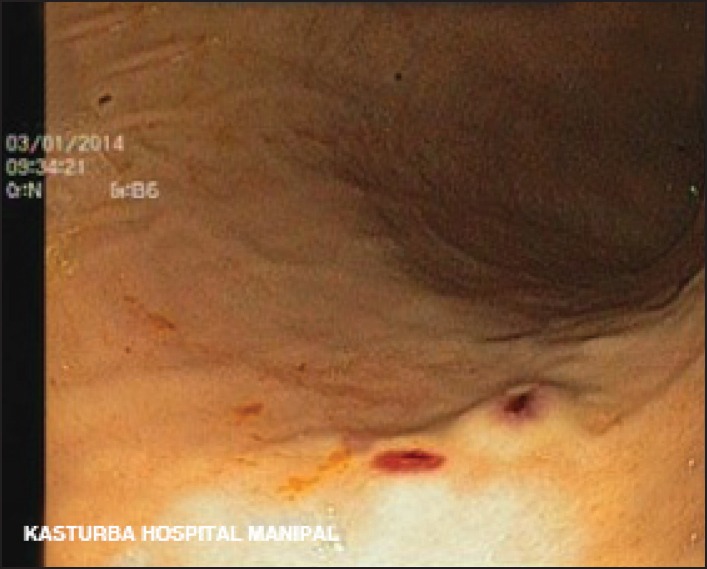
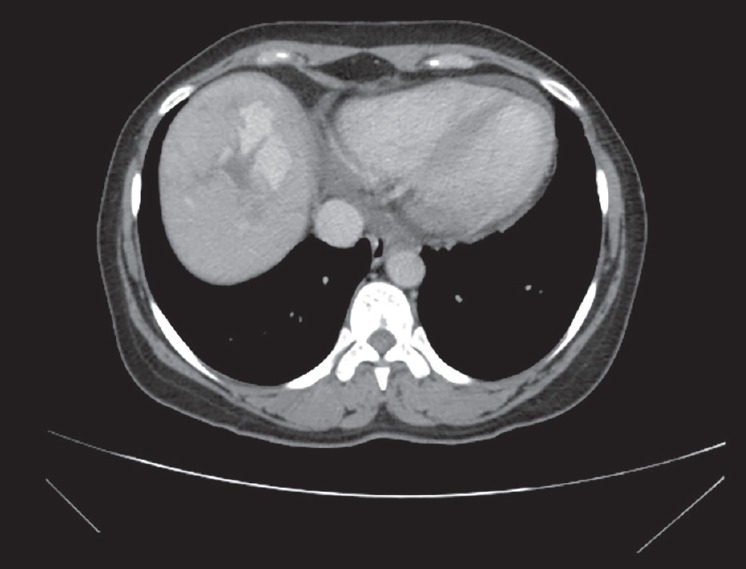
A 44-year-old woman came with complaints of recurrent episodes of hematemesis and epistaxis. Patient had a family history of similar complaints. Patient underwent esophagogastroduodenoscopy (EGD), which revealed telangiectasia in the stomach. Imaging of the abdomen showed features suggestive of arteriovenous shunting.
HHT can remain undiagnosed for a long time, and is rarely being reported in the literature with management needing a multidisciplinary approach with early inputs from a gastroenterologist.
遗传性出血性毛细血管扩张症(HHT)是一种常染色体显性疾病,可影响多个内脏器官并具有出血倾向。它具有黏膜皮肤毛细血管扩张、反复出血以及一级亲属阳性家族史这一典型三联征。鼻出血或胃肠道毛细血管扩张在少数情况下可能致命。
一名44岁女性因反复呕血和鼻出血前来就诊。患者有类似症状的家族史。患者接受了食管胃十二指肠镜检查(EGD),结果显示胃部有毛细血管扩张。腹部影像学检查显示有动静脉分流的特征。
HHT可能长时间未被诊断出来,且文献中鲜有报道,其治疗需要多学科方法,早期需有胃肠病学家参与。