Marais Leonard Charles, Ferreira Nando
Tumor, Sepsis and Reconstruction Unit, Department of Orthopaedic Surgery, Greys Hospital, University of KwaZulu-Natal, Private bag X9001, Pietermaritzburg, 3201, South Africa,
Strategies Trauma Limb Reconstr. 2015 Apr;10(1):27-33. doi: 10.1007/s11751-015-0221-7. Epub 2015 Apr 4.
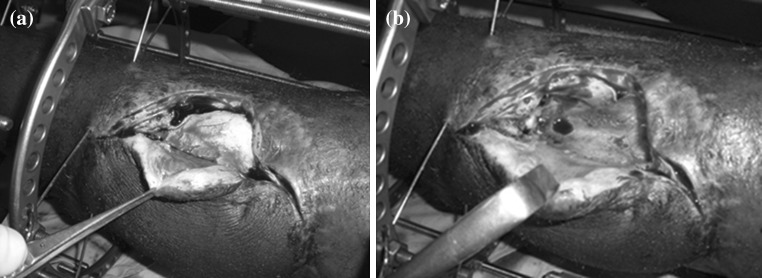
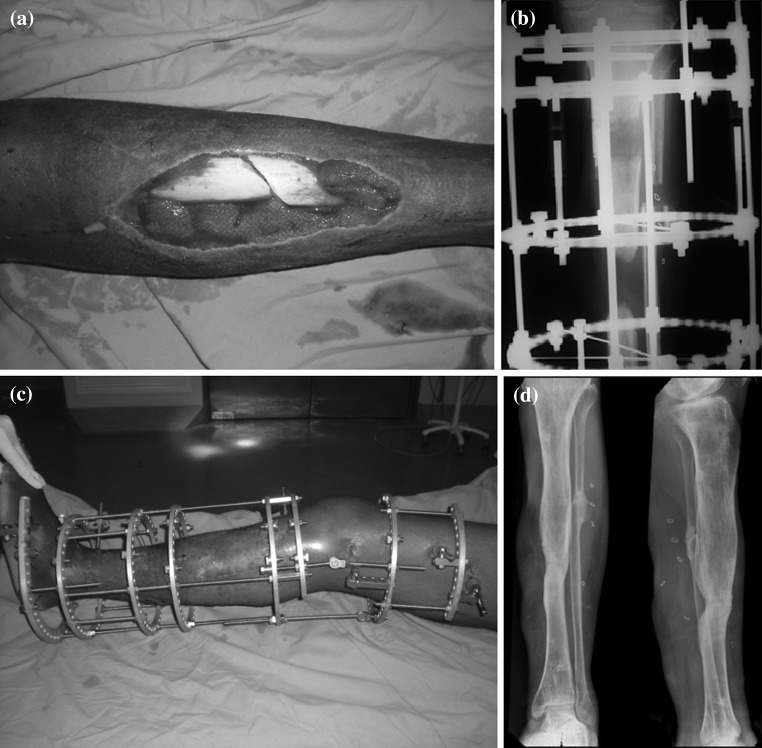
Wide resection of infected bone improves the odds of achieving remission of infection in patients with chronic osteomyelitis. Aggressive debridement is followed by the creation of large bone defects. The use of antibiotic-impregnated PMMA spacers, as a customized dead space management tool, has grown in popularity. In addition to certain biological advantages, the spacer offers a therapeutic benefit by serving as a vehicle for delivery of local adjuvant antibiotics. In this study, we investigate the efficacy of physician-directed antibiotic-impregnated PMMA spacers in achieving remission of chronic tibial osteomyelitis. This retrospective case series involves eight patients with chronic osteomyelitis of the tibial diaphysis managed with bone transport through an induced membrane using circular external fixation. All patients were treated according to a standardized treatment protocol. A review of the anatomical nature of the disease, the physiological status of the host and the outcome of treatment in terms of remission of infection, time to union and the complications that occurred was carried out. Seven patients, with a mean bone defect of 7 cm (range 5-8 cm), were included in the study. At a mean follow-up of 28 months (range 18-45 months), clinical eradication of osteomyelitis was achieved in all patients without the need for further reoperation. The mean total external fixation time was 77 weeks (range 52-104 weeks), which equated to a mean external fixation index of 81 days/cm (range 45-107). Failure of the skeletal reconstruction occurred in one patient who was not prepared to continue with further reconstructive surgery and requested amputation. Four major and four minor complications occurred. The temporary insertion of antibiotic-impregnated PMMA appears to be a useful dead space management technique in the treatment of post-infective tibial bone defects. Although the technique does not appear to offer an advantage in terms of the external fixation index, it may serve as a useful adjunct in order to achieve resolution of infection.
广泛切除感染骨可提高慢性骨髓炎患者实现感染缓解的几率。积极清创后会形成大的骨缺损。作为一种定制的死腔管理工具,抗生素浸渍的聚甲基丙烯酸甲酯(PMMA)骨水泥填充块的使用越来越普遍。除了某些生物学优势外,该填充块还通过作为局部辅助抗生素递送的载体提供治疗益处。在本研究中,我们调查了医生指导下的抗生素浸渍PMMA骨水泥填充块在实现慢性胫骨骨髓炎缓解方面的疗效。这个回顾性病例系列涉及8例胫骨干慢性骨髓炎患者,采用环形外固定通过诱导膜进行骨搬运治疗。所有患者均按照标准化治疗方案进行治疗。对疾病的解剖学性质、宿主的生理状态以及治疗结果进行了回顾,包括感染缓解情况、骨愈合时间和发生的并发症。7例患者纳入研究,平均骨缺损为7 cm(范围5 - 8 cm)。平均随访28个月(范围18 - 45个月),所有患者均实现了骨髓炎的临床根除,无需进一步再次手术。平均总外固定时间为77周(范围52 - 104周),平均外固定指数为81天/cm(范围45 - 107)。1例患者骨骼重建失败,该患者未准备好继续进行进一步的重建手术并要求截肢。发生了4例主要并发症和4例次要并发症。抗生素浸渍PMMA的临时植入似乎是治疗感染后胫骨骨缺损的一种有用的死腔管理技术。尽管该技术在外固定指数方面似乎没有优势,但它可能是实现感染消退的一种有用辅助手段。