Raïch-Regué Dàlia, Rosborough Brian R, Watson Alicia R, McGeachy Mandy J, Turnquist Hēth R, Thomson Angus W
Department of Surgery, Starzl Transplantation Institute, University of Pittsburgh School of Medicine, Pittsburgh, PA 15261;
Division of Rheumatology and Clinical Immunology, Department of Medicine, University of Pittsburgh School of Medicine, Pittsburgh, PA 15261; and Department of Immunology, University of Pittsburgh School of Medicine, Pittsburgh, PA 15261.
J Immunol. 2015 May 15;194(10):4767-76. doi: 10.4049/jimmunol.1402551. Epub 2015 Apr 3.
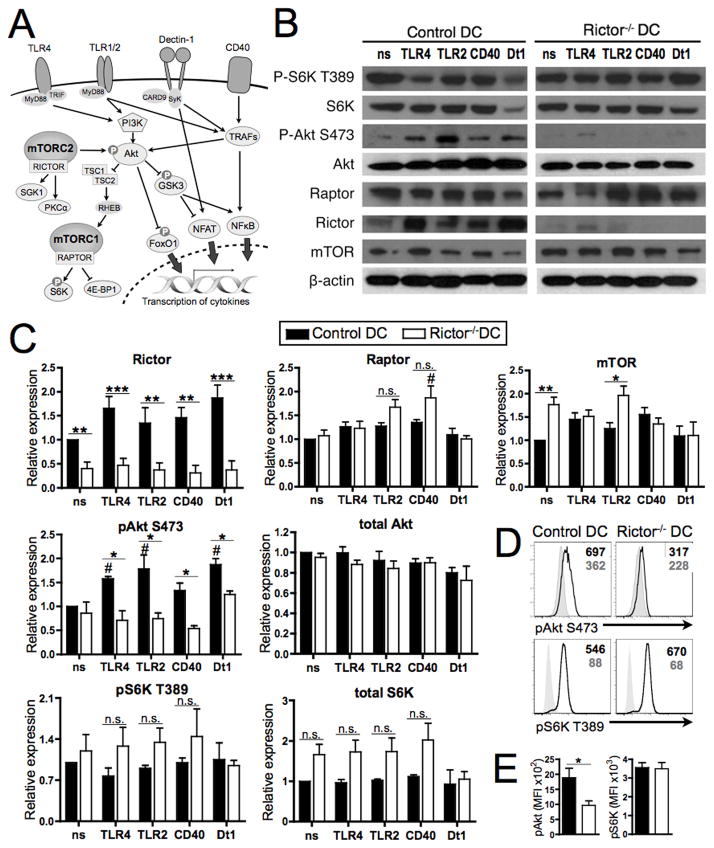
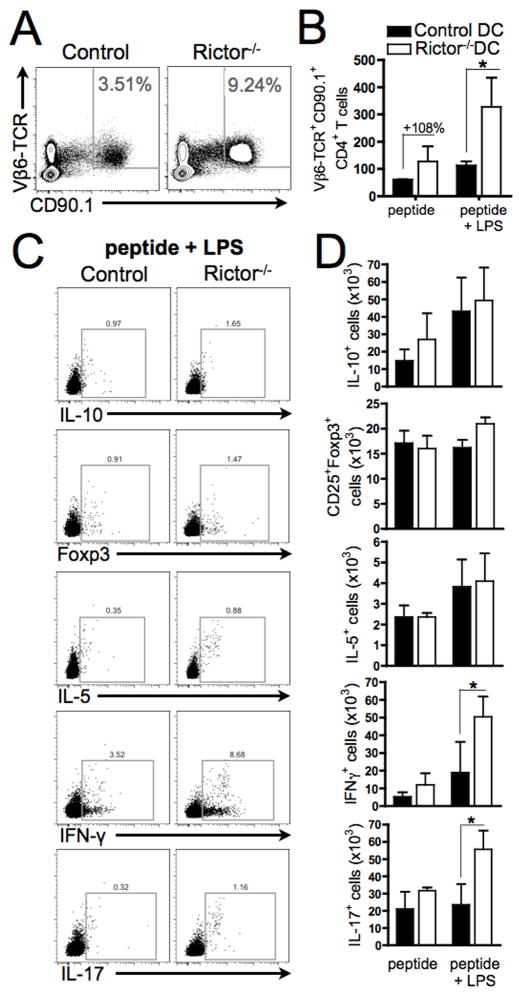
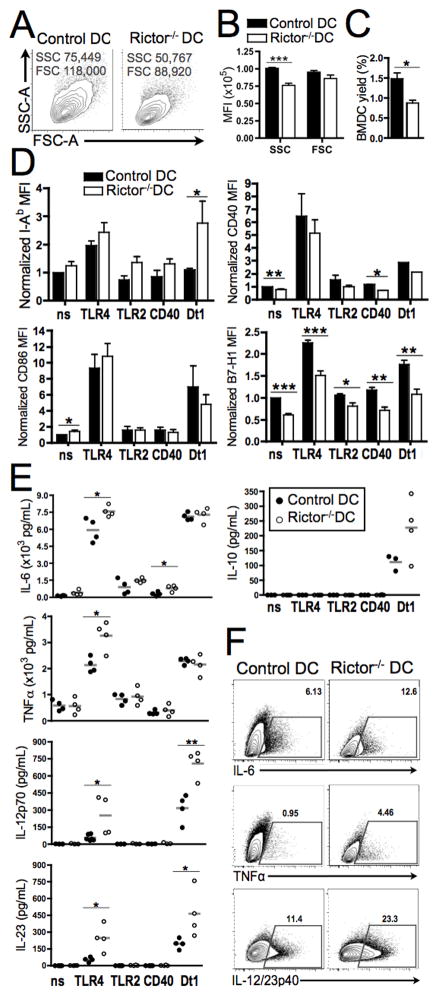
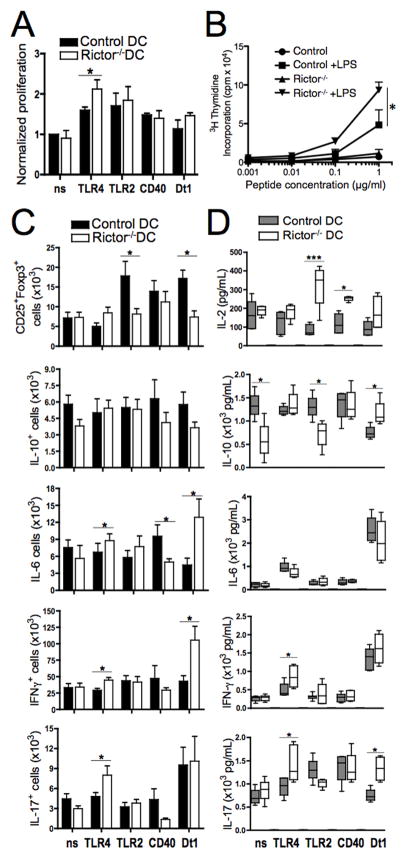
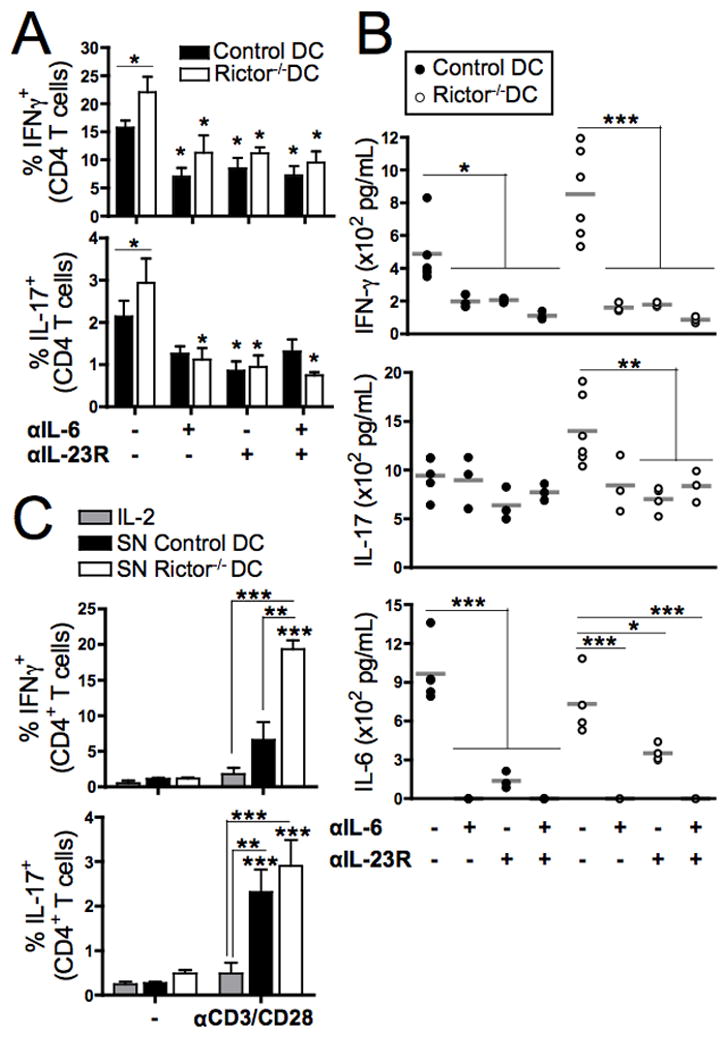
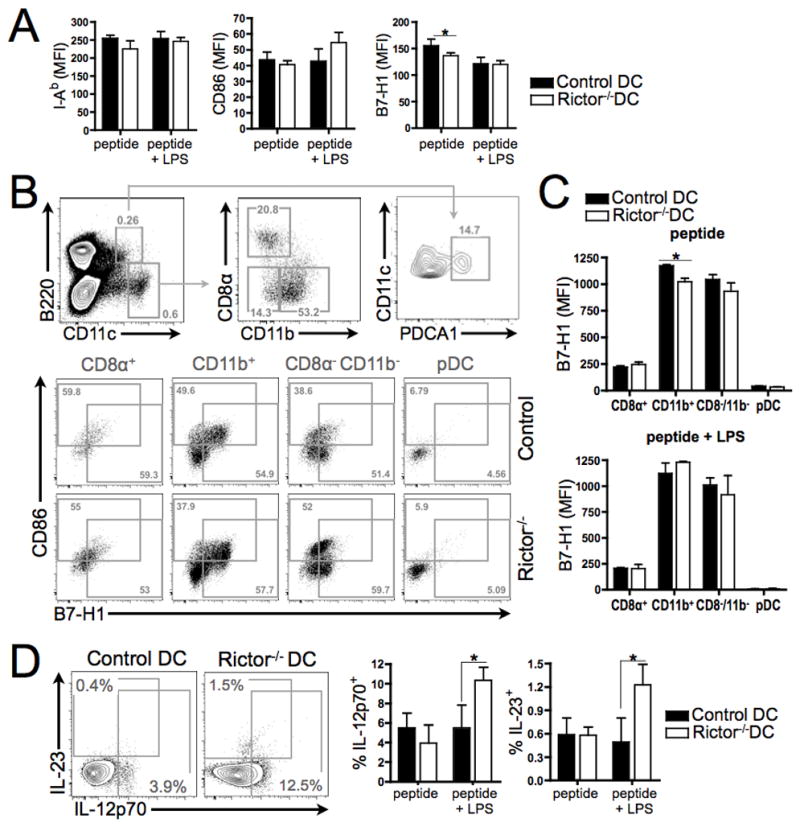
The mammalian/mechanistic target of rapamycin (mTOR) is a key integrative kinase that functions in two independent complexes, mTOR complex (mTORC) 1 and mTORC2. In contrast to the well-defined role of mTORC1 in dendritic cells (DC), little is known about the function of mTORC2. In this study, to our knowledge, we demonstrate for the first time an enhanced ability of mTORC2-deficient myeloid DC to stimulate and polarize allogeneic T cells. We show that activated bone marrow-derived DC from conditional Rictor(-/-) mice exhibit lower coinhibitory B7-H1 molecule expression independently of the stimulus and enhanced IL-6, TNF-α, IL-12p70, and IL-23 production following TLR4 ligation. Accordingly, TLR4-activated Rictor(-/-) DC display augmented allogeneic T cell stimulatory ability, expanding IFN-γ(+) and IL-17(+), but not IL-10(+) or CD4(+)Foxp3(+) regulatory T cells in vitro. A similar DC profile was obtained by stimulating Dectin-1 (C-type lectin family member) on Rictor(-/-) DC. Using novel CD11c-specific Rictor(-/-) mice, we confirm the alloreactive Th1 and Th17 cell-polarizing ability of endogenous mTORC2-deficient DC after TLR4 ligation in vivo. Furthermore, we demonstrate that proinflammatory cytokines produced by Rictor(-/-) DC after LPS stimulation are key in promoting Th1/Th17 responses. These data establish that mTORC2 activity restrains conventional DC proinflammatory capacity and their ability to polarize T cells following TLR and non-TLR stimulation. Our findings provide new insight into the role of mTORC2 in regulating DC function and may have implications for emerging therapeutic strategies that target mTOR in cancer, infectious diseases, and transplantation.
哺乳动物雷帕霉素靶蛋白(mTOR)是一种关键的整合激酶,在两种独立的复合物——mTOR复合物(mTORC)1和mTORC2中发挥作用。与mTORC1在树突状细胞(DC)中已明确的作用不同,人们对mTORC2的功能了解甚少。在本研究中,据我们所知,我们首次证明了mTORC2缺陷的髓样DC刺激和极化同种异体T细胞的能力增强。我们发现,来自条件性Rictor(-/-)小鼠的活化骨髓来源DC,无论刺激如何,其共抑制性B7-H1分子表达均较低,且在TLR4连接后,IL-6、TNF-α、IL-12p70和IL-23的产生增加。因此,TLR4激活的Rictor(-/-)DC显示出增强的同种异体T细胞刺激能力,在体外可扩增IFN-γ(+)和IL-17(+)细胞,但不扩增IL-10(+)或CD4(+)Foxp3(+)调节性T细胞。通过刺激Rictor(-/-)DC上的Dectin-1(C型凝集素家族成员)也获得了类似的DC特征。使用新型的CD11c特异性Rictor(-/-)小鼠,我们证实了体内TLR4连接后内源性mTORC2缺陷DC的同种异体反应性Th1和Th17细胞极化能力。此外,我们证明了LPS刺激后Rictor(-/-)DC产生的促炎细胞因子是促进Th1/Th17反应的关键。这些数据表明,mTORC2活性抑制了传统DC的促炎能力及其在TLR和非TLR刺激后极化T细胞的能力。我们的发现为mTORC2在调节DC功能中的作用提供了新的见解,并可能对针对癌症、传染病和移植中mTOR的新兴治疗策略产生影响。