Department of Orthopedic Surgery, University of California, San Francisco, California, United States ; Department of Orthopedic Surgery, Sumitomo Hospital, Osaka, Japan.
Department of Orthopedic Surgery, University of California, San Francisco, California, United States.
Global Spine J. 2015 Apr;5(2):102-9. doi: 10.1055/s-0034-1396432. Epub 2014 Dec 1.
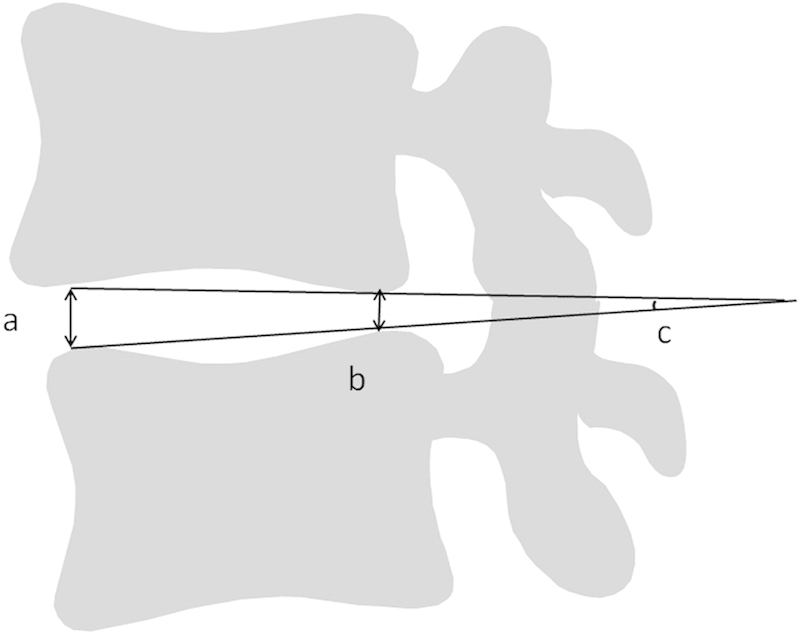
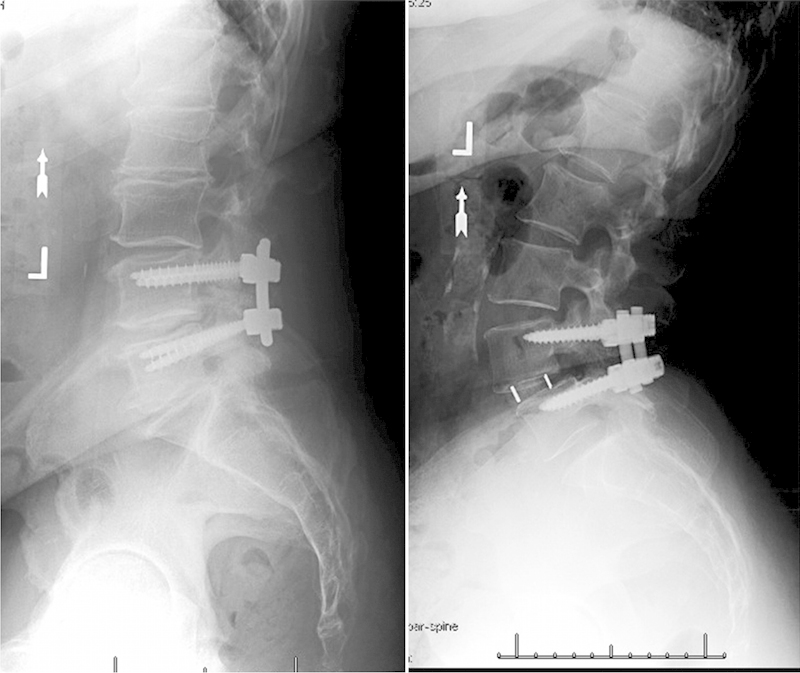
Study Design Retrospective cohort study. Objective To compare the clinical and radiographic outcomes of transforaminal lumbar interbody fusion (TLIF) and posterolateral lumbar fusion (PLF) in the treatment of degenerative spondylolisthesis. Methods This study compared 24 patients undergoing TLIF and 32 patients undergoing PLF with instrumentation. The clinical outcomes were assessed by visual analog scale (VAS) for low back pain and leg pain, physical component summary (PCS) of the 12-item Short-Form Health Survey, and the Oswestry Disability Index (ODI). Radiographic parameters included slippage of the vertebra, local disk lordosis, the anterior and posterior disk height, lumbar lordosis, and pelvic parameters. Results The improvement of VAS of leg pain was significantly greater in TLIF than in PLF unilaterally (3.4 versus 1.0; p = 0.02). The improvement of VAS of low back pain was significantly greater in TLIF than in PLF (3.8 versus 2.2; p = 0.02). However, there was no significant difference in improvement of ODI or PCS between TLIF and PLF. Reduction of slippage and the postoperative disk height was significantly greater in TLIF than in PLF. There was no significant difference in local disk lordosis, lumbar lordosis, or pelvic parameters. The fusion rate was 96% in TLIF and 84% in PLF (p = 0.3). There was no significant difference in fusion rate, estimated blood loss, adjacent segmental degeneration, or complication rate. Conclusions TLIF was superior to PLF in reduction of slippage and restoring disk height and might provide better improvement of leg pain. However, the health-related outcomes were not significantly different between the two procedures.
回顾性队列研究。目的:比较经椎间孔腰椎体间融合术(TLIF)和后外侧腰椎融合术(PLF)治疗退行性脊椎滑脱的临床和影像学结果。方法:本研究比较了 24 例接受 TLIF 和 32 例接受 PLF 联合器械治疗的患者。临床结果通过视觉模拟评分(VAS)评估腰痛和腿痛、12 项简短健康调查的物理成分综合评分(PCS)和 Oswestry 残疾指数(ODI)。影像学参数包括椎体滑移、局部椎间盘前凸角、前、后椎间盘高度、腰椎前凸角和骨盆参数。结果:TLIF 组在单侧腿痛 VAS 改善方面显著优于 PLF 组(3.4 对 1.0;p=0.02)。TLIF 组在腰痛 VAS 改善方面显著优于 PLF 组(3.8 对 2.2;p=0.02)。然而,TLIF 组与 PLF 组在 ODI 或 PCS 改善方面无显著差异。TLIF 组在滑脱减少和术后椎间盘高度方面的改善显著优于 PLF 组。局部椎间盘前凸角、腰椎前凸角和骨盆参数无显著差异。TLIF 组融合率为 96%,PLF 组为 84%(p=0.3)。TLIF 组与 PLF 组在融合率、估计失血量、相邻节段退变或并发症发生率方面无显著差异。结论:TLIF 在减少滑脱和恢复椎间盘高度方面优于 PLF,可能提供更好的腿痛改善。然而,两种手术在健康相关结果方面无显著差异。