Roopchand Diana E, Carmody Rachel N, Kuhn Peter, Moskal Kristin, Rojas-Silva Patricio, Turnbaugh Peter J, Raskin Ilya
School of Environmental and Biological Sciences, Rutgers, The State University of New Jersey, New Brunswick, NJ Nutrasorb, LLC, North Brunswick, NJ
G.W. Hooper Research Foundation, University of California, San Francisco, San Francisco, CA.
Diabetes. 2015 Aug;64(8):2847-58. doi: 10.2337/db14-1916. Epub 2015 Apr 6.
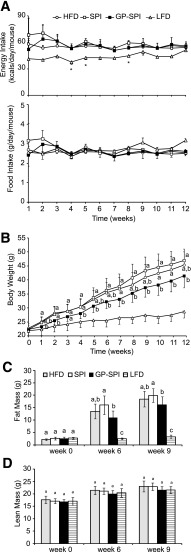
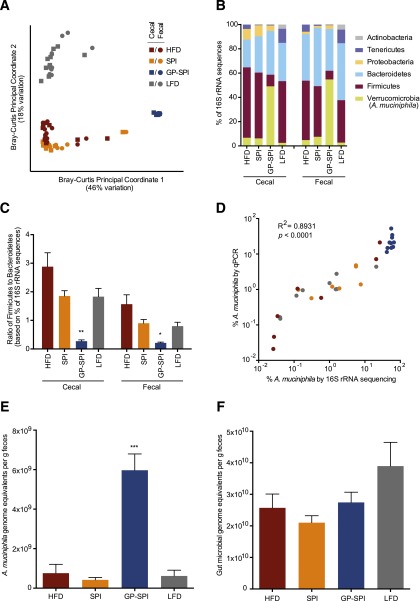
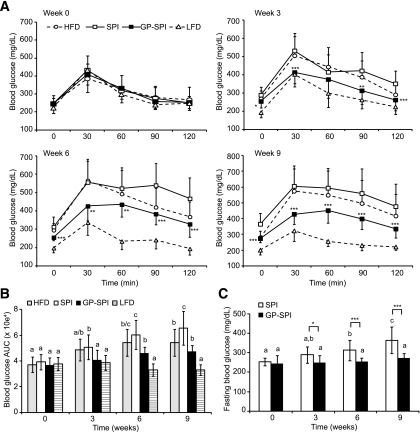
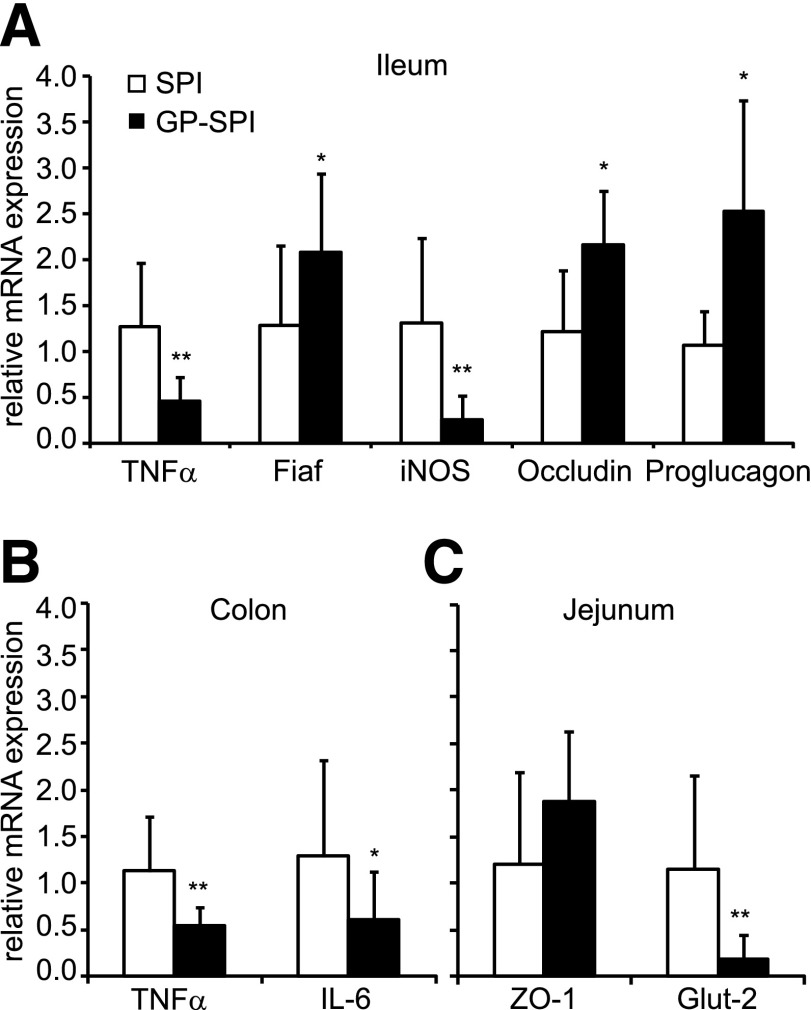
Dietary polyphenols protect against metabolic syndrome, despite limited absorption and digestion, raising questions about their mechanism of action. We hypothesized that one mechanism may involve the gut microbiota. To test this hypothesis, C57BL/6J mice were fed a high-fat diet (HFD) containing 1% Concord grape polyphenols (GP). Relative to vehicle controls, GP attenuated several effects of HFD feeding, including weight gain, adiposity, serum inflammatory markers (tumor necrosis factor [TNF]α, interleukin [IL]-6, and lipopolysaccharide), and glucose intolerance. GP lowered intestinal expression of inflammatory markers (TNFα, IL-6, inducible nitric oxide synthase) and a gene for glucose absorption (Glut2). GP increased intestinal expression of genes involved in barrier function (occludin) and limiting triglyceride storage (fasting-induced adipocyte factor). GP also increased intestinal gene expression of proglucagon, a precursor of proteins that promote insulin production and gut barrier integrity. 16S rRNA gene sequencing and quantitative PCR of cecal and fecal samples demonstrated that GP dramatically increased the growth of Akkermansia muciniphila and decreased the proportion of Firmicutes to Bacteroidetes, consistent with prior reports that similar changes in microbial community structure can protect from diet-induced obesity and metabolic disease. These data suggest that GP act in the intestine to modify gut microbial community structure, resulting in lower intestinal and systemic inflammation and improved metabolic outcomes. The gut microbiota may thus provide the missing link in the mechanism of action of poorly absorbed dietary polyphenols.
尽管膳食多酚的吸收和消化有限,但它们能预防代谢综合征,这引发了人们对其作用机制的疑问。我们推测一种机制可能涉及肠道微生物群。为了验证这一假设,给C57BL/6J小鼠喂食含1%康科德葡萄多酚(GP)的高脂饮食(HFD)。与载体对照组相比,GP减轻了HFD喂养的几种影响,包括体重增加、肥胖、血清炎症标志物(肿瘤坏死因子[TNF]α、白细胞介素[IL]-6和脂多糖)以及葡萄糖不耐受。GP降低了炎症标志物(TNFα、IL-6、诱导型一氧化氮合酶)和葡萄糖吸收基因(Glut2)的肠道表达。GP增加了参与屏障功能(闭合蛋白)和限制甘油三酯储存(禁食诱导脂肪细胞因子)的基因的肠道表达。GP还增加了胰高血糖素原的肠道基因表达,胰高血糖素原是促进胰岛素产生和肠道屏障完整性的蛋白质的前体。盲肠和粪便样本的16S rRNA基因测序和定量PCR表明,GP显著增加了嗜黏蛋白阿克曼氏菌的生长,并降低了厚壁菌门与拟杆菌门的比例,这与之前的报道一致,即微生物群落结构的类似变化可以预防饮食诱导的肥胖和代谢疾病。这些数据表明,GP在肠道中发挥作用,改变肠道微生物群落结构,从而降低肠道和全身炎症,并改善代谢结果。因此,肠道微生物群可能是吸收不良的膳食多酚作用机制中缺失的环节。