Lin Xiukun, Farooqi Ammad Ahmad, Ismail Muhammad
Department of Pharmacology, Capital Medical University, Beijing, People's Republic of China.
Institute of Biomedical and Genetic Engineering, Islamabad, Pakistan.
Drug Des Devel Ther. 2015 Mar 26;9:1797-804. doi: 10.2147/DDDT.S77341. eCollection 2015.
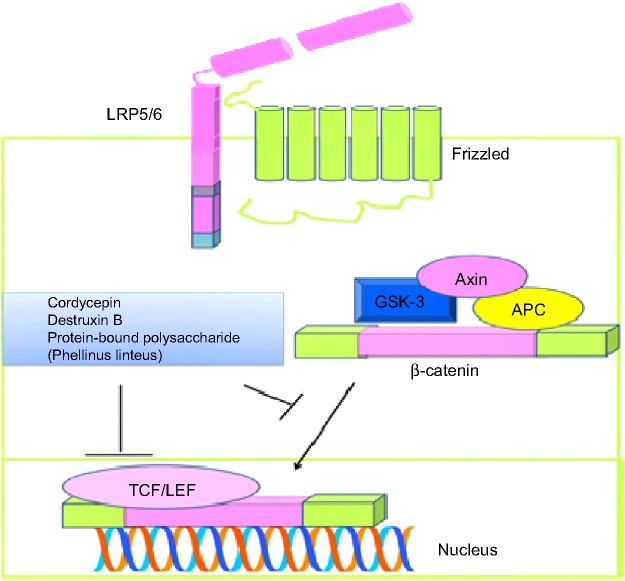
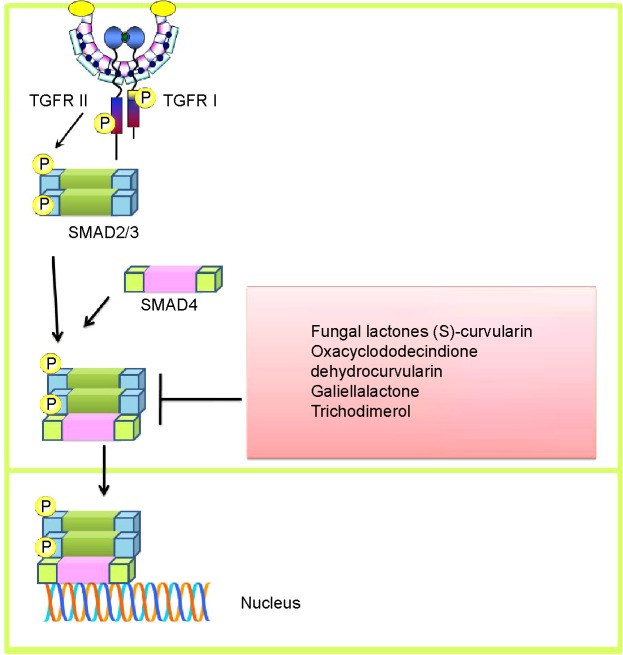
It is becoming increasingly understood that tumor cells may have different mutations and dependencies on diverse intracellular signaling cascades for survival or metastatic potential. Overexpression of oncogenes, inactivation of tumor suppressor genes, genetic/epigenetic mutations, genomic instability, and loss of apoptotic cell death are some of the mechanisms that have been widely investigated in molecular oncology. We partition this multicomponent review into the most recent evidence on the anticancer activity of fungal substances obtained from in vitro and xenografted models, and these fungal substances modulate expression of oncogenic and tumor suppressor miRNAs. There are some outstanding questions regarding fungus-derived chemical-induced modulation of intracellular signaling networks in different cancer cell lines and preclinical models. Certain hints have emerged, emphasizing mechanisms via which apoptosis can be restored in TRAIL-resistant cancer cells. Reconceptualization of the knowledge obtained from these emerging areas of research will enable us to potentially identify natural agents with notable anticancer activity and minimal off-target effects. Integration of experimentally verified evidence obtained from cancer cell line gene expression with large-scale functional screening results and pharmacological sensitivity data will be helpful in identification of therapeutics with substantial efficacy. New tools and technologies will further deepen our understanding of the signaling networks that underlie the development of cancer, metastasis, and resistance to different therapeutics at both a personal and systems-wide level.
人们越来越认识到,肿瘤细胞可能具有不同的突变,并且在生存或转移潜能方面对多种细胞内信号级联反应有不同的依赖性。癌基因的过表达、肿瘤抑制基因的失活、遗传/表观遗传突变、基因组不稳定性以及凋亡性细胞死亡的丧失是分子肿瘤学中广泛研究的一些机制。我们将这篇多部分综述分为关于从体外和异种移植模型中获得的真菌物质抗癌活性的最新证据,以及这些真菌物质如何调节致癌和肿瘤抑制性微小RNA(miRNA)的表达。关于真菌衍生化学物质在不同癌细胞系和临床前模型中对细胞内信号网络的诱导调节,仍存在一些突出问题。一些线索已经出现,强调了在对肿瘤坏死因子相关凋亡诱导配体(TRAIL)耐药的癌细胞中恢复凋亡的机制。对这些新兴研究领域所获知识进行重新概念化,将使我们有可能识别出具有显著抗癌活性且脱靶效应最小的天然药物。将从癌细胞系基因表达中获得的经实验验证的证据与大规模功能筛选结果及药理敏感性数据相结合,将有助于识别出具有显著疗效的治疗方法。新的工具和技术将在个体层面和全系统层面进一步加深我们对癌症发生、转移以及对不同治疗产生耐药性背后的信号网络的理解。