Maloney Nancy, Heider Arvela R, Rockwood Amy, Singh Ranjit
Canisius College.
University of Buffalo.
EGEMS (Wash DC). 2014 Oct 27;2(3):1091. eCollection 2014.
Secure exchange of clinical data among providers has the potential to improve quality, safety, efficiency, and reduce duplication. Many communities are experiencing challenges in building effective health information exchanges (HIEs). Previous studies have focused on financial and technical issues regarding HIE development. This paper describes the Western New York (WNY) HIE growth and lessons learned about accelerating progress to become a highly connected community.
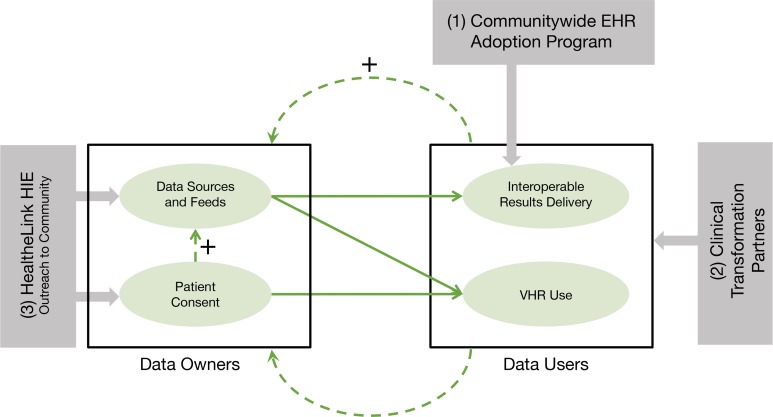
HEALTHeLINK, with funding from the Office of the National Coordinator for Health Information Technology (ONC) under the Beacon Community Program, expanded HIE usage in eight counties. The communitywide transformation process used three main drivers: (1) a communitywide Electronic Health Record (EHR) adoption program; (2) clinical transformation partners; and (3) HIE outreach and infrastructure development.
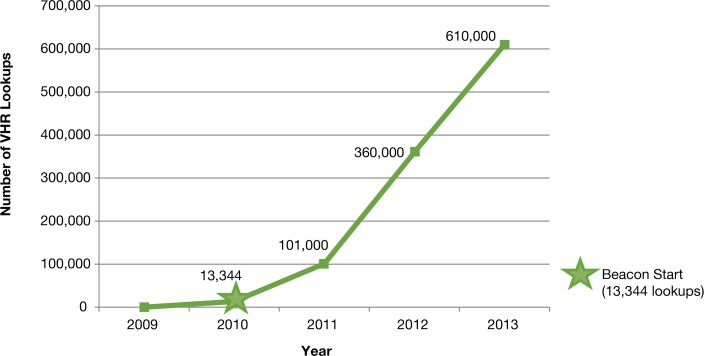
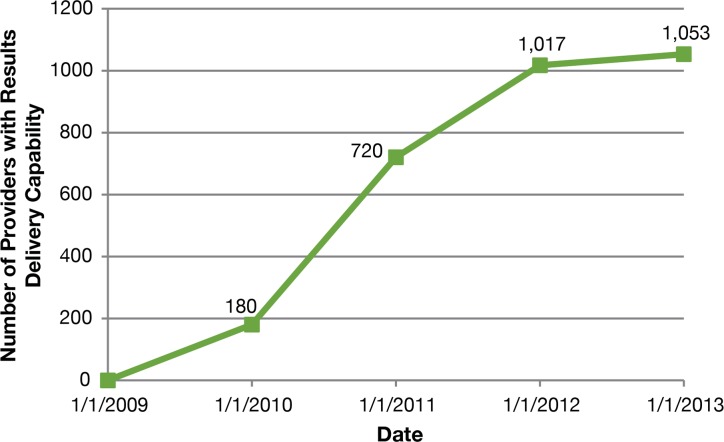
ONC Beacon Community funding allowed WNY to achieve a new level in the use of interoperable HIE. Electronic delivery of results into the EHR expanded from 23 practices in 2010 to 222 practices in 2013, a tenfold increase. There were more than 12.5 million results delivered electronically (HL7 messages) to 222 practices' EHRs via the HIE in 2013. Use of a secure portal and Virtual Health Record (VHR) to access reports (those not delivered directly to the EHR) also increased significantly, from 13,344 report views in 2010 to over 600,000 in 2013.
The WNY Beacon successfully expanded the sharing of clinical information among different sources of data and providers, creating a highly connected community to improve the quality and continuity of care. Technical, organizational, and community lessons described in this paper should prove beneficial to others as they pursue efforts to create connected communities.
医疗服务提供者之间安全地交换临床数据,有潜力提高医疗质量、安全性、效率,并减少重复工作。许多社区在建立有效的健康信息交换(HIE)方面正面临挑战。以往的研究主要关注HIE发展中的财务和技术问题。本文描述了纽约西部(WNY)HIE的发展情况以及在加速发展成为一个高度互联社区方面所学到的经验教训。
在健康信息技术国家协调办公室(ONC)的灯塔社区计划资助下,HEALTHeLINK在八个县扩大了HIE的使用。社区范围的转型过程使用了三个主要驱动因素:(1)全社区电子健康记录(EHR)采用计划;(2)临床转型合作伙伴;(3)HIE推广及基础设施建设。
ONC灯塔社区项目的资金使WNY在可互操作的HIE使用方面达到了一个新水平。电子方式将检查结果传输到EHR的医疗机构数量从2010年的23家增加到2013年的222家,增长了十倍。2013年,通过HIE以电子方式(HL7消息)向222家医疗机构的EHR传输了超过1250万条检查结果。使用安全门户和虚拟健康记录(VHR)访问报告(那些未直接传输到EHR的报告)的情况也显著增加,从2010年的13344次报告查看量增加到2013年的超过60万次。
WNY灯塔项目成功扩大了不同数据来源和医疗服务提供者之间临床信息的共享,创建了一个高度互联的社区,以提高医疗质量和连续性。本文所述的技术、组织和社区方面的经验教训,对于其他致力于创建互联社区的人应具有借鉴意义。