Feng Juanjuan, Wang Jinhui, Fan Pengxiang, Jia Weitao, Nie Lingling, Jiang Ping, Chen Xianyang, Lv Sulian, Wan Lichuan, Chang Sandra, Li Shizhong, Li Yinxin
BMC Plant Biol. 2015 Feb 26;15:63. doi: 10.1186/s12870-015-0451-3.
microRNAs (miRNAs) are implicated in plant development processes and play pivotal roles in plant adaptation to environmental stresses. Salicornia europaea, a salt mash euhalophyte, is a suitable model plant to study salt adaptation mechanisms. S. europaea is also a vegetable, forage, and oilseed that can be used for saline land reclamation and biofuel precursor production on marginal lands. Despite its importance, no miRNA has been identified from S. europaea thus far.
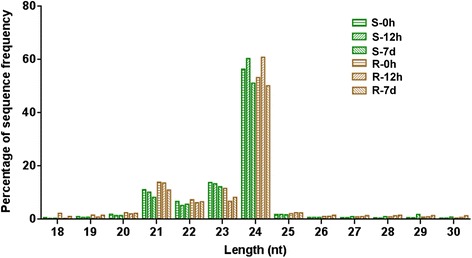
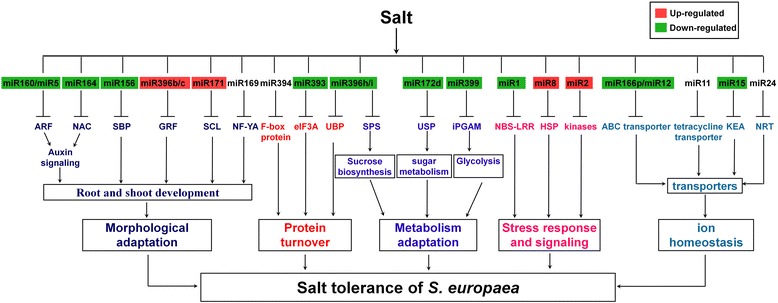
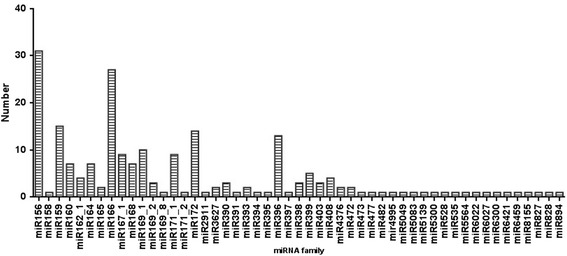
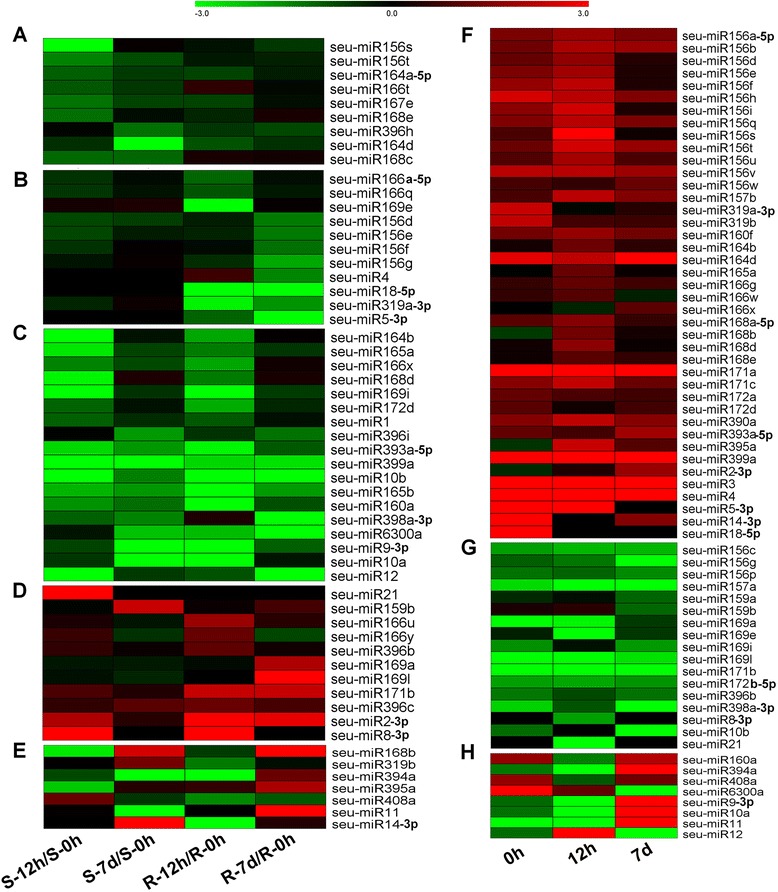
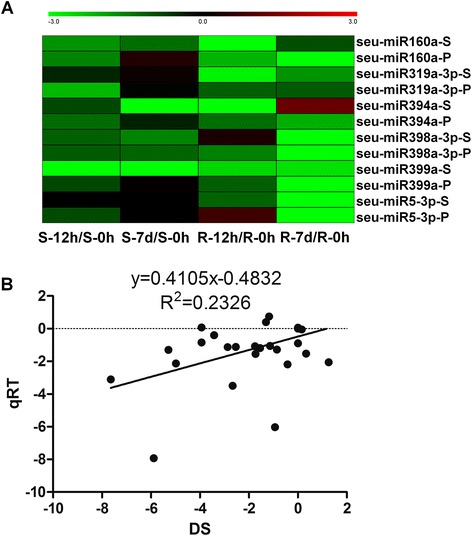
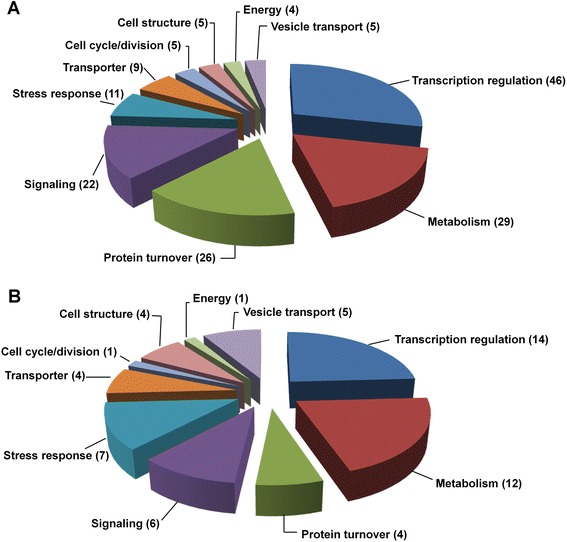
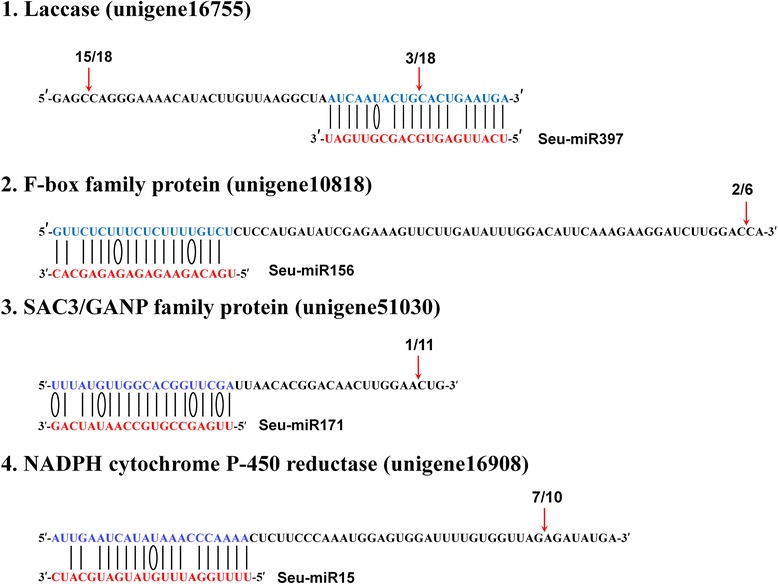
Deep sequencing was performed to investigate small RNA transcriptome of S. europaea. Two hundred and ten conserved miRNAs comprising 51 families and 31 novel miRNAs (including seven miRNA star sequences) belonging to 30 families were identified. About half (13 out of 31) of the novel miRNAs were only detected in salt-treated samples. The expression of 43 conserved and 13 novel miRNAs significantly changed in response to salinity. In addition, 53 conserved and 13 novel miRNAs were differentially expressed between the shoots and roots. Furthermore, 306 and 195 S. europaea unigenes were predicted to be targets of 41 conserved and 29 novel miRNA families, respectively. These targets encoded a wide range of proteins, and genes involved in transcription regulation constituted the largest category. Four of these genes encoding laccase, F-box family protein, SAC3/GANP family protein, and NADPH cytochrome P-450 reductase were validated using 5'-RACE.
Our results indicate that specific miRNAs are tightly regulated by salinity in the shoots and/or roots of S. europaea, which may play important roles in salt tolerance of this euhalophyte. The S. europaea salt-responsive miRNAs and miRNAs that target transcription factors, nucleotide binding site-leucine-rich repeat proteins and enzymes involved in lignin biosynthesis as well as carbon and nitrogen metabolism may be applied in genetic engineering of crops with high stress tolerance, and genetic modification of biofuel crops with high biomass and regulatable lignin biosynthesis.
微小RNA(miRNA)参与植物发育过程,并在植物适应环境胁迫中起关键作用。欧洲海蓬子是一种盐沼真盐生植物,是研究盐适应机制的合适模式植物。欧洲海蓬子也是一种蔬菜、饲料和油料作物,可用于盐碱地开垦和边际土地上生物燃料前体的生产。尽管其具有重要性,但迄今为止尚未从欧洲海蓬子中鉴定出miRNA。
进行深度测序以研究欧洲海蓬子的小RNA转录组。鉴定出210个保守的miRNA,属于51个家族,以及31个新的miRNA(包括7个miRNA*序列),属于30个家族。约一半(31个中的13个)新的miRNA仅在盐处理样品中检测到。43个保守的和13个新的miRNA的表达响应盐度而显著变化。此外,53个保守的和13个新的miRNA在地上部和根之间差异表达。此外,分别预测306个和195个欧洲海蓬子单基因是41个保守的和29个新的miRNA家族的靶标。这些靶标编码多种蛋白质,参与转录调控的基因构成最大类别。使用5'-RACE验证了其中四个编码漆酶、F-box家族蛋白、SAC3/GANP家族蛋白和NADPH细胞色素P-450还原酶的基因。
我们的结果表明,特定的miRNA在欧洲海蓬子的地上部和/或根中受到盐度的严格调控,这可能在这种真盐生植物的耐盐性中起重要作用。欧洲海蓬子盐响应性miRNA以及靶向转录因子、核苷酸结合位点富含亮氨酸重复蛋白和参与木质素生物合成以及碳和氮代谢的酶的miRNA可应用于高胁迫耐受性作物的基因工程,以及高生物量和可调节木质素生物合成的生物燃料作物的基因改造。