Ding Zhaojian, Li Minhui, Sun Fei, Xi Pinggen, Sun Longhua, Zhang Lianhui, Jiang Zide
Department of Plant Pathology, South China Agricultural University, Guangzhou 510642, China; Guangdong Province Key Laboratory of Microbial Signals and Disease Control, South China Agricultural University, Guangzhou 510642, China.
Department of Plant Pathology, South China Agricultural University, Guangzhou 510642, China.
PLoS One. 2015 Apr 7;10(4):e0122634. doi: 10.1371/journal.pone.0122634. eCollection 2015.
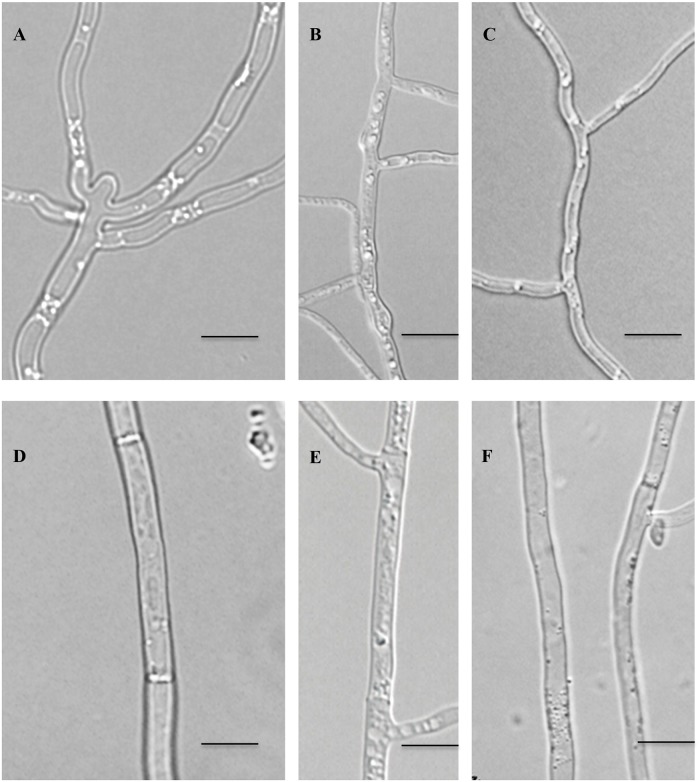
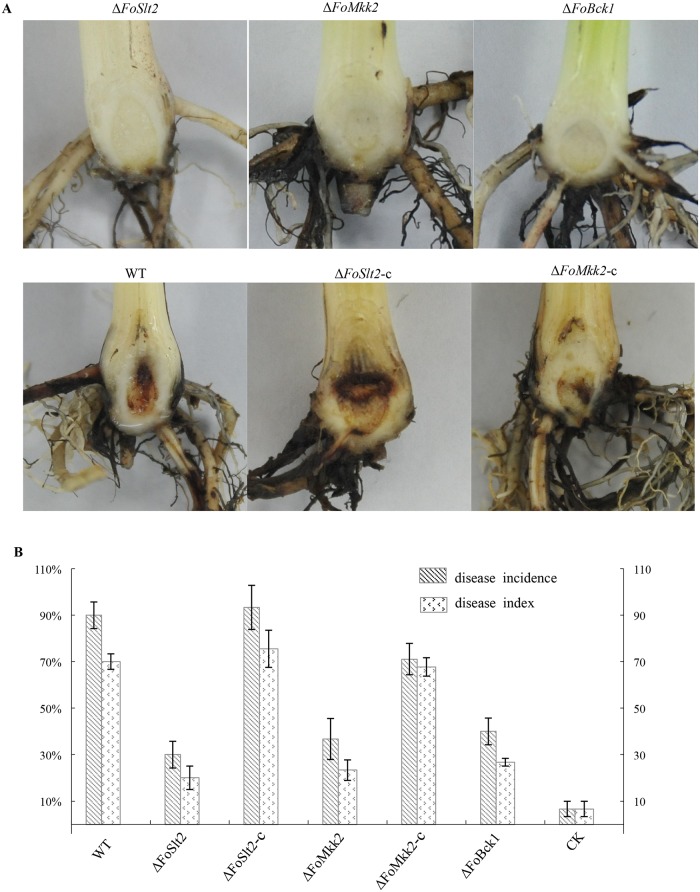
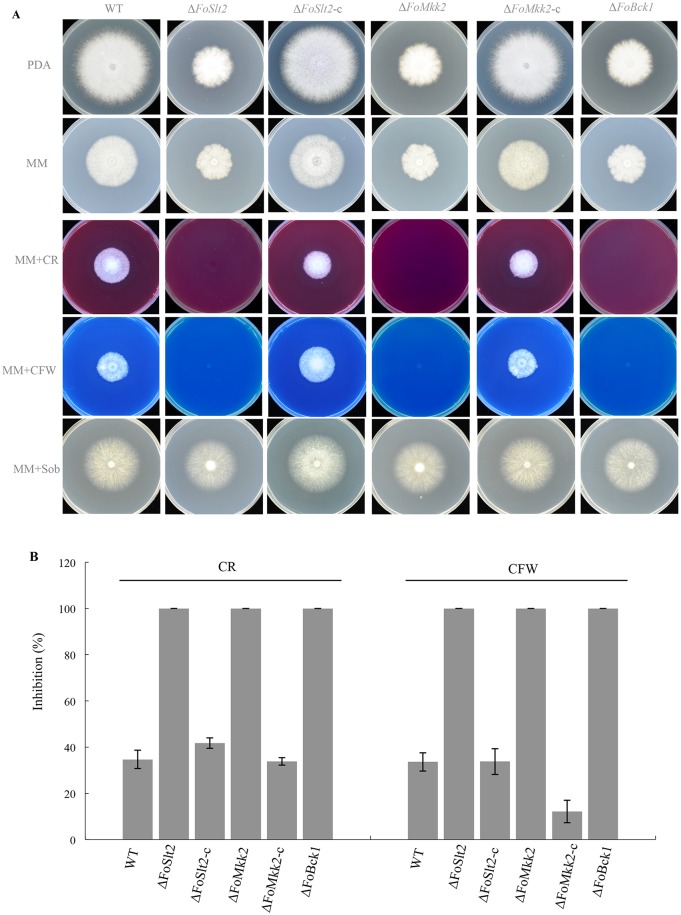
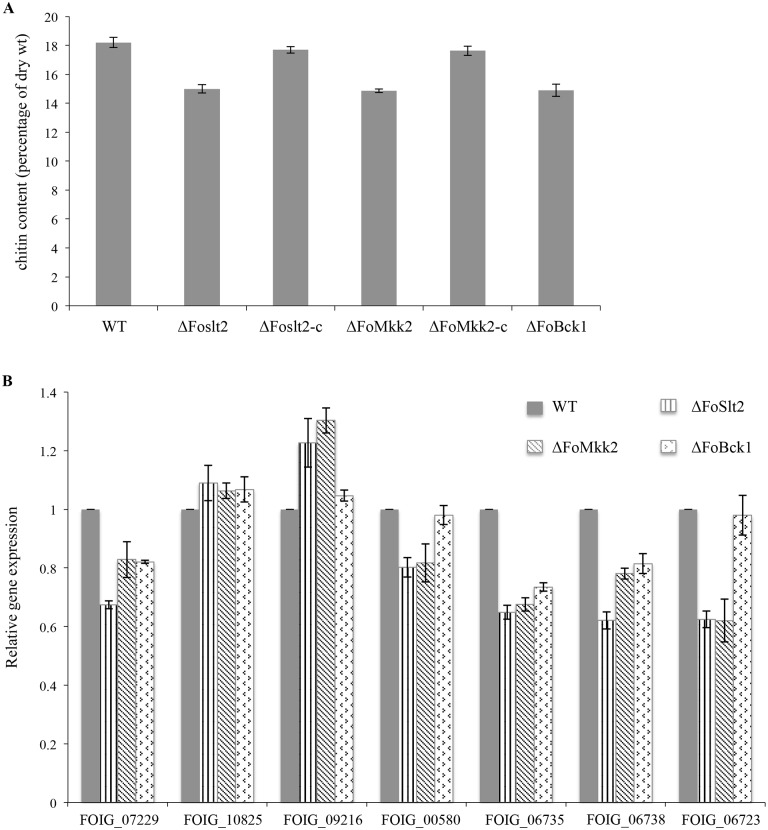
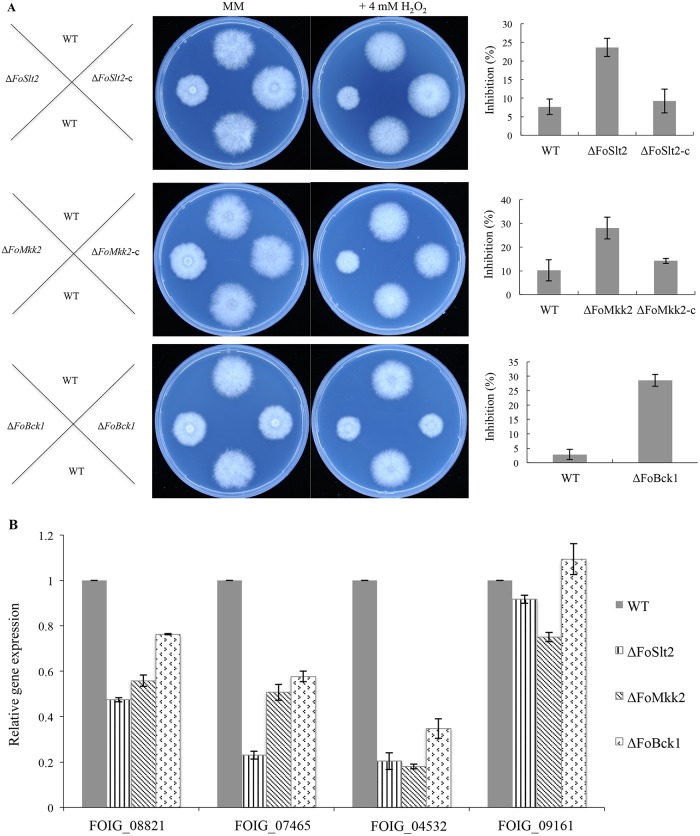
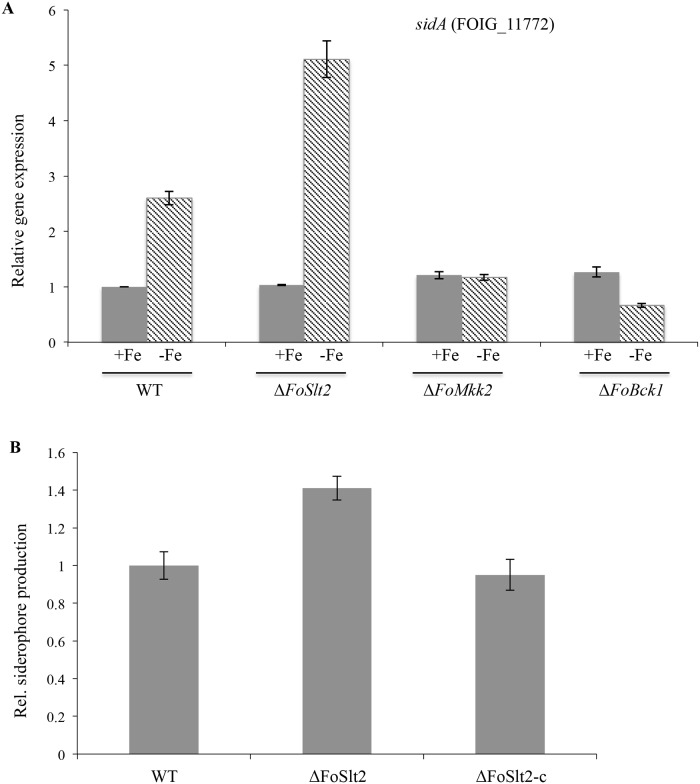
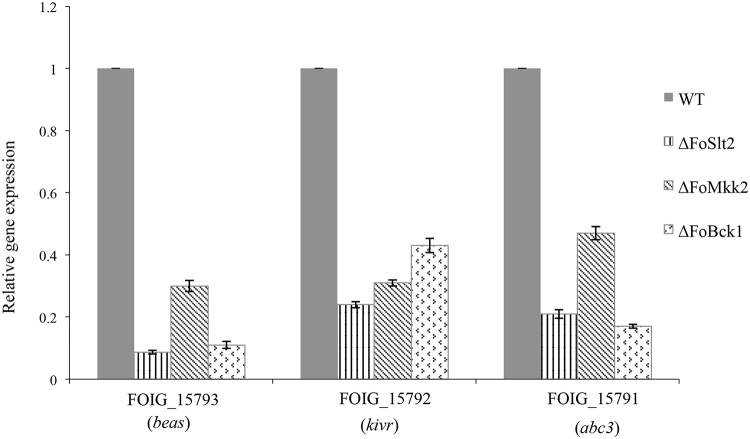
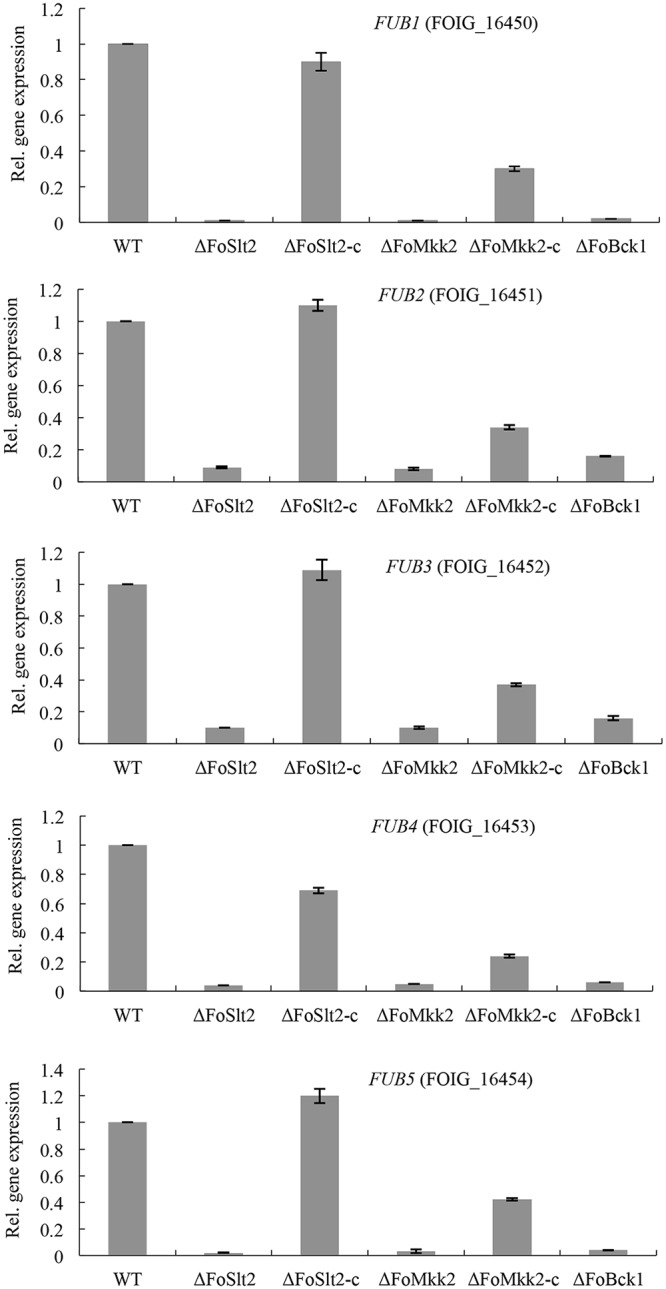
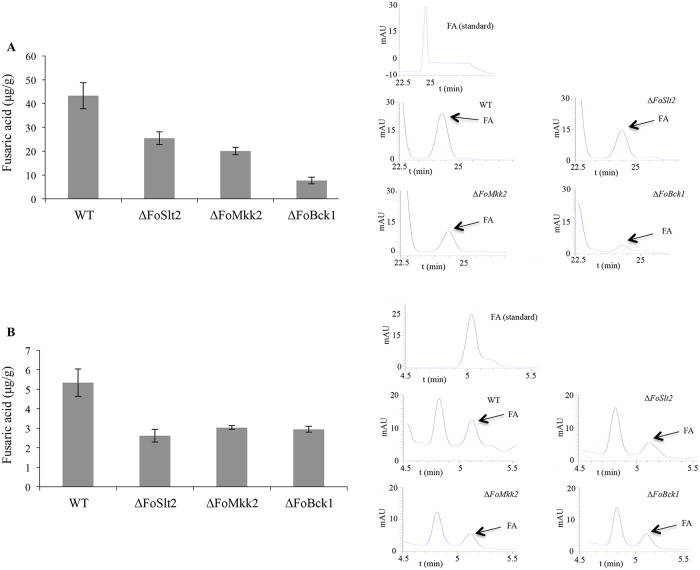
Fusarium oxysporum f. sp. cubense (FOC) is an important soil-borne fungal pathogen causing devastating vascular wilt disease of banana plants and has become a great concern threatening banana production worldwide. However, little information is known about the molecular mechanisms that govern the expression of virulence determinants of this important fungal pathogen. In this study, we showed that null mutation of three mitogen-activated protein (MAP) kinase genes, designated as FoSlt2, FoMkk2 and FoBck1, respectively, led to substantial attenuation in fungal virulence on banana plants. Transcriptional analysis revealed that the MAP kinase signaling pathway plays a key role in regulation of the genes encoding production of chitin, peroxidase, beauvericin and fusaric acid. Biochemical analysis further confirmed the essential role of MAP kinases in modulating the production of fusaric acid, which was a crucial phytotoxin in accelerating development of Fusarium wilt symptoms in banana plants. Additionally, we found that the MAP kinase FoSlt2 was required for siderophore biosynthesis under iron-depletion conditions. Moreover, disruption of the MAP kinase genes resulted in abnormal hypha and increased sensitivity to Congo Red, Calcofluor White and H2O2. Taken together, these results depict the critical roles of MAP kinases in regulation of FOC physiology and virulence.
尖孢镰刀菌古巴专化型(FOC)是一种重要的土传真菌病原体,可引发香蕉植株毁灭性的维管束枯萎病,已成为威胁全球香蕉生产的重大问题。然而,对于调控这种重要真菌病原体毒力决定因素表达的分子机制,我们知之甚少。在本研究中,我们发现分别命名为FoSlt2、FoMkk2和FoBck1的三个丝裂原活化蛋白(MAP)激酶基因的无效突变导致该真菌对香蕉植株的毒力大幅减弱。转录分析表明,MAP激酶信号通路在调控几丁质、过氧化物酶、白僵菌素和镰刀菌素酸产生的基因表达中起关键作用。生化分析进一步证实了MAP激酶在调节镰刀菌素酸产生中的重要作用,镰刀菌素酸是加速香蕉植株枯萎病症状发展的一种关键植物毒素。此外,我们发现MAP激酶FoSlt2在缺铁条件下的铁载体生物合成中是必需的。而且,MAP激酶基因的破坏导致菌丝异常,并增加了对刚果红、荧光增白剂和过氧化氢的敏感性。综上所述,这些结果描绘了MAP激酶在调控FOC生理学和毒力方面的关键作用。