Mirendil H, Thomas E A, De Loera C, Okada K, Inomata Y, Chun J
Department of Molecular and Cellular Neuroscience, Dorris Neuroscience Center, The Scripps Research Institute, La Jolla, CA, USA.
Advanced Medical Research Laboratories, Research Division, Mitsubishi Tanabe Pharma Corporation, Toda-shi, Saitama, Japan.
Transl Psychiatry. 2015 Apr 7;5(4):e541. doi: 10.1038/tp.2015.33.
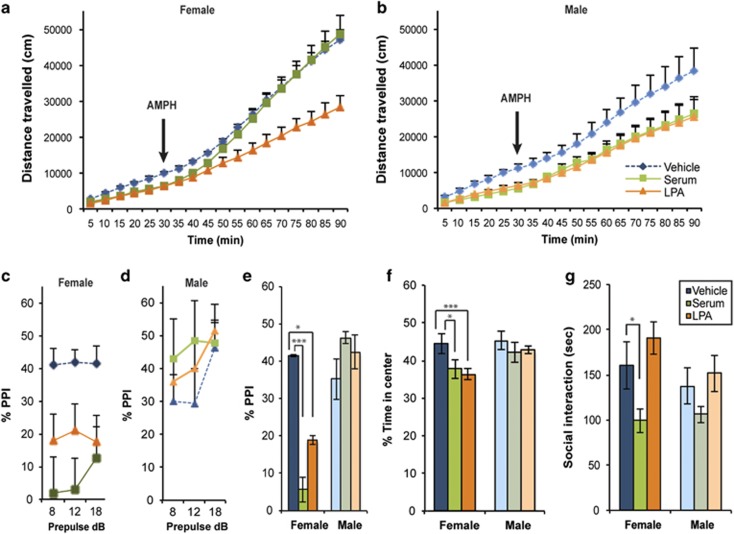
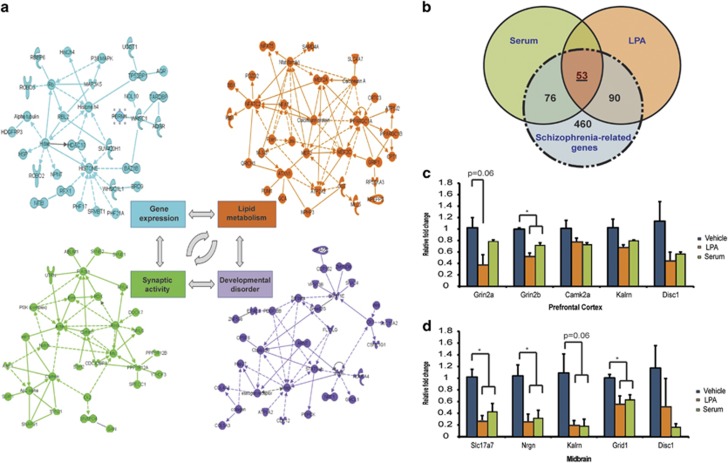
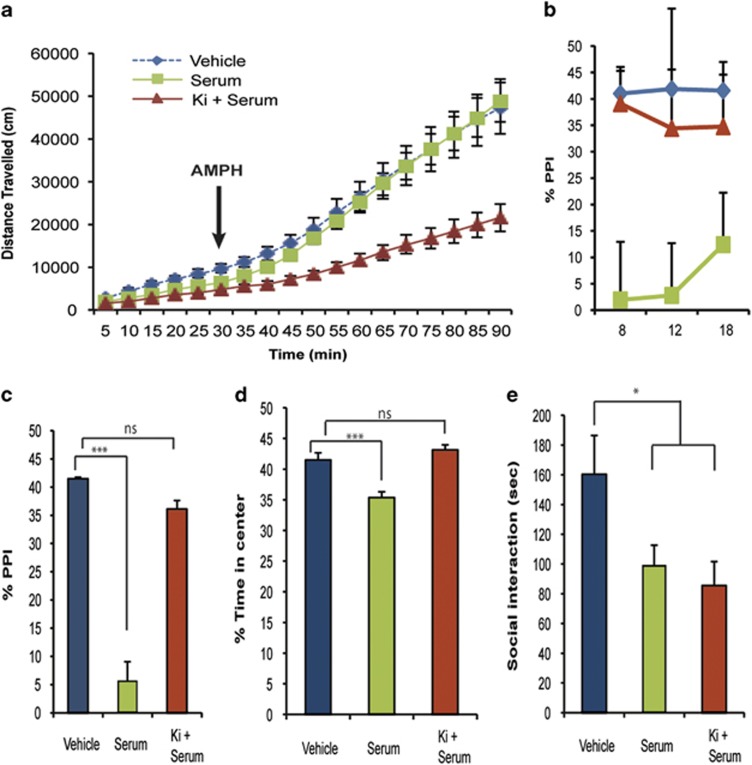
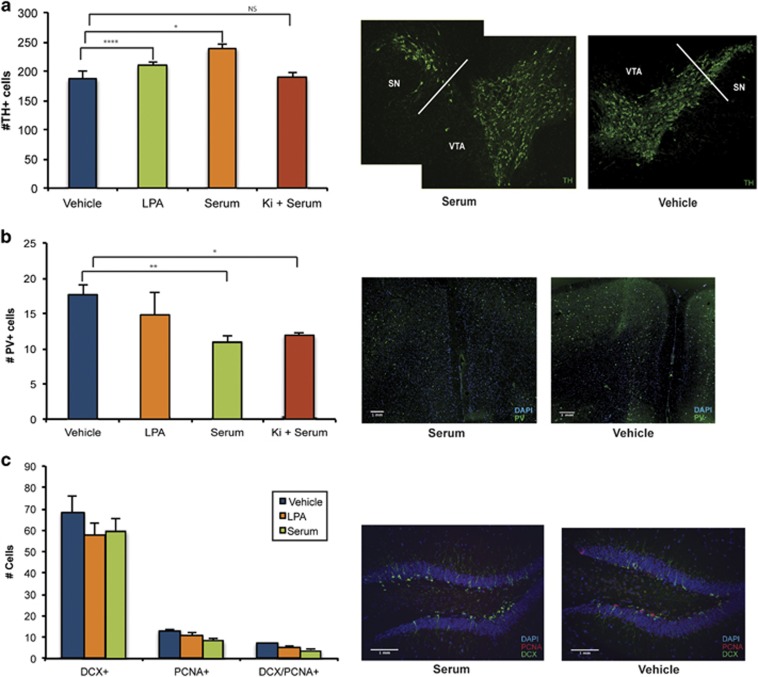
Genetic, environmental and neurodevelopmental factors are thought to underlie the onset of neuropsychiatric disorders such as schizophrenia. How these risk factors collectively contribute to pathology is unclear. Here, we present a mouse model of prenatal intracerebral hemorrhage--an identified risk factor for schizophrenia--using a serum-exposure paradigm. This model exhibits behavioral, neurochemical and schizophrenia-related gene expression alterations in adult females. Behavioral alterations in amphetamine-induced locomotion, prepulse inhibition, thigmotaxis and social interaction--in addition to increases in tyrosine hydroxylase-positive dopaminergic cells in the substantia nigra and ventral tegmental area and decreases in parvalbumin-positive cells in the prefrontal cortex--were induced upon prenatal serum exposure. Lysophosphatidic acid (LPA), a lipid component of serum, was identified as a key molecular initiator of schizophrenia-like sequelae induced by serum. Prenatal exposure to LPA alone phenocopied many of the schizophrenia-like alterations seen in the serum model, whereas pretreatment with an antagonist against the LPA receptor subtype LPA1 prevented many of the behavioral and neurochemical alterations. In addition, both prenatal serum and LPA exposure altered the expression of many genes and pathways related to schizophrenia, including the expression of Grin2b, Slc17a7 and Grid1. These findings demonstrate that aberrant LPA receptor signaling associated with fetal brain hemorrhage may contribute to the development of some neuropsychiatric disorders.
遗传、环境和神经发育因素被认为是精神分裂症等神经精神疾病发病的基础。目前尚不清楚这些风险因素如何共同导致病理变化。在此,我们使用血清暴露范式建立了一种产前脑内出血的小鼠模型,而产前脑内出血是已确定的精神分裂症风险因素。该模型在成年雌性小鼠中表现出行为、神经化学以及与精神分裂症相关的基因表达改变。产前血清暴露会诱导苯丙胺诱发的运动、前脉冲抑制、趋触性和社交互动等行为改变,同时还会导致黑质和腹侧被盖区酪氨酸羟化酶阳性多巴胺能细胞增加,前额叶皮质小白蛋白阳性细胞减少。血清中的脂质成分溶血磷脂酸(LPA)被确定为血清诱导的精神分裂症样后遗症的关键分子引发剂。单独产前暴露于LPA可模拟血清模型中出现的许多精神分裂症样改变,而用LPA受体亚型LPA1的拮抗剂进行预处理可预防许多行为和神经化学改变。此外,产前血清和LPA暴露均改变了许多与精神分裂症相关的基因和信号通路的表达,包括Grin2b、Slc17a7和Grid1的表达。这些发现表明,与胎儿脑出血相关的异常LPA受体信号可能导致某些神经精神疾病的发生。