Chen Zhen-Xia, Oliver Brian
Section of Developmental Genomics, Laboratory of Cellular and Developmental Biology, National Institute of Diabetes and Digestive and Kidney Diseases, National Institutes of Health, Bethesda, Maryland 20892.
Section of Developmental Genomics, Laboratory of Cellular and Developmental Biology, National Institute of Diabetes and Digestive and Kidney Diseases, National Institutes of Health, Bethesda, Maryland 20892
G3 (Bethesda). 2015 Apr 7;5(6):1057-63. doi: 10.1534/g3.115.017632.
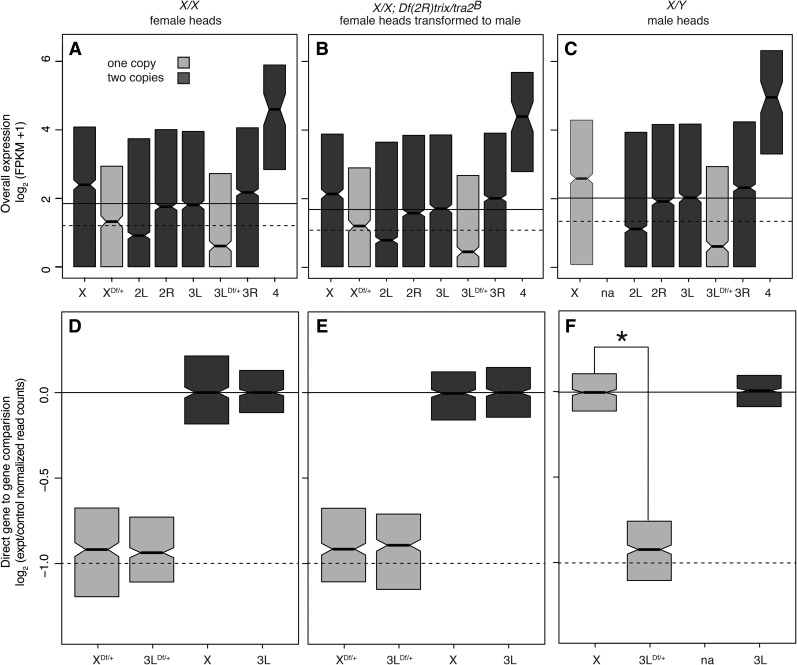
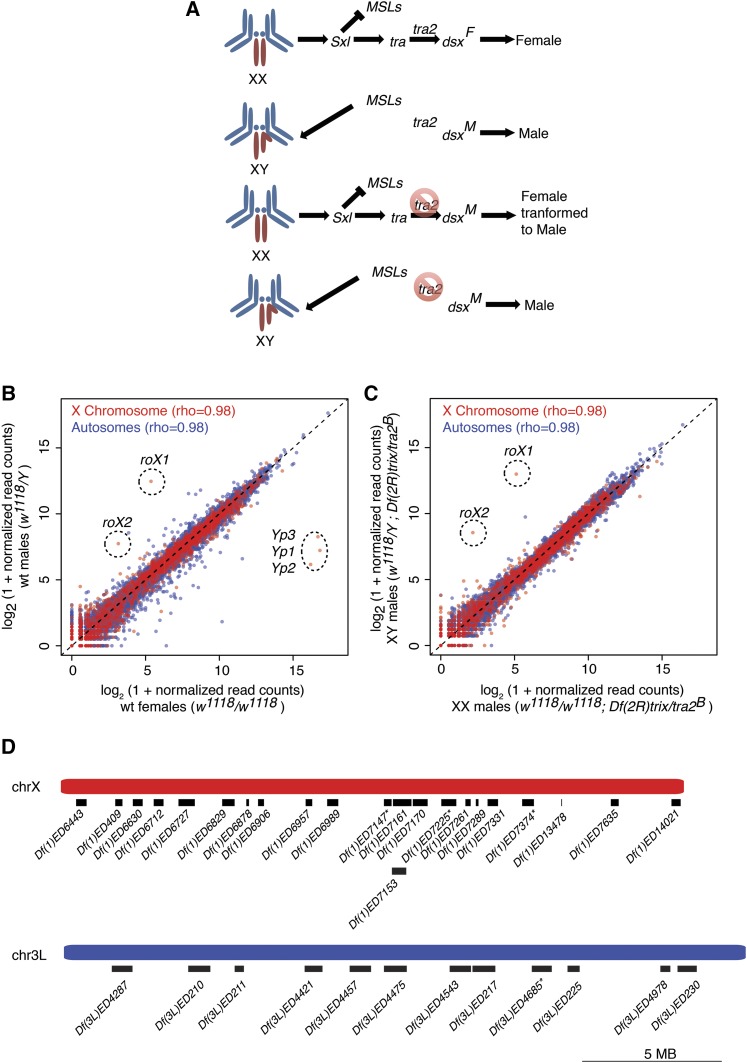
X chromosome dosage compensation is required for male viability in Drosophila. Dosage compensation relative to autosomes is two-fold, but this is likely to be due to a combination of homeostatic gene-by-gene regulation and chromosome-wide regulation. We have baseline values for gene-by-gene dosage compensation on autosomes, but not for the X chromosome. Given the evolutionary history of sex chromosomes, these baseline values could differ. We used a series of deficiencies on the X and autosomes, along with mutations in the sex-determination gene transformer-2, to carefully measure the sex-independent X-chromosome response to gene dosage in adult heads by RNA sequencing. We observed modest and indistinguishable dosage compensation for both X chromosome and autosome genes, suggesting that the X chromosome is neither inherently more robust nor sensitive to dosage change.
在果蝇中,X染色体剂量补偿是雄性生存所必需的。相对于常染色体,剂量补偿是两倍,但这可能是由于基因稳态调节和全染色体调节共同作用的结果。我们有常染色体上逐个基因剂量补偿的基线值,但X染色体没有。鉴于性染色体的进化历史,这些基线值可能不同。我们利用X染色体和常染色体上的一系列缺失,以及性别决定基因transformer-2中的突变,通过RNA测序仔细测量了成年果蝇头部中X染色体对基因剂量的性别独立反应。我们观察到X染色体基因和常染色体基因的剂量补偿适度且无明显差异,这表明X染色体对剂量变化既不是天生更具抗性也不是更敏感。