Scofield Hailey N, Mattila Heather R
Department of Biological Sciences, Wellesley College, Wellesley, Massachusetts, United States of America.
PLoS One. 2015 Apr 8;10(4):e0121731. doi: 10.1371/journal.pone.0121731. eCollection 2015.
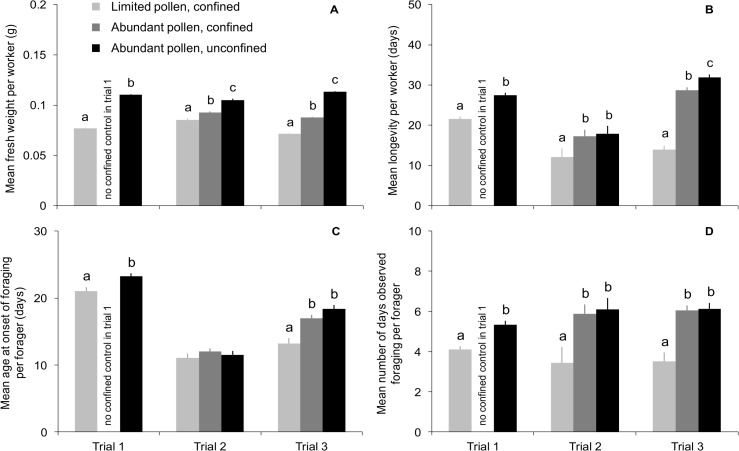
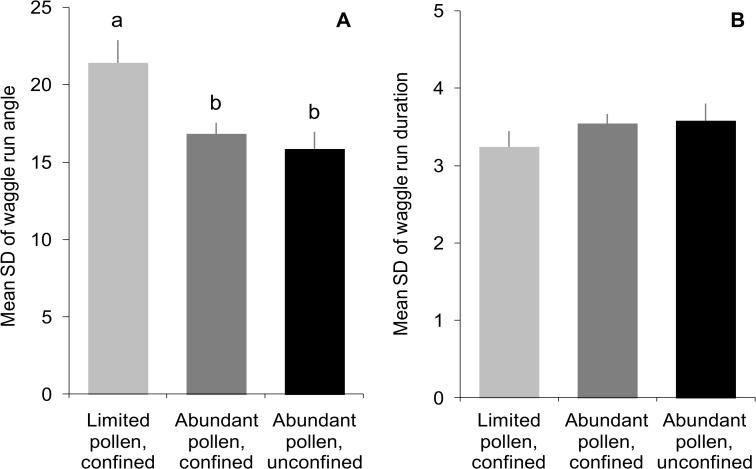
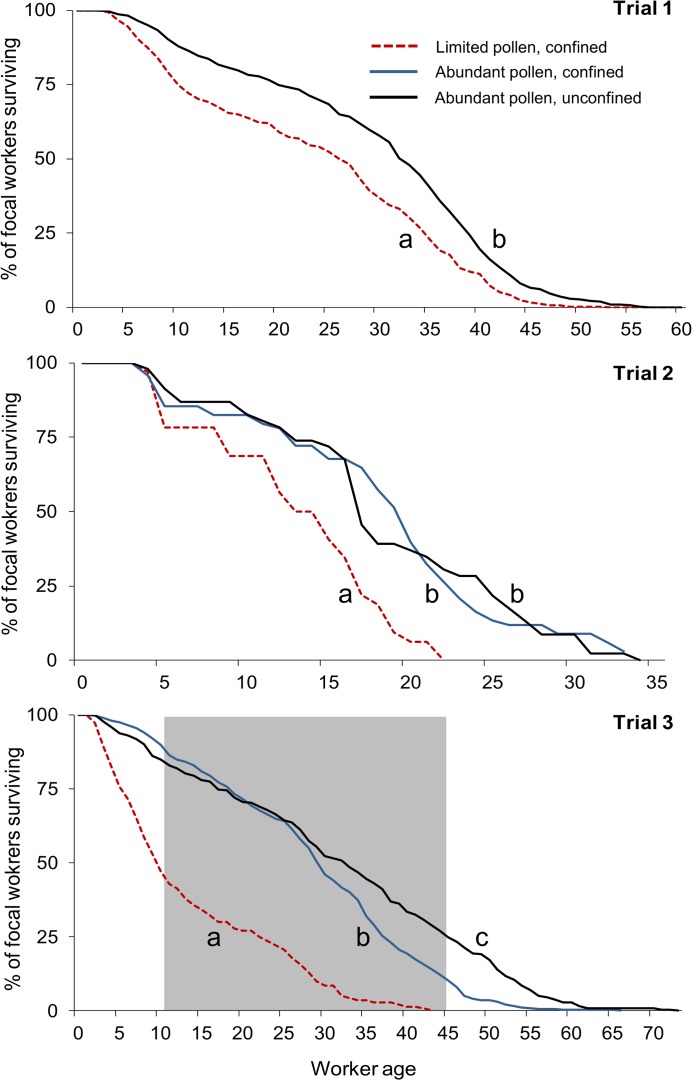
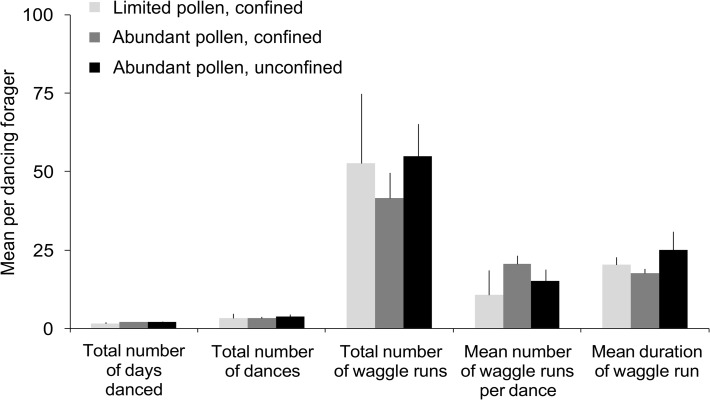
The negative effects on adult behavior of juvenile undernourishment are well documented in vertebrates, but relatively poorly understood in invertebrates. We examined the effects of larval nutritional stress on the foraging and recruitment behavior of an economically important model invertebrate, the honey bee (Apis mellifera). Pollen, which supplies essential nutrients to developing workers, can become limited in colonies because of seasonal dearths, loss of foraging habitat, or intensive management. However, the functional consequences of being reared by pollen-stressed nestmates remain unclear, despite growing concern that poor nutrition interacts with other stressors to exacerbate colony decline. We manipulated nurse bees' access to pollen and then assessed differences in weight, longevity, foraging activity, and waggle-dance behavior of the workers that they reared (who were co-fostered as adults). Pollen stress during larval development had far-reaching physical and behavioral effects on adult workers. Workers reared in pollen-stressed colonies were lighter and shorter lived than nestmates reared with adequate access to pollen. Proportionally fewer stressed workers were observed foraging and those who did forage started foraging sooner, foraged for fewer days, and were more likely to die after only a single day of foraging. Pollen-stressed workers were also less likely to waggle dance than their unstressed counterparts and, if they danced, the information they conveyed about the location of food was less precise. These performance deficits may escalate if long-term pollen limitation prevents stressed foragers from providing sufficiently for developing workers. Furthermore, the effects of brief pollen shortages reported here mirror the effects of other environmental stressors that limit worker access to nutrients, suggesting the likelihood of their synergistic interaction. Honey bees often experience the level of stress that we created, thus our findings underscore the importance of adequate nutrition for supporting worker performance and their potential contribution to colony productivity and quality pollination services.
幼年营养不良对脊椎动物成年行为的负面影响已有充分记录,但在无脊椎动物中相对了解较少。我们研究了幼虫营养应激对一种具有重要经济意义的模式无脊椎动物——蜜蜂(西方蜜蜂)觅食和招募行为的影响。花粉为发育中的工蜂提供必需营养,但由于季节性短缺、觅食栖息地丧失或集约化管理,蜂群中的花粉可能会变得有限。然而,尽管人们越来越担心营养不良与其他压力源相互作用会加剧蜂群衰退,但由花粉紧张的巢伴抚养长大的功能后果仍不清楚。我们控制了哺育蜂获取花粉的机会,然后评估了它们抚养的工蜂(成年后共同寄养)在体重、寿命、觅食活动和摇摆舞行为方面的差异。幼虫发育期间的花粉应激对成年工蜂产生了深远的生理和行为影响。在花粉紧张的蜂群中饲养的工蜂比有充足花粉供应的巢伴更轻,寿命更短。观察到觅食的受应激工蜂比例相对较少,而那些确实觅食的工蜂开始觅食的时间更早,觅食天数更少,并且在仅觅食一天后更有可能死亡。与未受应激的工蜂相比,受花粉应激的工蜂摇摆舞的可能性也更小,而且如果它们跳舞,它们传达的食物位置信息也不太准确。如果长期的花粉限制阻止受应激的觅食者为发育中的工蜂提供足够的食物,这些性能缺陷可能会升级。此外,这里报道的短暂花粉短缺的影响反映了其他限制工蜂获取营养的环境压力源的影响,表明它们协同相互作用的可能性。蜜蜂经常经历我们所创造的压力水平,因此我们的研究结果强调了充足营养对于支持工蜂性能及其对蜂群生产力和优质授粉服务潜在贡献的重要性。