Vaughn Caryn C, Atkinson Carla L, Julian Jason P
Oklahoma Biological Survey, Department of Biology, and Ecology and Evolutionary Biology Graduate Program, University of Oklahoma Norman, Oklahoma.
Oklahoma Biological Survey, Department of Biology, and Ecology and Evolutionary Biology Graduate Program, University of Oklahoma Norman, Oklahoma ; Department of Biological Sciences, University of Alabama Tuscaloosa, Alabama.
Ecol Evol. 2015 Mar;5(6):1291-305. doi: 10.1002/ece3.1442. Epub 2015 Feb 25.
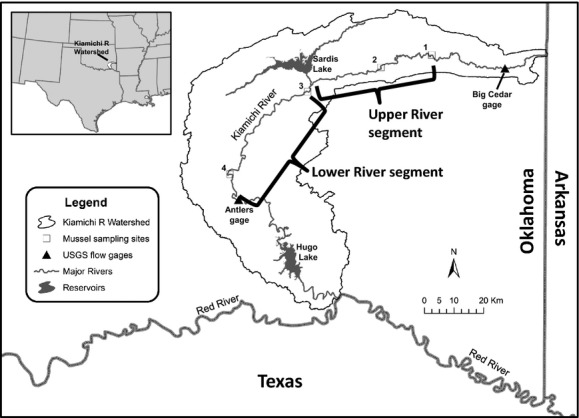
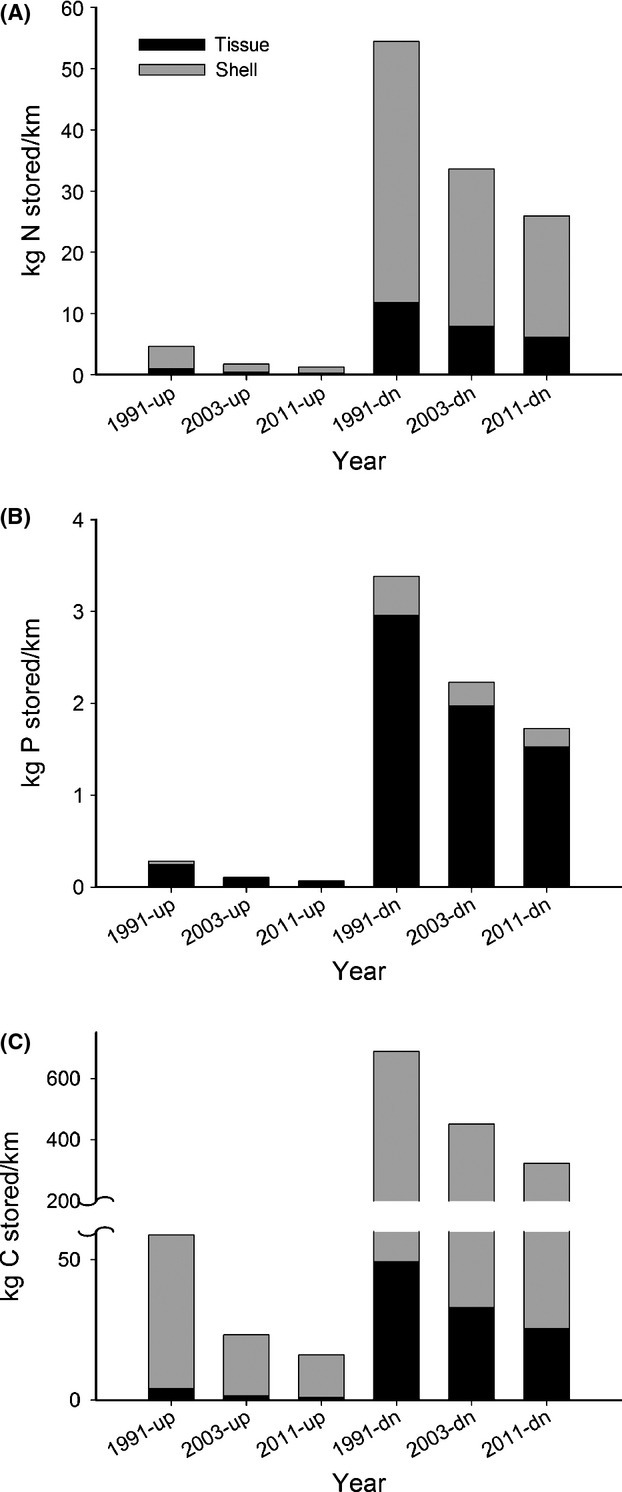
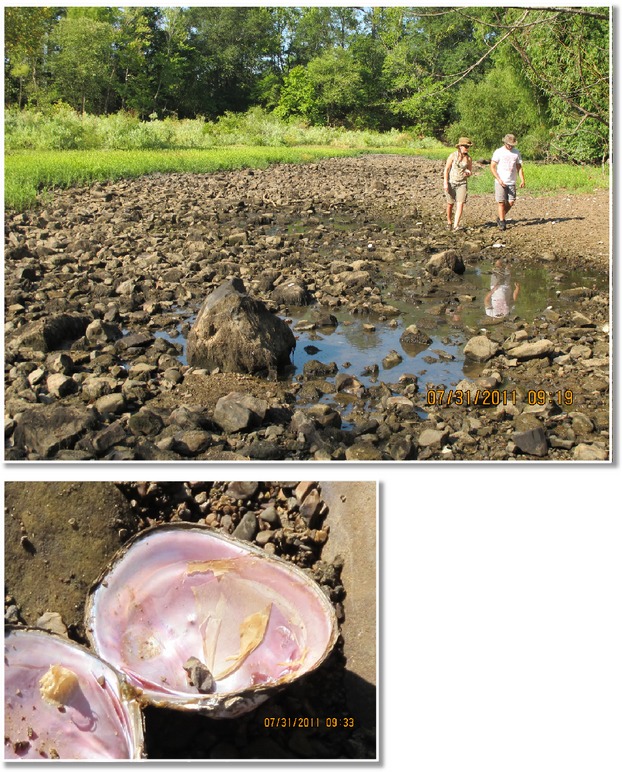
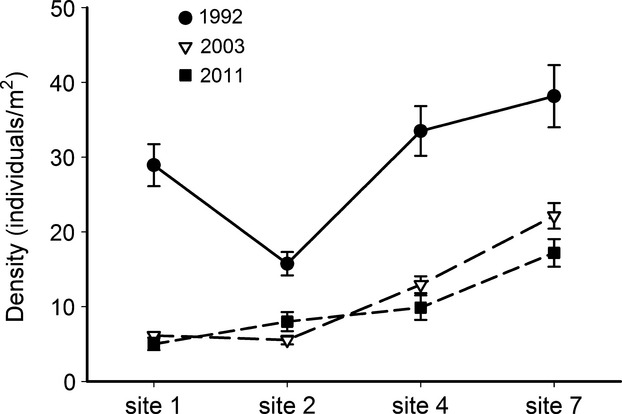
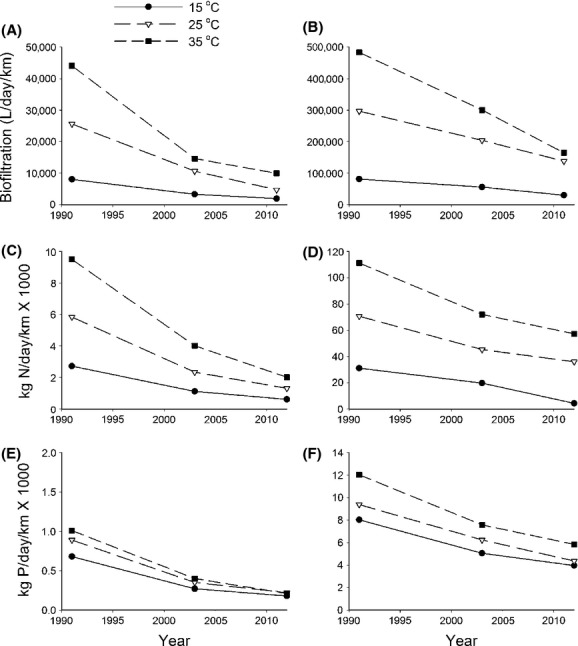
Extreme hydro-meteorological events such as droughts are becoming more frequent, intense, and persistent. This is particularly true in the south central USA, where rapidly growing urban areas are running out of water and human-engineered water storage and management are leading to broad-scale changes in flow regimes. The Kiamichi River in southeastern Oklahoma, USA, has high fish and freshwater mussel biodiversity. However, water from this rural river is desired by multiple urban areas and other entities. Freshwater mussels are large, long-lived filter feeders that provide important ecosystem services. We ask how observed changes in mussel biomass and community composition resulting from drought-induced changes in flow regimes might lead to changes in river ecosystem services. We sampled mussel communities in this river over a 20-year period that included two severe droughts. We then used laboratory-derived physiological rates and river-wide estimates of species-specific mussel biomass to estimate three aggregate ecosystem services provided by mussels over this time period: biofiltration, nutrient recycling (nitrogen and phosphorus), and nutrient storage (nitrogen, phosphorus, and carbon). Mussel populations declined over 60%, and declines were directly linked to drought-induced changes in flow regimes. All ecosystem services declined over time and mirrored biomass losses. Mussel declines were exacerbated by human water management, which has increased the magnitude and frequency of hydrologic drought in downstream reaches of the river. Freshwater mussels are globally imperiled and declining around the world. Summed across multiple streams and rivers, mussel losses similar to those we document here could have considerable consequences for downstream water quality although lost biofiltration and nutrient retention. While we cannot control the frequency and severity of climatological droughts, water releases from reservoirs could be used to augment stream flows and prevent compounded anthropogenic stressors.
干旱等极端水文气象事件正变得愈发频繁、强烈且持久。美国中南部地区尤其如此,在那里,快速发展的城市地区水资源告急,人工蓄水和管理措施正在引发流域水流状况的大规模变化。美国俄克拉荷马州东南部的基亚米奇河拥有丰富的鱼类和淡水贻贝生物多样性。然而,这条乡村河流的水受到多个城市地区和其他实体的觊觎。淡水贻贝是大型、长寿的滤食性生物,提供重要的生态系统服务。我们探究了由干旱引发的水流状况变化导致的贻贝生物量和群落组成变化如何可能引起河流生态系统服务的改变。我们在20年时间里对这条河中的贻贝群落进行了采样,这期间经历了两次严重干旱。然后,我们利用实验室得出的生理速率和全河特定物种贻贝生物量的估计值,来估算这一时期贻贝提供的三项总体生态系统服务:生物过滤、养分循环(氮和磷)以及养分储存(氮、磷和碳)。贻贝数量减少了60%以上,且减少与干旱引发的水流状况变化直接相关。所有生态系统服务都随时间下降,且与生物量损失情况一致。人类的水资源管理加剧了贻贝数量的减少,这增加了河流下游水文干旱的强度和频率。淡水贻贝在全球范围内受到威胁,数量正在减少。多条溪流和河流累计起来,类似我们记录的贻贝损失可能会对下游水质产生重大影响,尽管生物过滤和养分保留功能丧失。虽然我们无法控制气候干旱的频率和严重程度,但水库放水可用于增加溪流流量,防止人为压力叠加。