Shi Yue, Wang Jihan, Xin Zhuoyuan, Duan Zipeng, Wang Guoqing, Li Fan
Department of Pathogenobiology, The Key Laboratory of Zoonosis, Chinese Ministry of Education, College of Basic Medicine, Jilin University, Changchun, Jilin, China.
Department of Pathogenobiology, The Key Laboratory of Zoonosis, Chinese Ministry of Education, College of Basic Medicine, Jilin University, Changchun, Jilin, China; The Key Laboratory for Bionics Engineering, Ministry of Education, China, Jilin University, Changchun, China.
PLoS One. 2015 Apr 10;10(4):e0122882. doi: 10.1371/journal.pone.0122882. eCollection 2015.
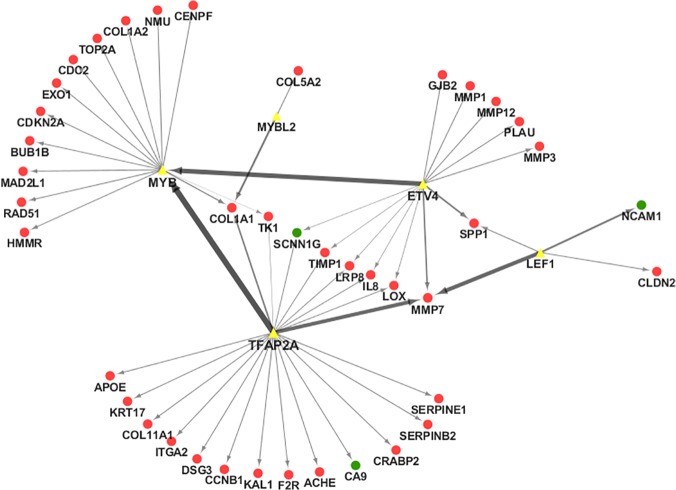
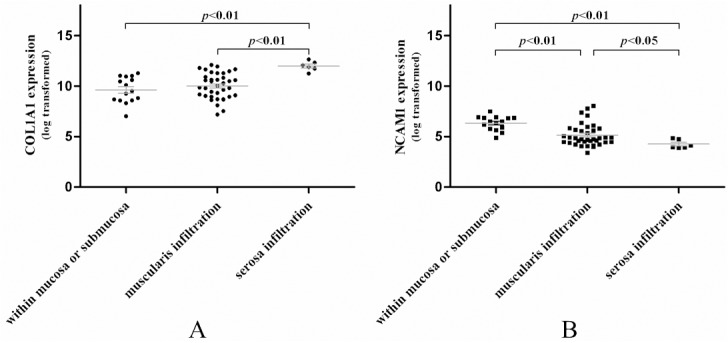
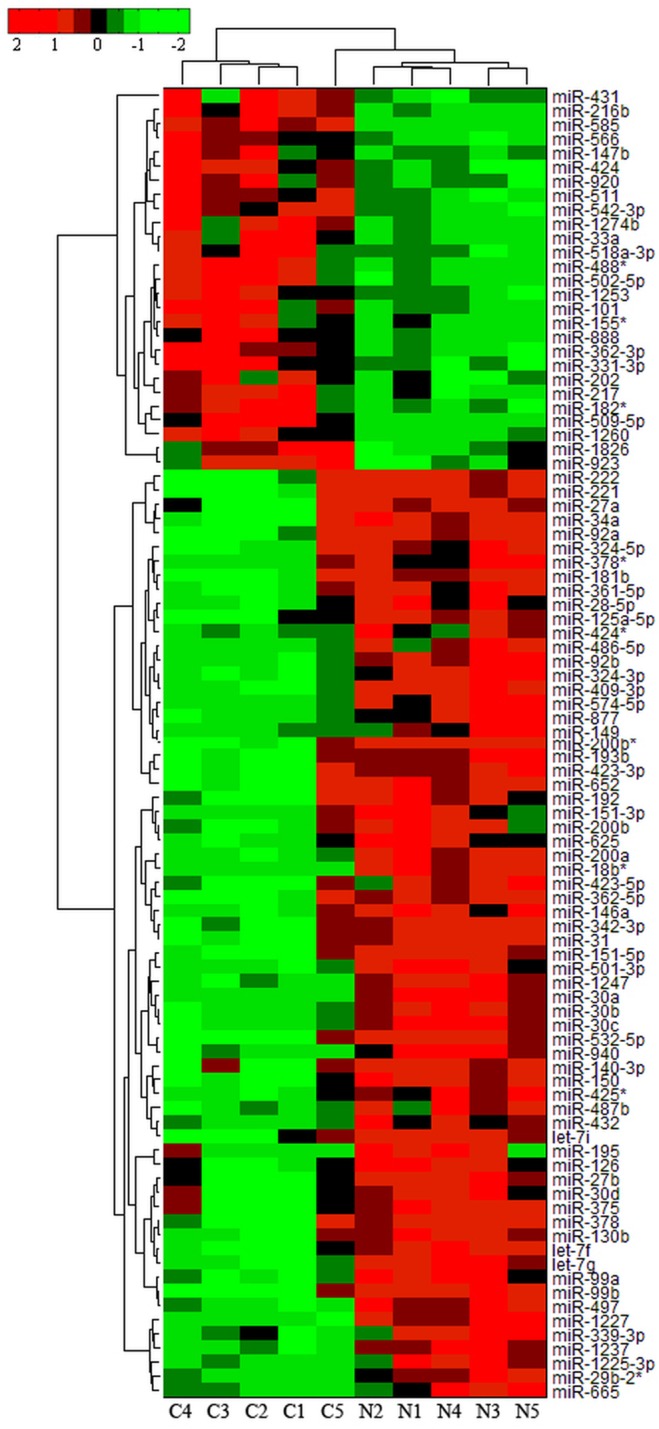
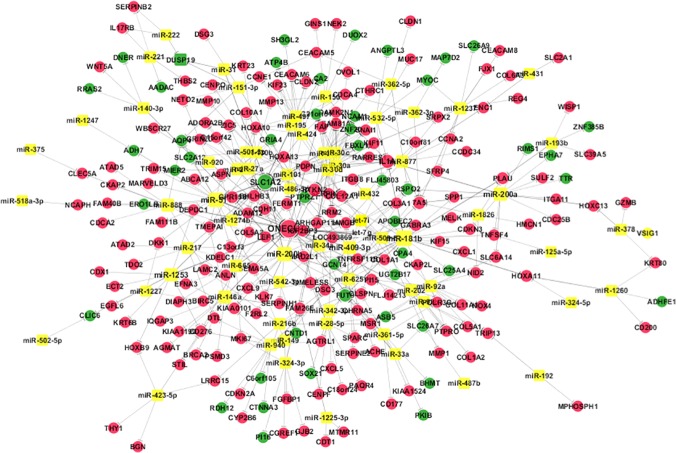
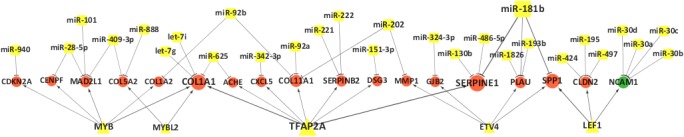
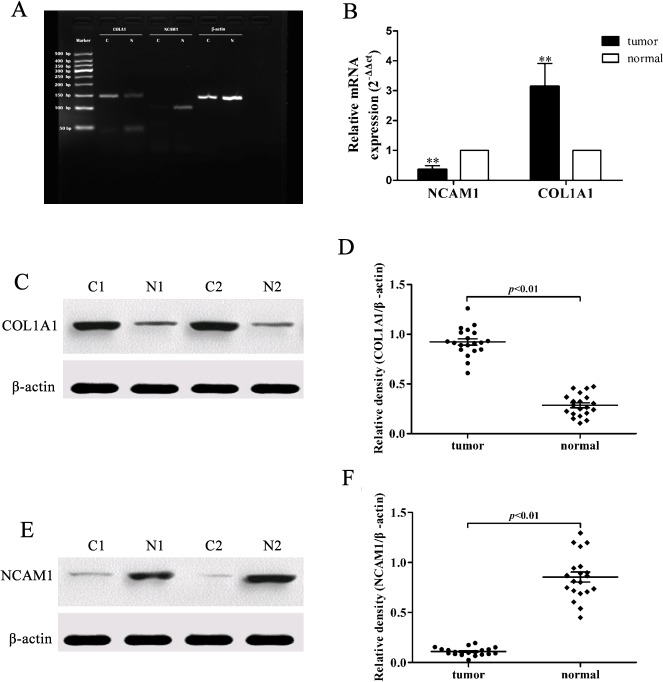
Aberrant miRNA expression abnormally modulates gene expression in cells and can contribute to tumorigenesis in humans. This study identified functionally relevant differentially expressed genes using the transcription factors and miRNA-co-regulated network analysis for gastric cancer. The TF-miRNA co-regulatory network was constructed based on data obtained from cDNA microarray and miRNA expression profiling of gastric cancer tissues. The network along with their co-regulated genes was analyzed using Database for Annotation, Visualization and Integrated Discovery (DAVID) and Transcriptional Regulatory Element Database (TRED). We found eighteen (17 up-regulated and 1 down-regulated) differentially expressed genes that were co-regulated by transcription factors and miRNAs. KEGG pathway analysis revealed that these genes were part of the extracellular matrix-receptor interaction and focal adhesion signaling pathways. In addition, qRT- PCR and Western blot data showed an increase in COL1A1 and decrease in NCAM1 mRNA and protein levels in gastric cancer tissues. Thus, these data provided the first evidence to illustrate that altered gene network was associated with gastric cancer invasion. Further study with a large sample size and more functional experiments is needed to confirm these data and contribute to diagnostic and treatment strategies for gastric cancer.
异常的微小RNA(miRNA)表达会异常调节细胞中的基因表达,并可能导致人类肿瘤发生。本研究通过转录因子和miRNA共同调控网络分析,鉴定出与胃癌功能相关的差异表达基因。基于从胃癌组织的cDNA微阵列和miRNA表达谱获得的数据构建了TF-miRNA共调控网络。使用注释、可视化和综合发现数据库(DAVID)和转录调控元件数据库(TRED)对该网络及其共同调控的基因进行了分析。我们发现18个(17个上调和1个下调)差异表达基因受到转录因子和miRNA的共同调控。KEGG通路分析表明,这些基因是细胞外基质-受体相互作用和粘着斑信号通路的一部分。此外,qRT-PCR和蛋白质印迹数据显示,胃癌组织中COL1A1增加,而NCAM1 mRNA和蛋白质水平降低。因此,这些数据首次证明基因网络改变与胃癌侵袭有关。需要进行更大样本量的进一步研究和更多功能实验来证实这些数据,并为胃癌的诊断和治疗策略做出贡献。