Bright Molly G, Murphy Kevin
Division of Clinical Neurology, School of Medicine, University of Nottingham, Nottingham, United Kingdom; Sir Peter Mansfield Imaging Centre, School of Physics, University of Nottingham, Nottingham, United Kingdom; Cardiff University Brain Research Imaging Centre (CUBRIC), School of Psychology, Cardiff University, Cardiff, United Kingdom.
Cardiff University Brain Research Imaging Centre (CUBRIC), School of Psychology, Cardiff University, Cardiff, United Kingdom.
Neuroimage. 2015 Jul 1;114:158-69. doi: 10.1016/j.neuroimage.2015.03.070. Epub 2015 Apr 7.
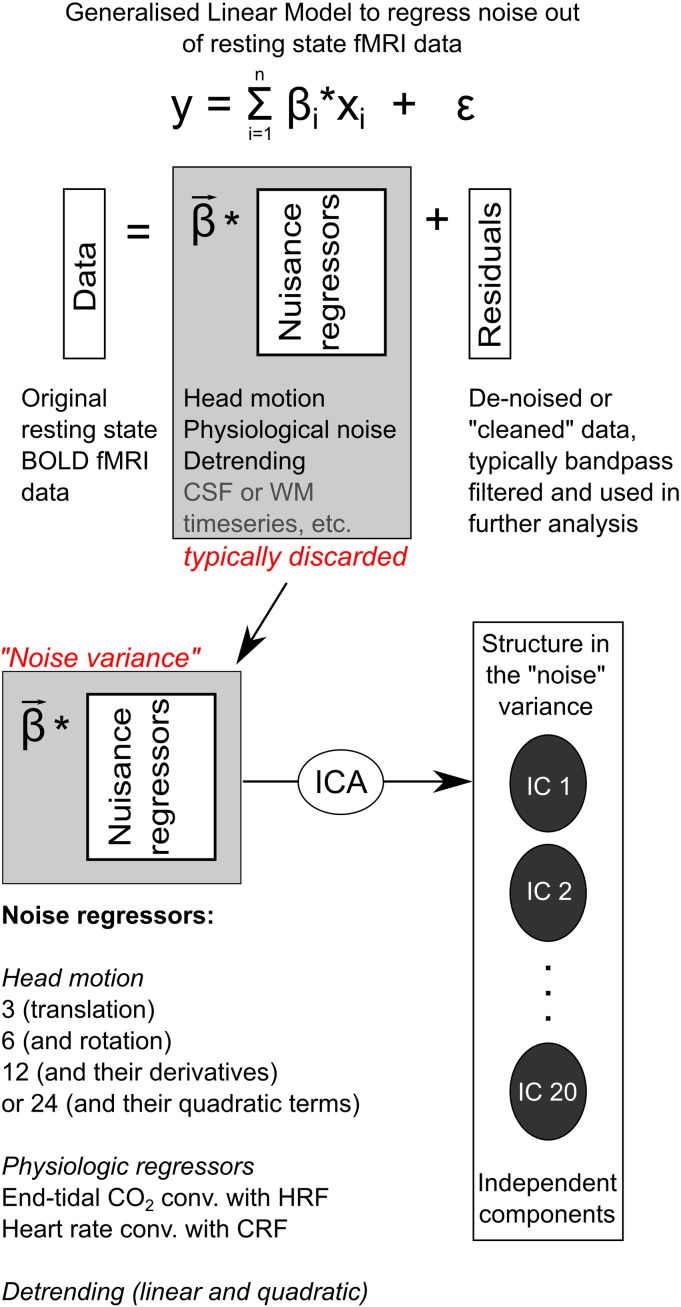
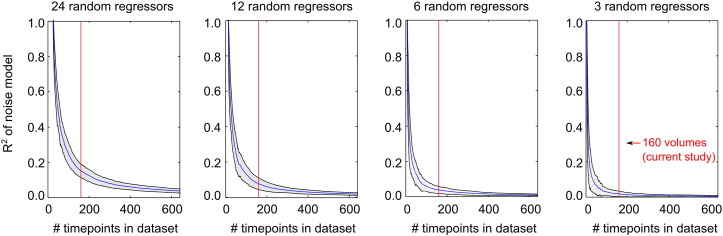
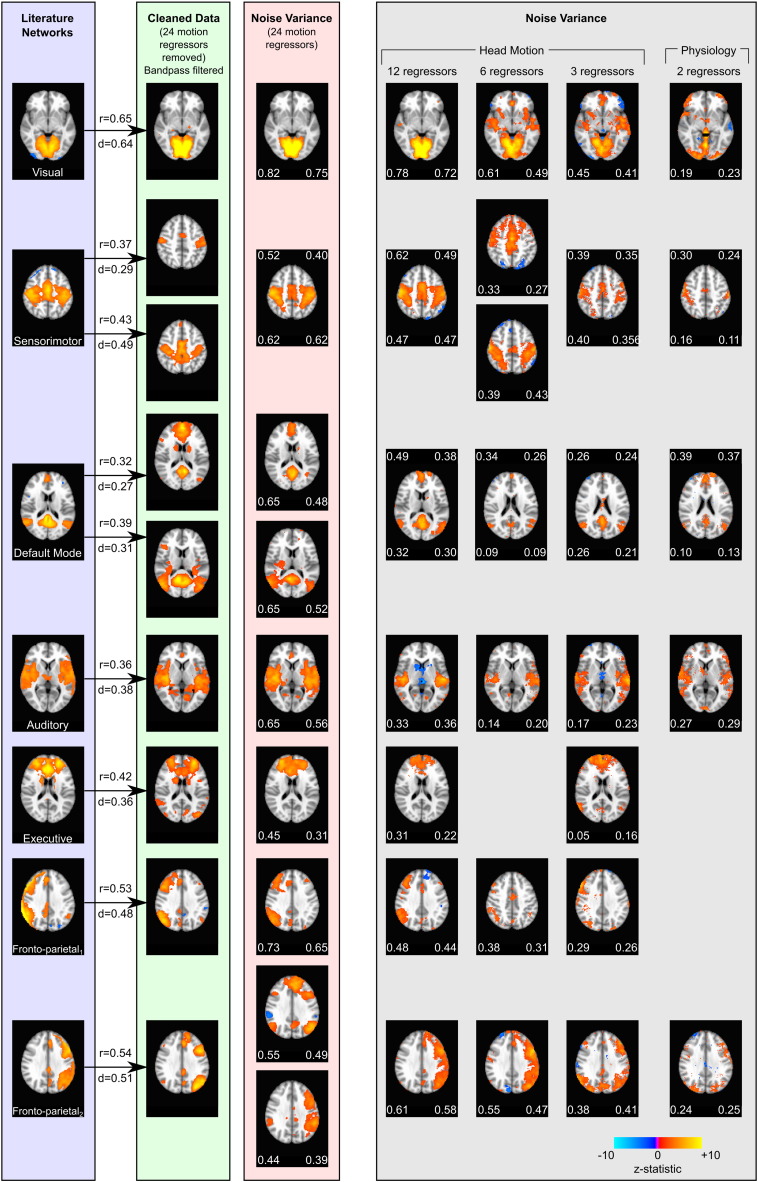
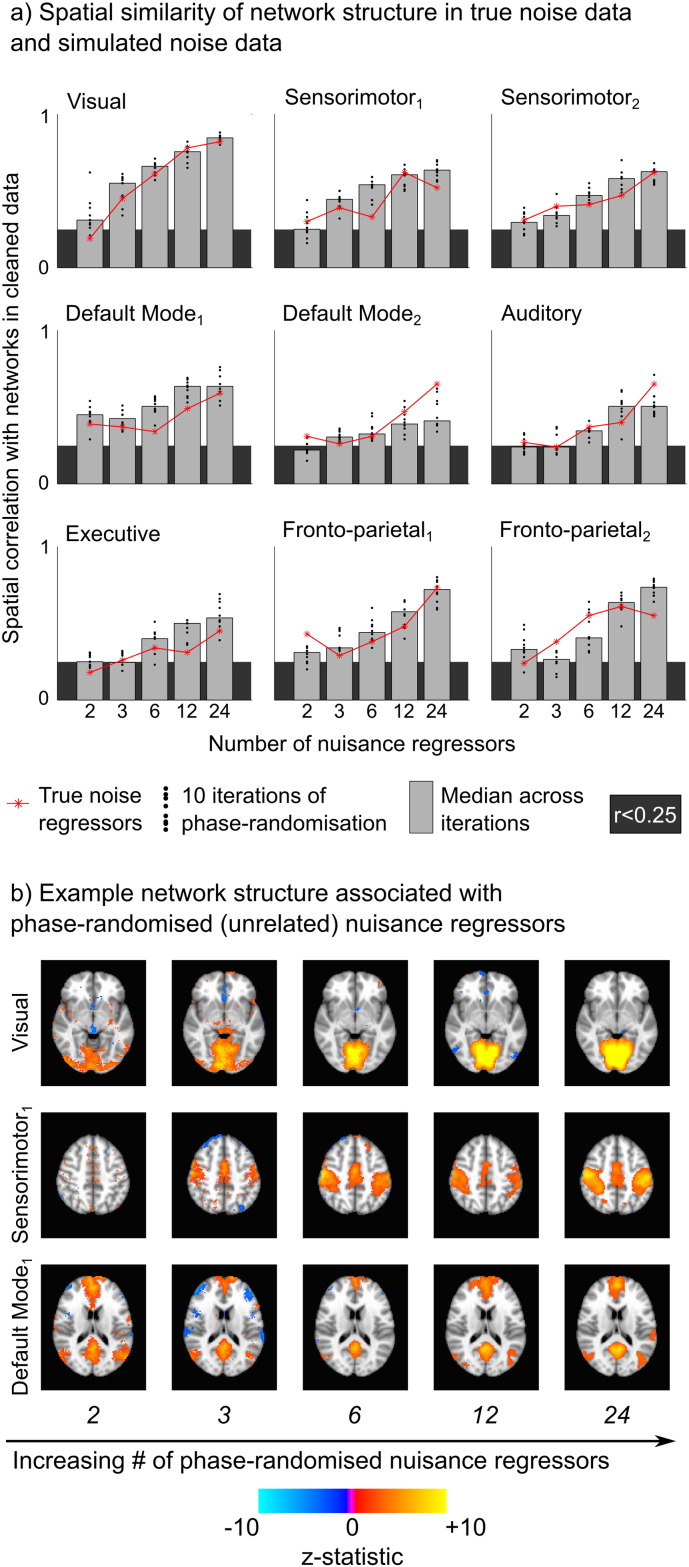
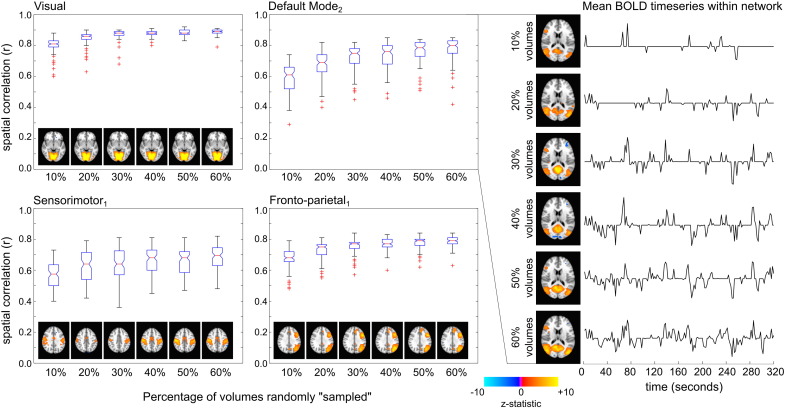
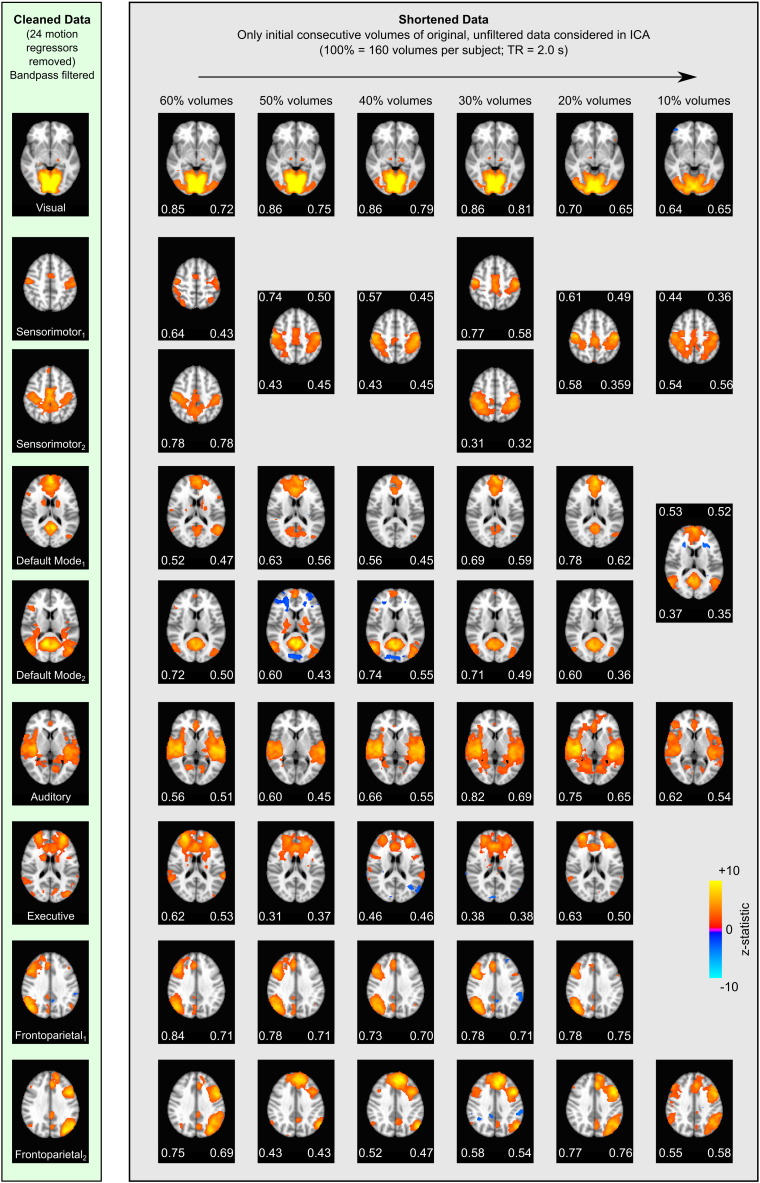
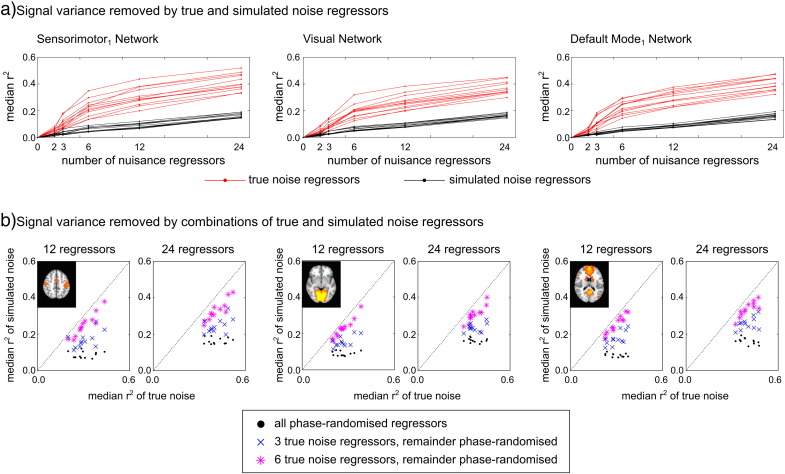
Noise correction is a critical step towards accurate mapping of resting state BOLD fMRI connectivity. Noise sources related to head motion or physiology are typically modelled by nuisance regressors, and a generalised linear model is applied to regress out the associated signal variance. In this study, we use independent component analysis (ICA) to characterise the data variance typically discarded in this pre-processing stage in a cohort of 12 healthy volunteers. The signal variance removed by 24, 12, 6, or only 3 head motion parameters demonstrated network structure typically associated with functional connectivity, and certain networks were discernable in the variance extracted by as few as 2 physiologic regressors. Simulated nuisance regressors, unrelated to the true data noise, also removed variance with network structure, indicating that any group of regressors that randomly sample variance may remove highly structured "signal" as well as "noise." Furthermore, to support this we demonstrate that random sampling of the original data variance continues to exhibit robust network structure, even when as few as 10% of the original volumes are considered. Finally, we examine the diminishing returns of increasing the number of nuisance regressors used in pre-processing, showing that excessive use of motion regressors may do little better than chance in removing variance within a functional network. It remains an open challenge to understand the balance between the benefits and confounds of noise correction using nuisance regressors.
噪声校正是准确绘制静息态功能磁共振成像(BOLD fMRI)连接性的关键步骤。与头部运动或生理相关的噪声源通常由干扰回归器建模,并应用广义线性模型来回归去除相关的信号方差。在本研究中,我们使用独立成分分析(ICA)来表征12名健康志愿者队列在这个预处理阶段通常被丢弃的数据方差。由24、12、6或仅3个头部运动参数去除的信号方差显示出通常与功能连接相关的网络结构,并且在由少至2个生理回归器提取的方差中可以辨别出某些网络。与真实数据噪声无关的模拟干扰回归器也去除了具有网络结构的方差,这表明随机采样方差的任何一组回归器可能会去除高度结构化的“信号”以及“噪声”。此外,为了支持这一点,我们证明即使只考虑原始体积的10%,对原始数据方差进行随机采样仍会持续呈现出稳健的网络结构。最后,我们研究了增加预处理中使用的干扰回归器数量的收益递减情况,表明过度使用运动回归器在去除功能网络内的方差方面可能并不比随机情况好多少。理解使用干扰回归器进行噪声校正的益处和混淆因素之间的平衡仍然是一个开放的挑战。