Yang Zhengshi, Zhuang Xiaowei, Sreenivasan Karthik, Mishra Virendra, Cordes Dietmar
Cleveland Clinic Lou Ruvo Center for Brain Health, Las Vegas, NV, United States.
Department of Psychology and Neuroscience, University of Colorado, Boulder, Boulder, CO, United States.
Front Neurosci. 2019 Feb 28;13:169. doi: 10.3389/fnins.2019.00169. eCollection 2019.
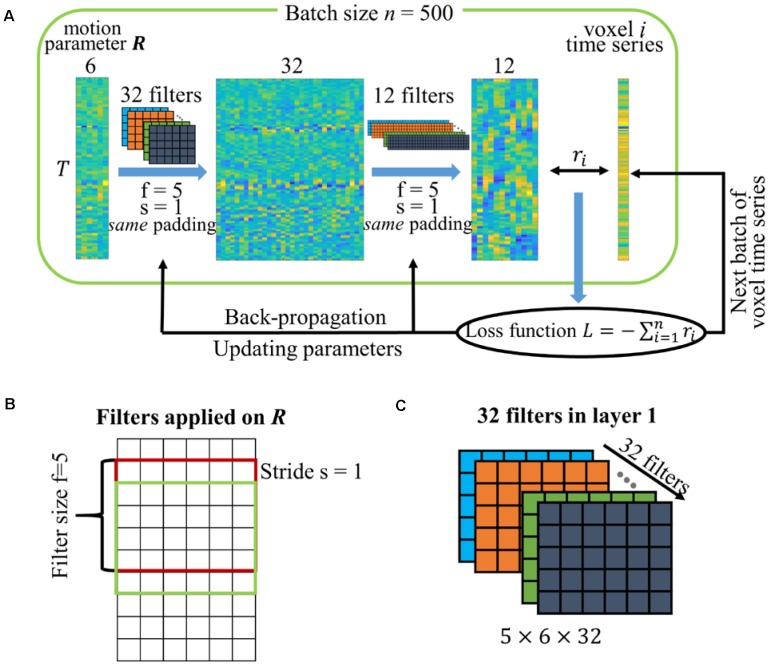
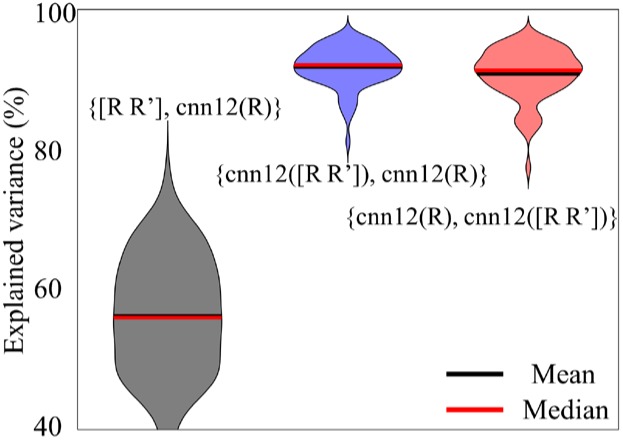
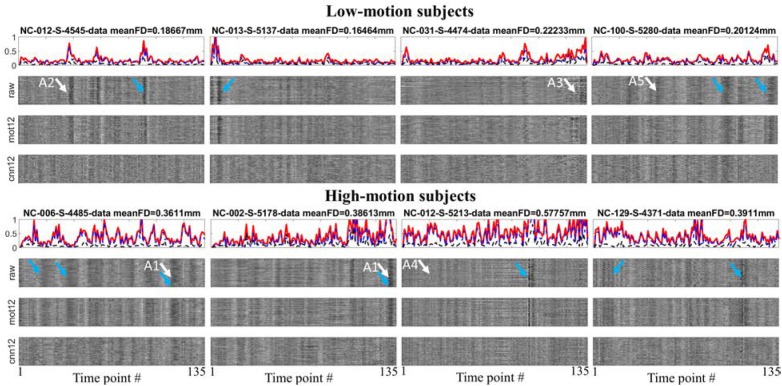
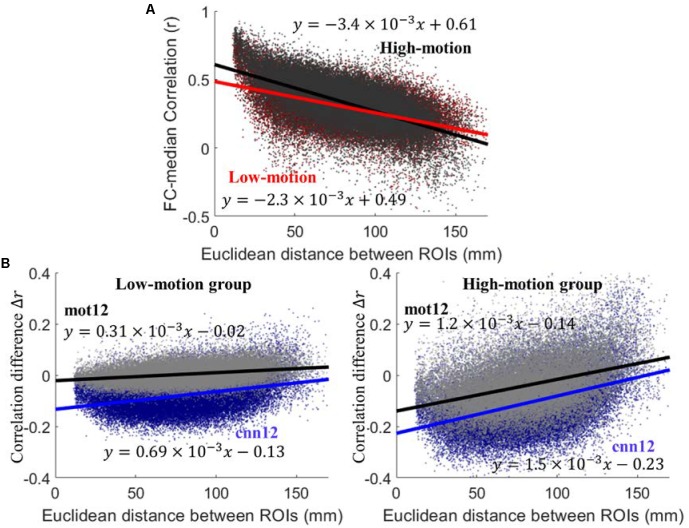
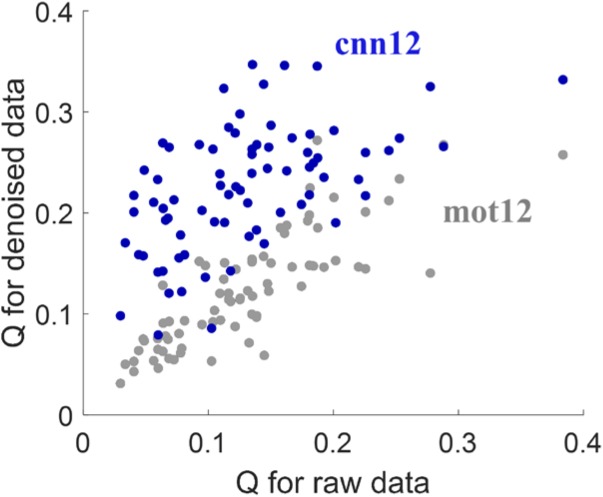
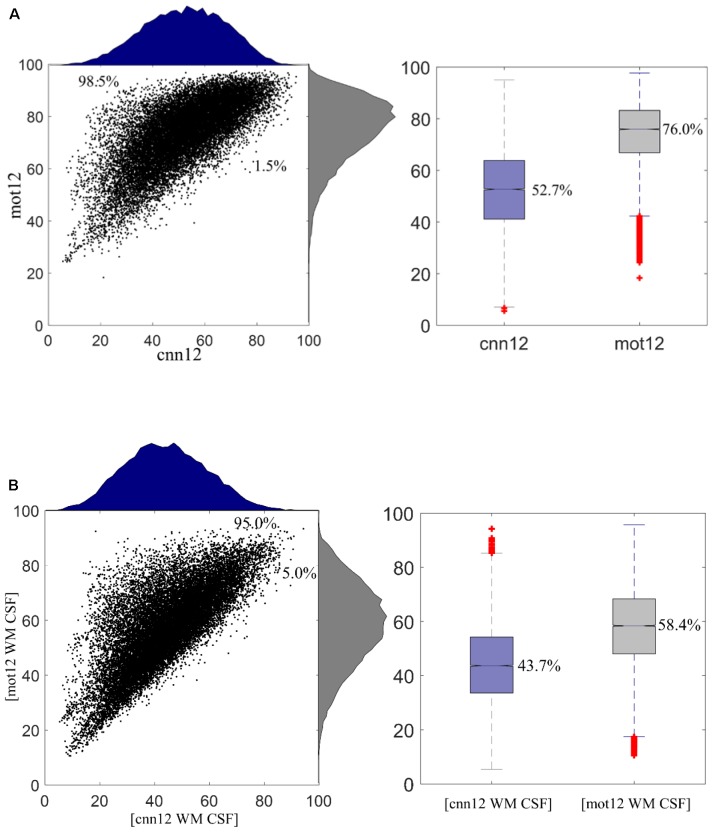
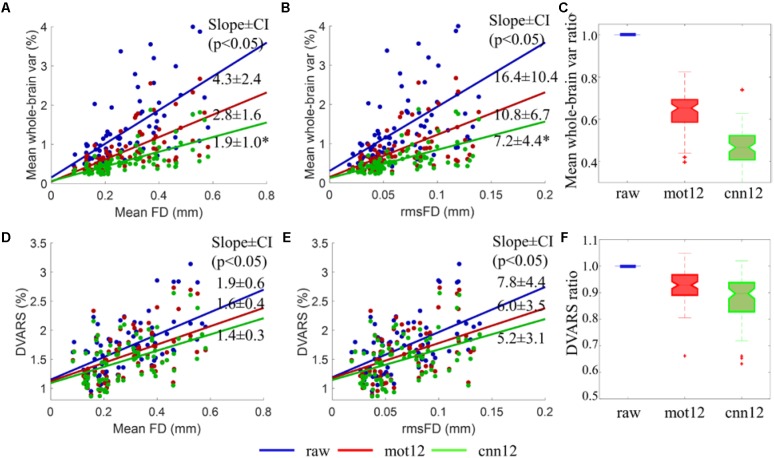
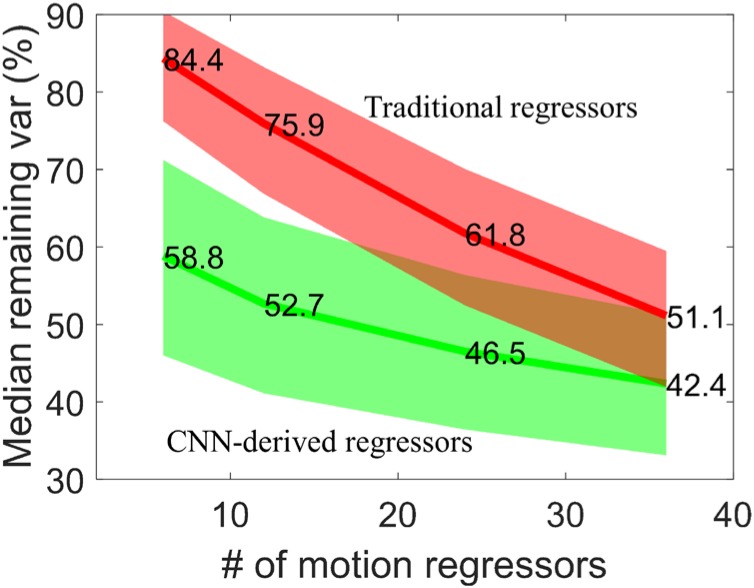
Resting-state functional magnetic resonance imaging (rs-fMRI) based on the blood-oxygen-level-dependent (BOLD) signal has been widely used in healthy individuals and patients to investigate brain functions when the subjects are in a resting or task-negative state. Head motion considerably confounds the interpretation of rs-fMRI data. Nuisance regression is commonly used to reduce motion-related artifacts with six motion parameters estimated from rigid-body realignment as regressors. To further compensate for the effect of head movement, the first-order temporal derivatives of motion parameters and squared motion parameters were proposed previously as possible motion regressors. However, these additional regressors may not be sufficient to model the impact of head motion because of the complexity of motion artifacts. In addition, while using more motion-related regressors could explain more variance in the data, the neural signal may also be removed with increasing number of motion regressors. To better model how in-scanner motion affects rs-fMRI data, a robust and automated convolutional neural network (CNN) model is developed in this study to obtain optimal motion regressors. The CNN network consists of two temporal convolutional layers and the output from the network are the derived motion regressors used in the following nuisance regression. The temporal convolutional layer in the network can non-parametrically model the prolonged effect of head motion. The set of regressors derived from the neural network is compared with the same number of regressors used in a traditional nuisance regression approach. It is demonstrated that the CNN-derived regressors can more effectively reduce motion-related artifacts.
基于血氧水平依赖(BOLD)信号的静息态功能磁共振成像(rs-fMRI)已被广泛应用于健康个体和患者,以研究受试者处于静息或任务负态时的脑功能。头部运动极大地混淆了rs-fMRI数据的解读。通常使用干扰回归来减少与运动相关的伪影,其中从刚体重新对齐估计的六个运动参数作为回归变量。为了进一步补偿头部运动的影响,先前有人提出将运动参数的一阶时间导数和运动参数的平方作为可能的运动回归变量。然而,由于运动伪影的复杂性,这些额外的回归变量可能不足以对头部运动的影响进行建模。此外,虽然使用更多与运动相关的回归变量可以解释数据中更多的方差,但随着运动回归变量数量的增加,神经信号也可能被去除。为了更好地模拟扫描仪内运动如何影响rs-fMRI数据,本研究开发了一种强大的自动化卷积神经网络(CNN)模型,以获得最佳的运动回归变量。CNN网络由两个时间卷积层组成,网络的输出是在后续干扰回归中使用的派生运动回归变量。网络中的时间卷积层可以非参数地模拟头部运动的长期影响。将从神经网络派生的回归变量集与传统干扰回归方法中使用的相同数量的回归变量进行比较。结果表明,CNN派生的回归变量可以更有效地减少与运动相关的伪影。