Valiuliene Giedre, Stirblyte Ieva, Cicenaite Dovile, Kaupinis Algirdas, Valius Mindaugas, Navakauskiene Ruta
Department of Molecular Cell Biology, Institute of Biochemistry, Vilnius University, Vilnius, Lithuania.
Proteomics Centre, Institute of Biochemistry, Vilnius University, Vilnius, Lithuania.
J Cell Mol Med. 2015 Jul;19(7):1742-55. doi: 10.1111/jcmm.12550. Epub 2015 Apr 11.
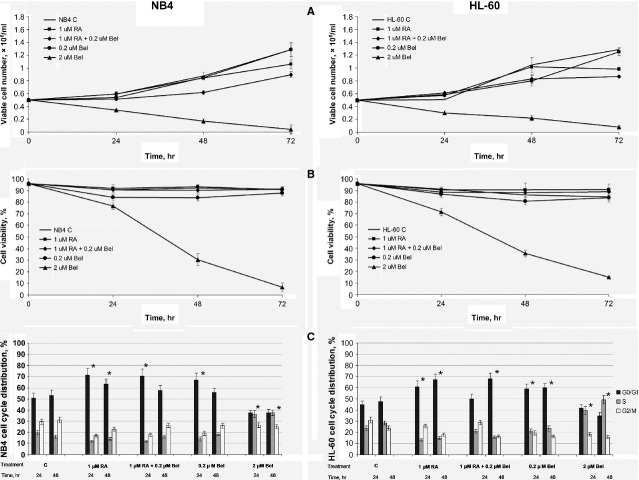
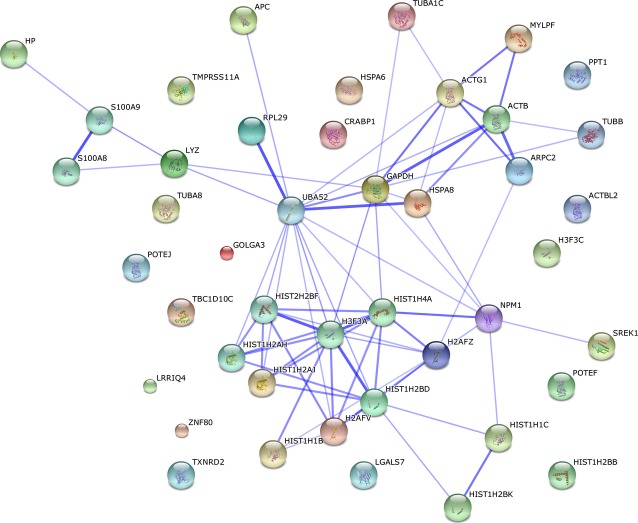
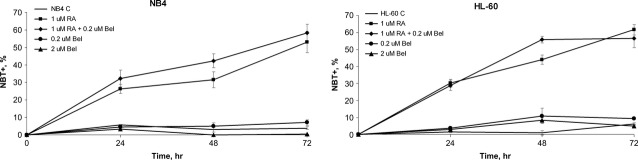
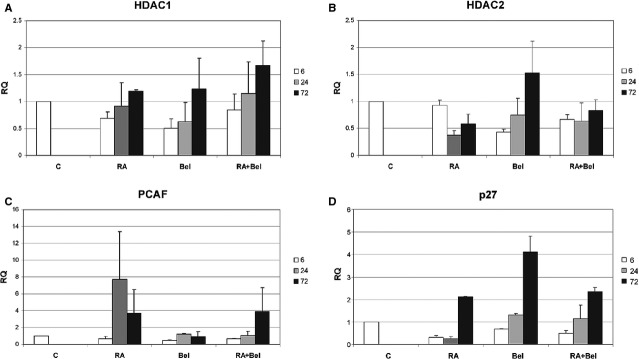
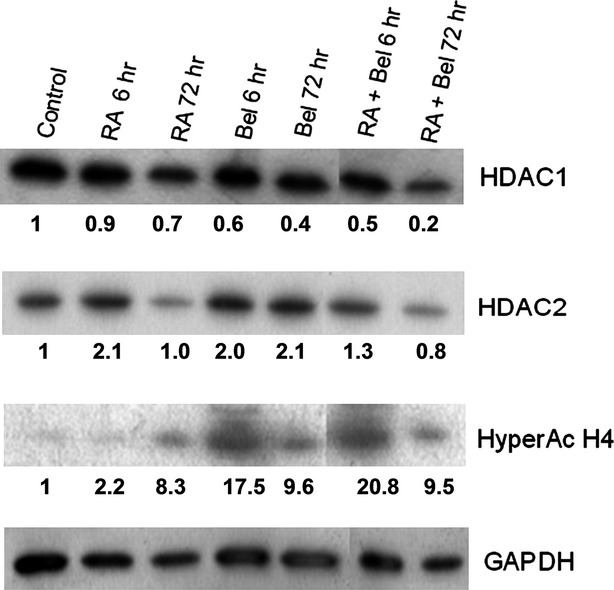
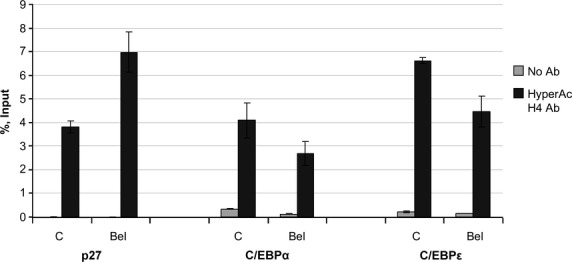
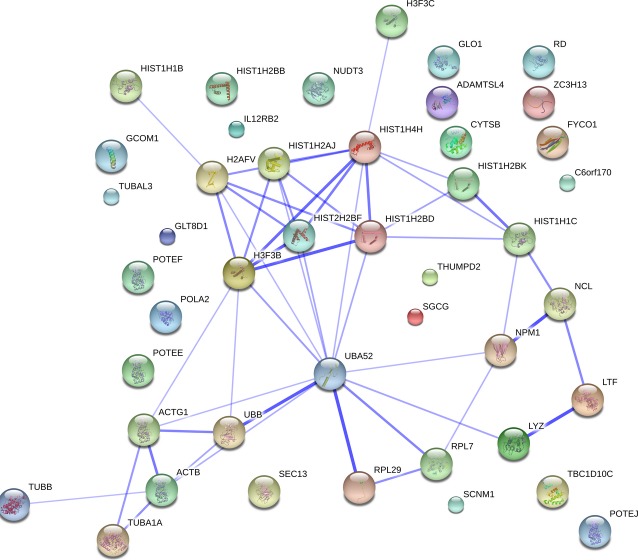
Epigenetic changes play a significant role in leukaemia pathogenesis, therefore histone deacetylases (HDACis) are widely accepted as an attractive strategy for acute promyelocytic leukaemia (APL) treatment. Belinostat (Bel, PXD101), a hydroxamate-type HDACi, has proved to be a promising cure in clinical trials for solid tumours and haematological malignancies. However, insight into molecular effects of Bel on APL, is still lacking. In this study, we investigated the effect of Bel alone and in combination with differentiation inducer retinoic acid (RA) on human promyelocytic leukaemia NB4 and HL-60 cells. We found that treatment with Bel, depending on the dosage used, inhibits cell proliferation, whereas in combination with RA enhances and accelerates granulocytic leukaemia cell differentiation. We also evaluated the effect of used treatments with Bel and RA on certain epigenetic modifiers (HDAC1, HDAC2, PCAF) as well as cell cycle regulators (p27) gene expression and protein level modulation. We showed that Bel in combination with RA up-regulates basal histone H4 hyperacetylation level more strongly compared to Bel or RA alone. Furthermore, chromatin immunoprecipitation assay indicated that Bel induces the accumulation of hyperacetylated histone H4 at the p27 promoter region. Mass spectrometry analysis revealed that in control NB4 cells, hyperacetylated histone H4 is mainly found in association with proteins involved in DNA replication and transcription, whereas after Bel treatment it is found with proteins implicated in pro-apoptotic processes, in defence against oxidative stress and tumour suppression. Summarizing, our study provides some novel insights into the molecular mechanisms of HDACi Bel action on APL cells.
表观遗传变化在白血病发病机制中起重要作用,因此组蛋白去乙酰化酶(HDACis)作为急性早幼粒细胞白血病(APL)治疗的一种有吸引力的策略已被广泛接受。贝利司他(Bel,PXD101)是一种异羟肟酸型HDACi,已被证明在实体瘤和血液系统恶性肿瘤的临床试验中是一种有前景的治疗方法。然而,对Bel对APL的分子作用仍缺乏深入了解。在本研究中,我们研究了Bel单独使用以及与分化诱导剂维甲酸(RA)联合使用对人早幼粒细胞白血病NB4和HL-60细胞的影响。我们发现,根据所用剂量,Bel处理可抑制细胞增殖,而与RA联合使用则可增强并加速粒细胞白血病细胞分化。我们还评估了Bel和RA处理对某些表观遗传修饰因子(HDAC1、HDAC2、PCAF)以及细胞周期调节因子(p27)基因表达和蛋白质水平调节的影响。我们发现,与单独使用Bel或RA相比,Bel与RA联合使用能更强烈地上调基础组蛋白H4的高乙酰化水平。此外,染色质免疫沉淀分析表明,Bel可诱导p27启动子区域高乙酰化组蛋白H4的积累。质谱分析显示,在对照NB4细胞中,高乙酰化组蛋白H4主要与参与DNA复制和转录的蛋白质相关,而在Bel处理后,它与参与促凋亡过程、抗氧化应激和肿瘤抑制的蛋白质相关。总之,我们的研究为HDACi Bel作用于APL细胞的分子机制提供了一些新的见解。