Saito Kenji, Cao Xuehong, He Yanlin, Xu Yong
Department of Pediatrics, USDA Children's Nutrition Research Center, Baylor College of Medicine, Houston, Texas, USA.
Obesity (Silver Spring). 2015 May;23(5):919-26. doi: 10.1002/oby.21099. Epub 2015 Apr 10.
Estrogens can act in the brain to prevent body weight gain. Tremendous research efforts have been focused on estrogen physiology in the brain in the context of body weight control; estrogen receptors and the related signals have been attractive targets for development of new obesity therapies. The objective is to review recent findings on these aspects.
Recent studies that used conventional and conditional knockout mouse strains to delineate the cellular and molecular mechanisms for the beneficial effects of estrogens on body weight balance are reviewed. Emerging genetic tools that could further benefit the field of estrogen research and a newly developed estrogen-based regimen that produces body weight-lowering benefits also are discussed.
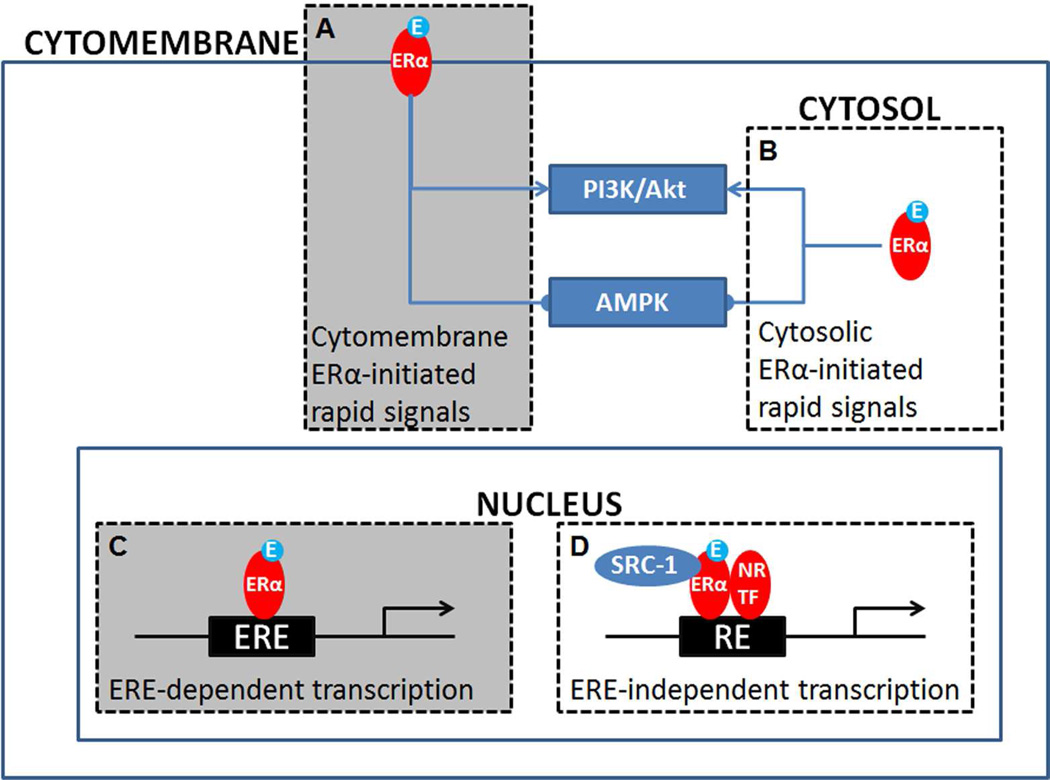
The body weight-lowering effects of estrogens are mediated by multiple forms of estrogen receptors in different brain regions through distinct but coordinated mechanisms. Both rapid signals and "classic" nuclear receptor actions of estrogen receptors appear to contribute to estrogenic regulation of body weight.
Estrogen receptors and associated signal networks are potential targets for obesity treatment, and further investigations are warranted.
雌激素可作用于大脑以防止体重增加。在体重控制的背景下,大量研究工作聚焦于大脑中的雌激素生理学;雌激素受体及相关信号一直是新型肥胖治疗药物研发的诱人靶点。目的是综述这些方面的最新研究发现。
综述了近期利用传统及条件性基因敲除小鼠品系来阐明雌激素对体重平衡有益作用的细胞和分子机制的研究。还讨论了可能进一步推动雌激素研究领域发展的新兴基因工具以及一种新开发的具有降低体重益处的基于雌激素的治疗方案。
雌激素的体重降低作用由不同脑区的多种形式雌激素受体通过不同但相互协调的机制介导。雌激素受体的快速信号和“经典”核受体作用似乎都有助于雌激素对体重的调节。
雌激素受体及相关信号网络是肥胖治疗的潜在靶点,有必要进行进一步研究。