Mei Yufei, Jiang Chun, Wan You, Lv Jihui, Jia Jianping, Wang Xiaomin, Yang Xu, Tong Zhiqian
Alzheimer's disease Center, Beijing Institute for Brain Disorders, Capital Medical University, Beijing, 100069, China.
Section of Environmental Biomedicine, Hubei Key Laboratory of Genetic Regulation and Integrative Biology, College of Life Sciences, Central China Normal University, Wuhan, 430079, China.
Aging Cell. 2015 Aug;14(4):659-68. doi: 10.1111/acel.12345. Epub 2015 Apr 11.
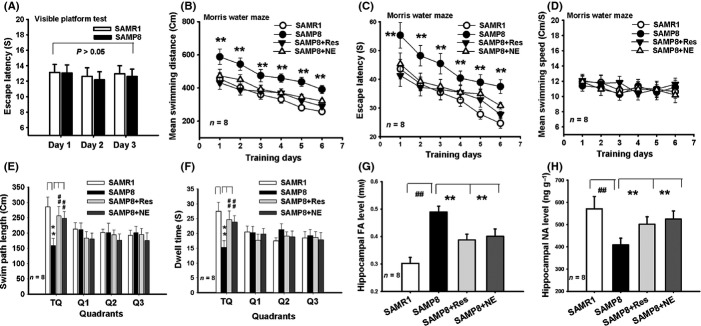
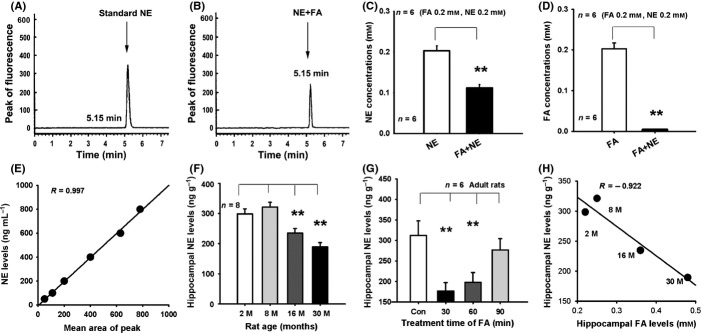
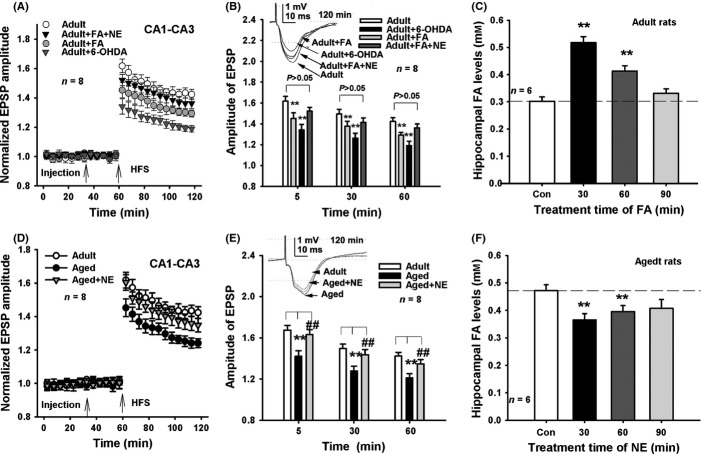
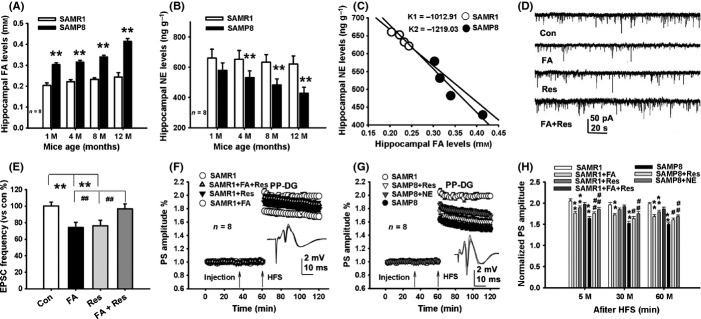
A norepinephrine (NE) deficiency has been observed in aged rats and in patients with Alzheimer's disease and is thought to cause cognitive disorder. Which endogenous factor induces NE depletion, however, is largely unknown. In this study, we investigated the effects of aging-associated formaldehyde (FA) on the inactivation of NE in vitro and in vivo, and on memory behaviors in rodents. The results showed that age-related DNA demethylation led to hippocampal FA accumulation, and when this occurred, the hippocampal NE content was reduced in healthy male rats of different ages. Furthermore, biochemical analysis revealed that FA rapidly inactivated NE in vitro and that an intrahippocampal injection of FA markedly reduced hippocampal NE levels in healthy adult rats. Unexpectedly, an injection of FA (at a pathological level) or 6-hydroxydopamine (6-OHDA, a NE depletor) can mimic age-related NE deficiency, long-term potentiation (LTP) impairments, and spatial memory deficits in healthy adult rats. Conversely, an injection of NE reversed age-related deficits in both LTP and memory in aged rats. In agreement with the above results, the senescence-accelerated prone 8 (SAMP8) mice also exhibited a severe deficit in LTP and memory associated with a more severe NE deficiency and FA accumulation, when compared with the age-matched, senescence-resistant 1 (SAMR1) mice. Injection of resveratrol (a natural FA scavenger) or NE into SAMP8 mice reversed FA accumulation and NE deficiency and restored the magnitude of LTP and memory. Collectively, these findings suggest that accumulated FA is a critical endogenous factor for aging-associated NE depletion and cognitive decline.
在老年大鼠和阿尔茨海默病患者中已观察到去甲肾上腺素(NE)缺乏,并且认为这会导致认知障碍。然而,究竟是哪种内源性因素导致NE耗竭在很大程度上尚不清楚。在本研究中,我们调查了与衰老相关的甲醛(FA)在体外和体内对NE失活的影响,以及对啮齿动物记忆行为的影响。结果表明,与年龄相关的DNA去甲基化导致海马体FA积累,当这种情况发生时,不同年龄的健康雄性大鼠海马体中的NE含量会降低。此外,生化分析表明,FA在体外能迅速使NE失活,并且向健康成年大鼠海马体内注射FA会显著降低海马体NE水平。出乎意料的是,注射FA(处于病理水平)或6-羟基多巴胺(6-OHDA,一种NE耗竭剂)可模拟健康成年大鼠中与年龄相关的NE缺乏、长时程增强(LTP)损伤和空间记忆缺陷。相反,注射NE可逆转老年大鼠LTP和记忆方面与年龄相关的缺陷。与上述结果一致,与年龄匹配的抗衰老1(SAMR1)小鼠相比,衰老加速易感性8(SAMP8)小鼠在LTP和记忆方面也表现出严重缺陷,且伴有更严重的NE缺乏和FA积累。向SAMP8小鼠注射白藜芦醇(一种天然的FA清除剂)或NE可逆转FA积累和NE缺乏,并恢复LTP和记忆的程度。总的来说,这些发现表明积累的FA是与衰老相关的NE耗竭和认知衰退的关键内源性因素。