Katayama Yuki, Terasawa Yuichi, Tachibana Masashi, Mizuguchi Hiroyuki, Sakurai Fuminori
Laboratory of Biochemistry and Molecular Biology, Graduate School of Pharmaceutical Sciences, Osaka University, 1-6 Yamadaoka, Suita, Osaka 565-0871, Japan.
Laboratory of Biochemistry and Molecular Biology, Graduate School of Pharmaceutical Sciences, Osaka University, 1-6 Yamadaoka, Suita, Osaka 565-0871, Japan ; Laboratory of Hepatic Differentiation Research, National Institute of Biomedical Innovation, 7-6-8 Asagi, Saito, Ibaraki, Osaka 567-0085, Japan ; Center for Advanced Medical Engineering and Informatics, Osaka University, 1-6 Yamadaoka, Suita, Osaka 565-0871, Japan ; Laboratory of iPS Research, Graduate School of Pharmaceutical Sciences, Osaka University, 1-6 Yamadaoka, Suita, Osaka 565-0871, Japan.
Biomed Res Int. 2015;2015:468457. doi: 10.1155/2015/468457. Epub 2015 Mar 19.
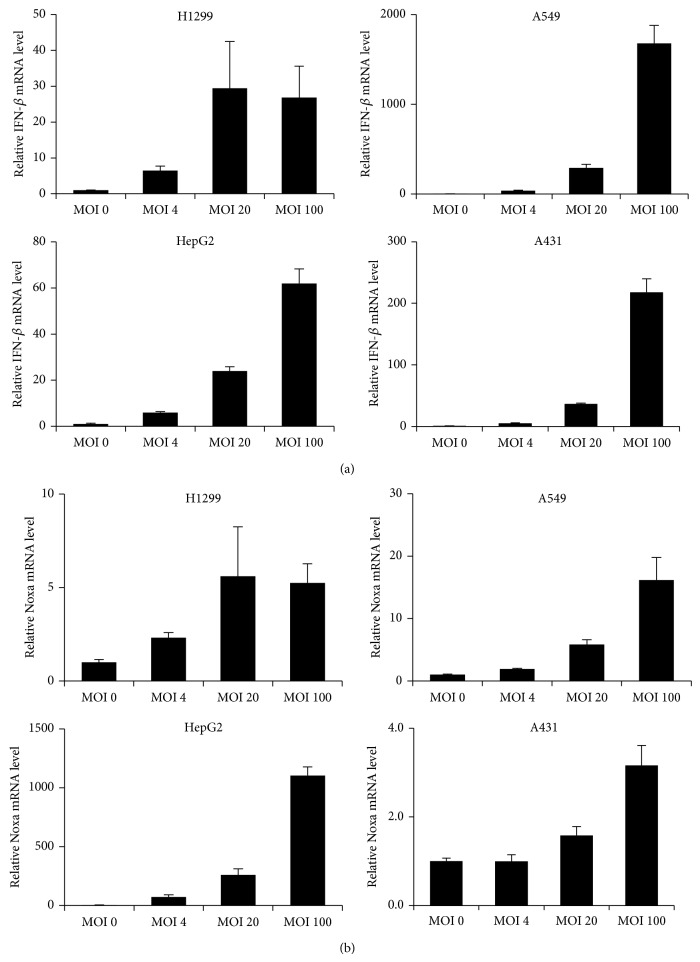
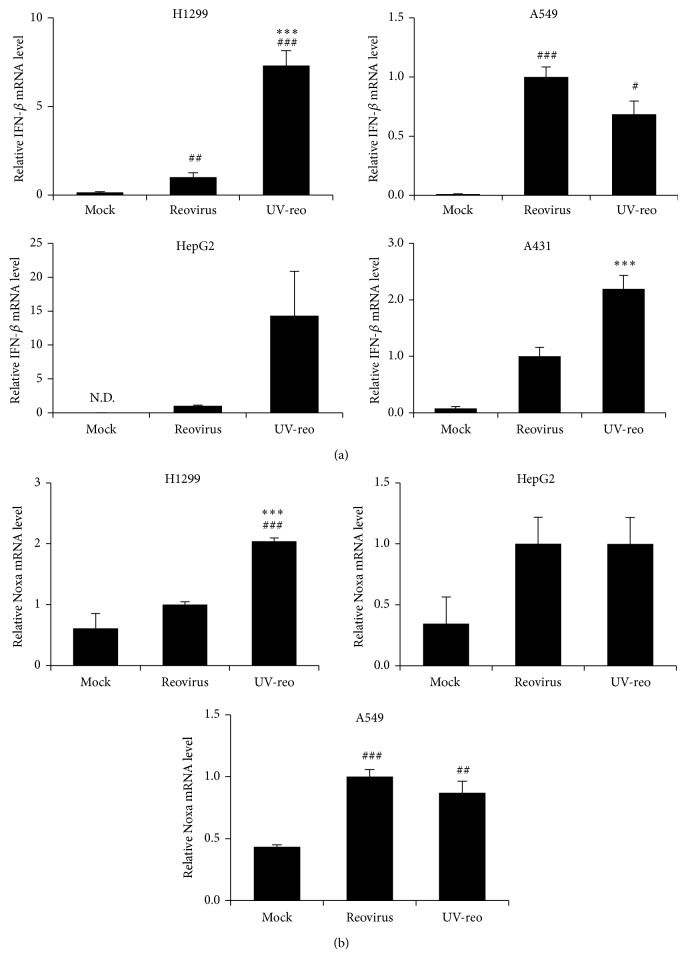
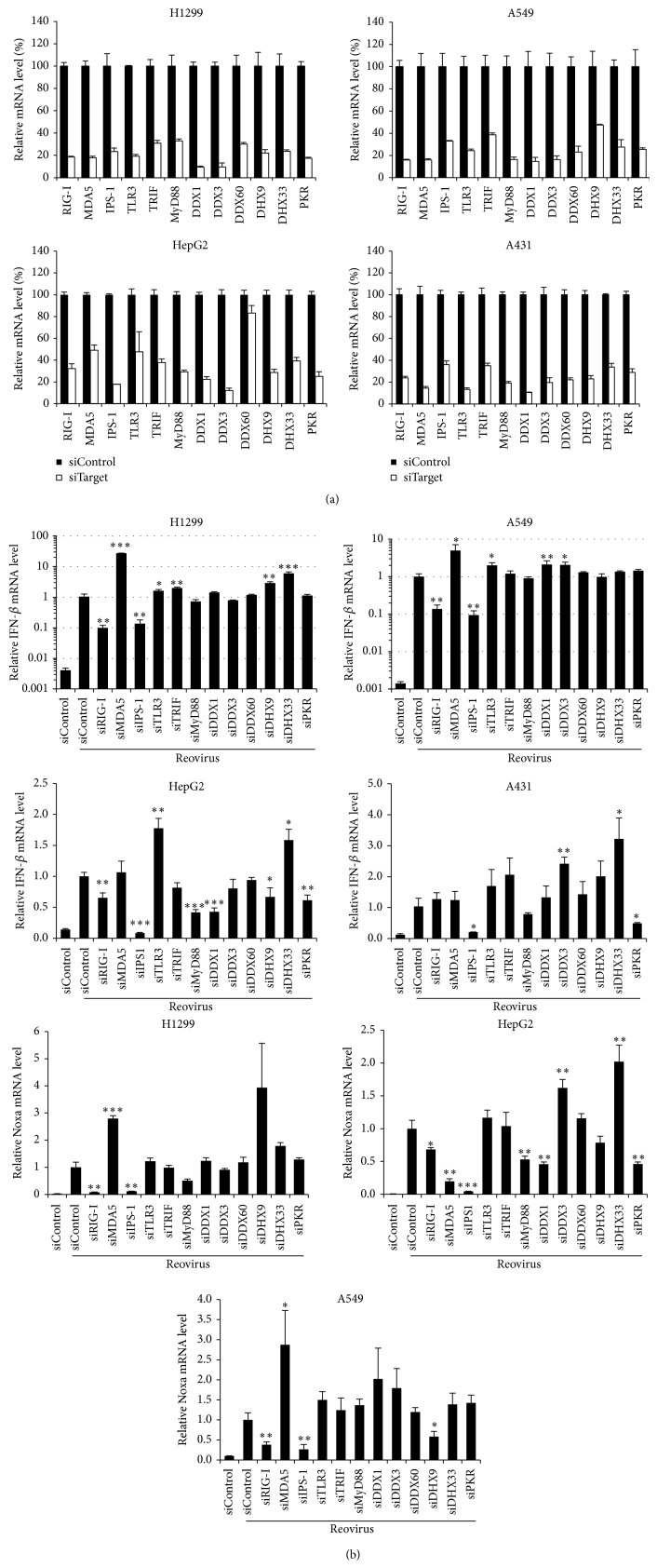
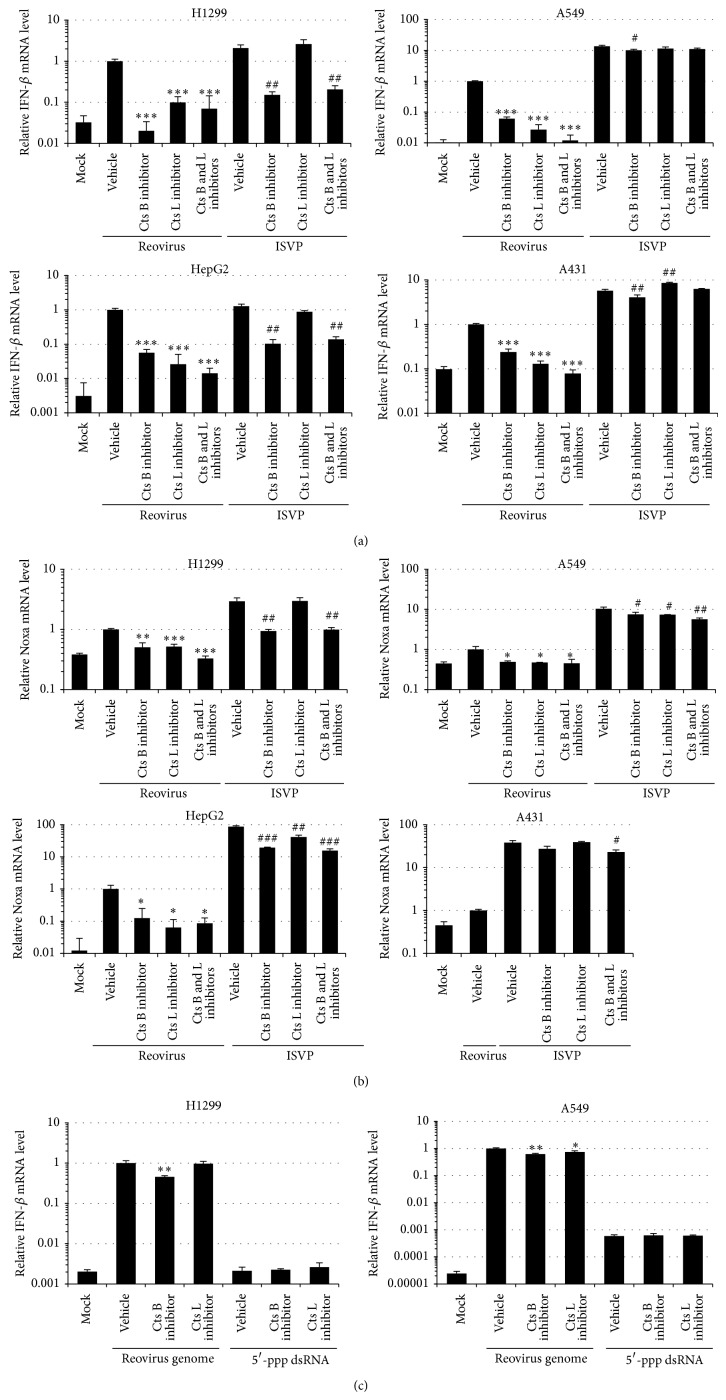
Oncolytic reovirus induces innate immune responses, which contribute to the antitumor activity of reovirus, following in vivo application. Reovirus-induced innate immune responses have been relatively well characterized in immune cells and mouse embryonic fibroblasts cells; however, the mechanisms and profiles of reovirus-induced innate immune responses in human tumor cells have not been well understood. In particular, differences in reovirus-induced innate immune responses between reovirus-susceptible and reovirus-refractory tumor cells remain unknown, although the intracellular trafficking of reovirus differs between these tumor cells. In this study, we examined reovirus-induced upregulation of interferon- (IFN-) β and of the proapoptotic gene, Noxa, in reovirus-susceptible and -refractory tumor cells. IFN-β and Noxa were significantly induced by reovirus via the IFN-β promoter stimulator-1 (IPS-1) signaling in both types of tumor cells. Inhibition of cathepsins B and L, which are important for disassembly of reovirus outer capsid proteins and escape into cytoplasm, largely suppressed reovirus-induced upregulation of IFN-β and Noxa expression in not only reovirus-susceptible but also reovirus-refractory tumor cells. These results indicated that in both reovirus-susceptible and reovirus-refractory tumor cells, disassembly of the outer capsid proteins by cathepsins and the escape into the cytoplasm were crucial steps for reovirus-induced innate immunity.
溶瘤呼肠孤病毒在体内应用后可诱导先天性免疫反应,这有助于呼肠孤病毒的抗肿瘤活性。呼肠孤病毒诱导的先天性免疫反应在免疫细胞和小鼠胚胎成纤维细胞中已有相对较好的特征描述;然而,呼肠孤病毒在人类肿瘤细胞中诱导先天性免疫反应的机制和特征尚未得到充分了解。特别是,尽管呼肠孤病毒在这些肿瘤细胞中的细胞内运输有所不同,但呼肠孤病毒敏感和耐药肿瘤细胞之间呼肠孤病毒诱导的先天性免疫反应差异仍然未知。在本研究中,我们检测了呼肠孤病毒在敏感和耐药肿瘤细胞中诱导的干扰素(IFN)-β和促凋亡基因Noxa的上调情况。在两种类型的肿瘤细胞中,呼肠孤病毒均通过IFN-β启动子刺激物-1(IPS-1)信号通路显著诱导IFN-β和Noxa。组织蛋白酶B和L对呼肠孤病毒外衣壳蛋白的分解和逃逸到细胞质中很重要,抑制它们不仅在呼肠孤病毒敏感肿瘤细胞中,而且在呼肠孤病毒耐药肿瘤细胞中,都能很大程度上抑制呼肠孤病毒诱导的IFN-β上调和Noxa表达。这些结果表明,在呼肠孤病毒敏感和耐药肿瘤细胞中,组织蛋白酶对外衣壳蛋白的分解以及逃逸到细胞质中是呼肠孤病毒诱导先天性免疫的关键步骤。