Alain Tommy, Kim Tom Sy, Lun Xueqing, Liacini Adelhamid, Schiff Leslie A, Senger Donna L, Forsyth Peter A
Department of Medical Sciences, Clark Smith Integrative Brain Tumor Research Center, Southern Alberta Cancer Research Institute, University of Calgary, Alberta, Canada.
Mol Ther. 2007 Aug;15(8):1512-21. doi: 10.1038/sj.mt.6300207. Epub 2007 May 22.
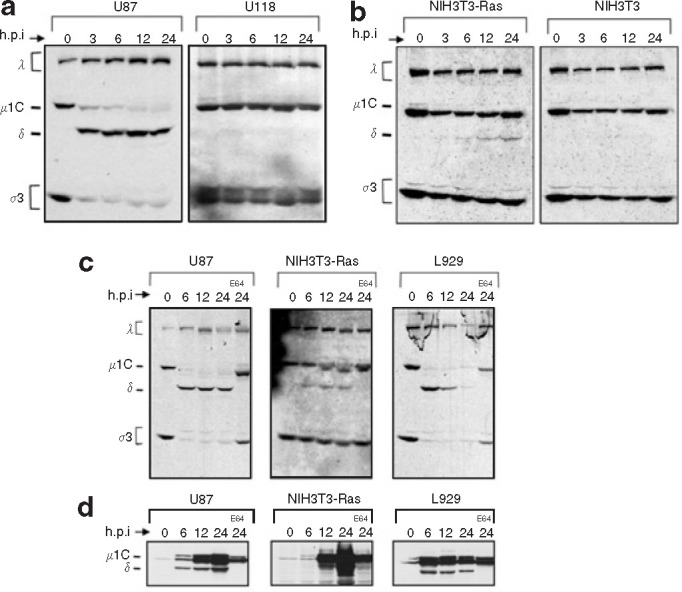
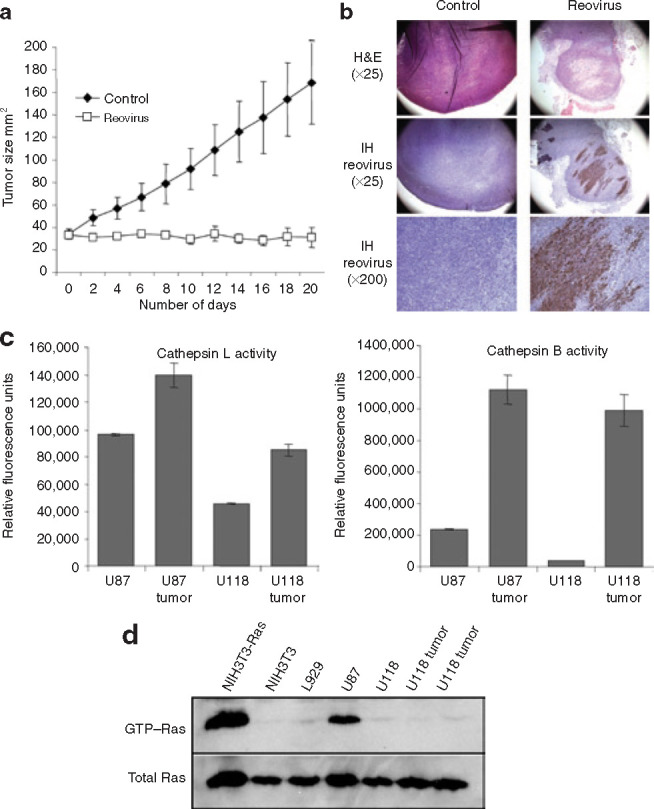
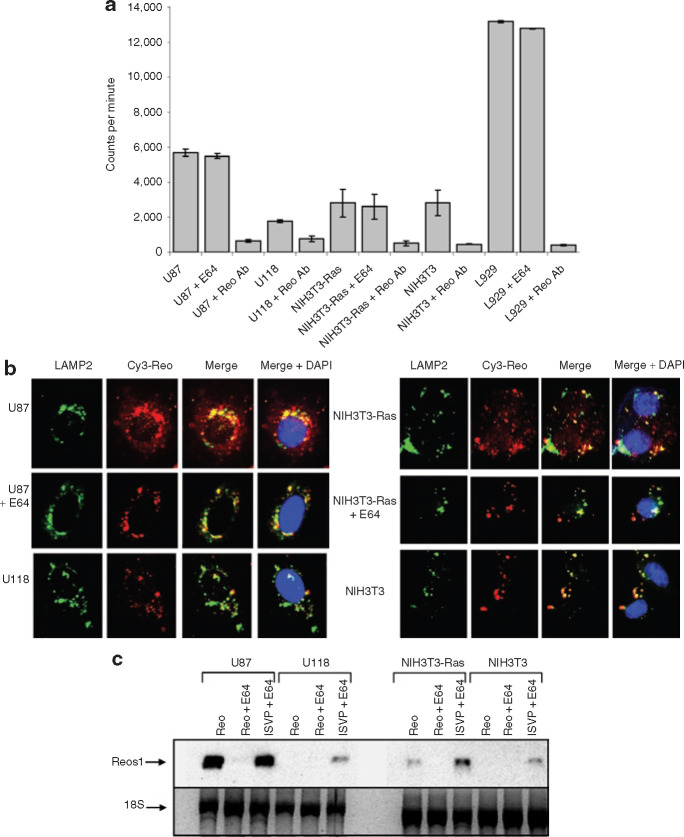
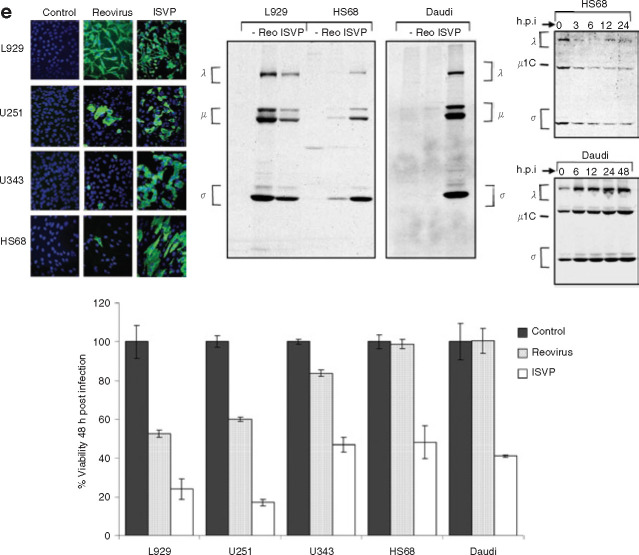
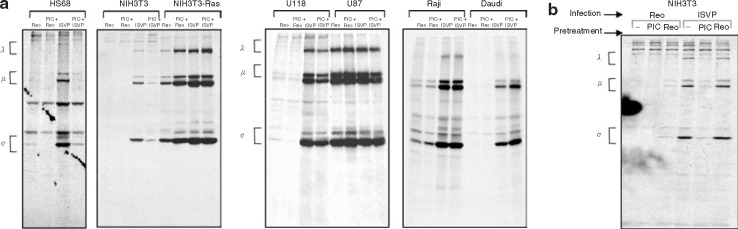
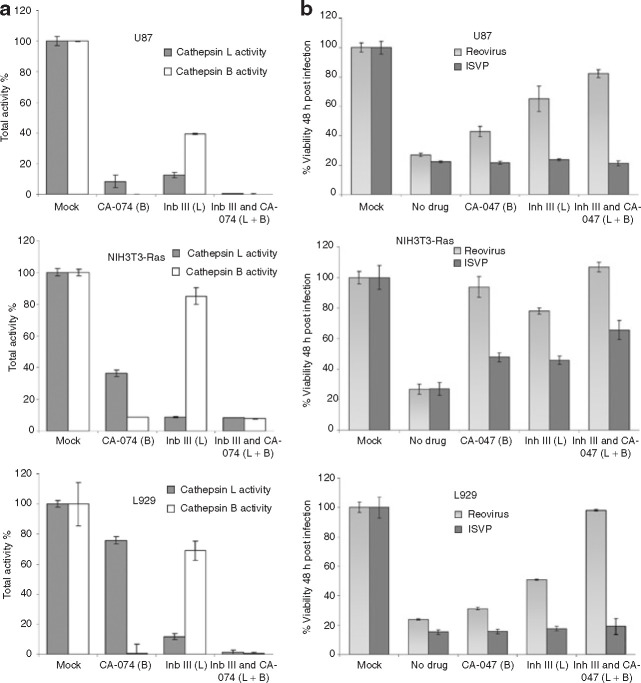
Mammalian ortheoreoviruses are currently being investigated as novel cancer therapeutics, but the cellular mechanisms that regulate susceptibility to reovirus oncolysis remain poorly understood. In this study, we present evidence that virion disassembly is a key determinant of reovirus oncolysis. To penetrate cell membranes and initiate infection, the outermost capsid proteins of reovirus must be proteolyzed to generate a disassembled particle called an infectious subviral particle (ISVP). In fibroblasts, this process is mediated by the endo/lysosomal proteases cathepsins B and L. We have analyzed the early events of infection in reovirus-susceptible and -resistant cells. We find that, in contrast to susceptible glioma cells and Ras-transformed NIH3T3 cells, reovirus-resistant cancer cells and untransformed NIH3T3 cells restrict virion uncoating and subsequent gene expression. Disassembly-restrictive cells support reovirus infection, as in vitro-generated ISVPs establish productive infection, and pretreatment with poly(I:C) does not prevent infection in cancer cells. We find that the level of active cathepsin B and L is increased in tumors and that disassembly-restrictive glioma cells support reovirus oncolysis when grown as a tumor in vivo. Together, these results provide a model in which proteolytic disassembly of reovirus is a critical determinant of susceptibility to reovirus oncolysis.
哺乳动物正呼肠孤病毒目前正作为新型癌症治疗药物进行研究,但调节对呼肠孤病毒溶瘤易感性的细胞机制仍知之甚少。在本研究中,我们提供证据表明病毒粒子的解体是呼肠孤病毒溶瘤的关键决定因素。为了穿透细胞膜并引发感染,呼肠孤病毒最外层的衣壳蛋白必须被蛋白水解,以产生一种称为感染性子病毒粒子(ISVP)的解体颗粒。在成纤维细胞中,这个过程由溶酶体蛋白酶组织蛋白酶B和L介导。我们分析了呼肠孤病毒易感和抗性细胞中感染的早期事件。我们发现,与易感的胶质瘤细胞和Ras转化的NIH3T3细胞不同,呼肠孤病毒抗性癌细胞和未转化的NIH3T3细胞会限制病毒粒子的脱壳和随后的基因表达。解体受限的细胞支持呼肠孤病毒感染,因为体外产生的ISVP能建立有效的感染,并且用聚肌苷酸胞嘧啶核苷酸(poly(I:C))预处理并不能阻止癌细胞中的感染。我们发现肿瘤中活性组织蛋白酶B和L的水平升高,并且解体受限的胶质瘤细胞在体内作为肿瘤生长时支持呼肠孤病毒溶瘤。总之,这些结果提供了一个模型,其中呼肠孤病毒的蛋白水解解体是对呼肠孤病毒溶瘤易感性的关键决定因素。