Center for Translational Research, The Feinstein Institute for Medical Research, Manhasset, New York, United States of America.
Center for Translational Research, The Feinstein Institute for Medical Research, Manhasset, New York, United States of America; Department of Surgery, Hofstra North Shore-Long Island Jewish School of Medicine, Manhasset, New York, United States of America.
PLoS One. 2015 Apr 13;10(4):e0122833. doi: 10.1371/journal.pone.0122833. eCollection 2015.
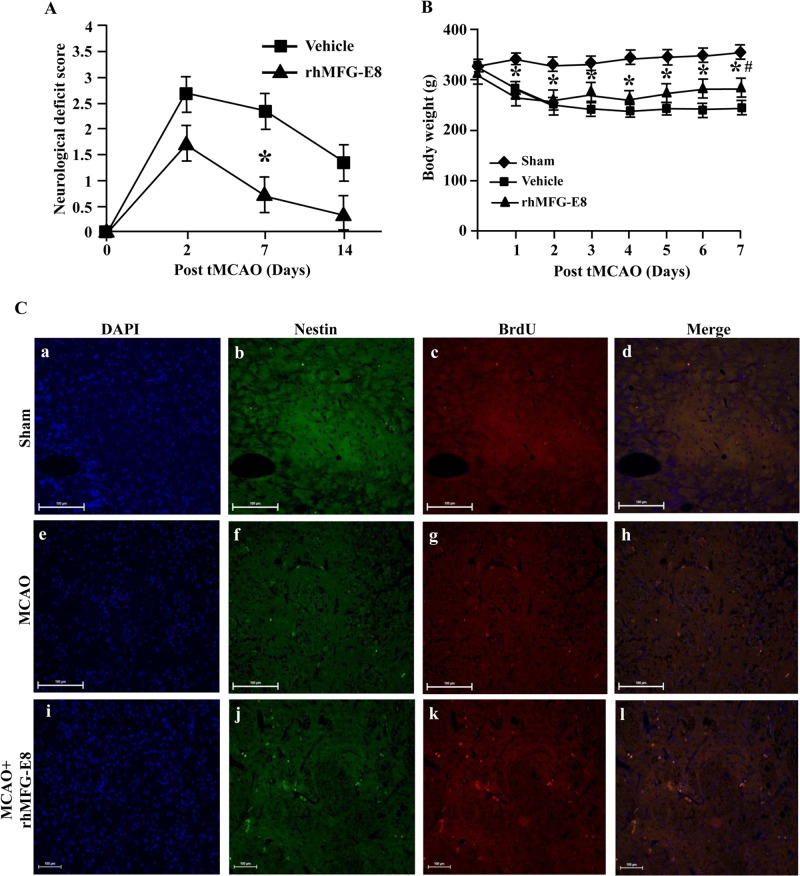
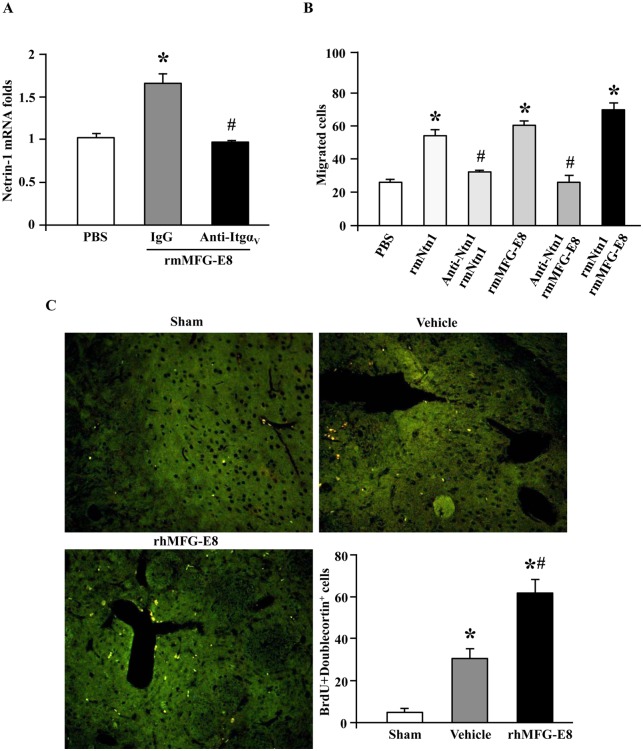
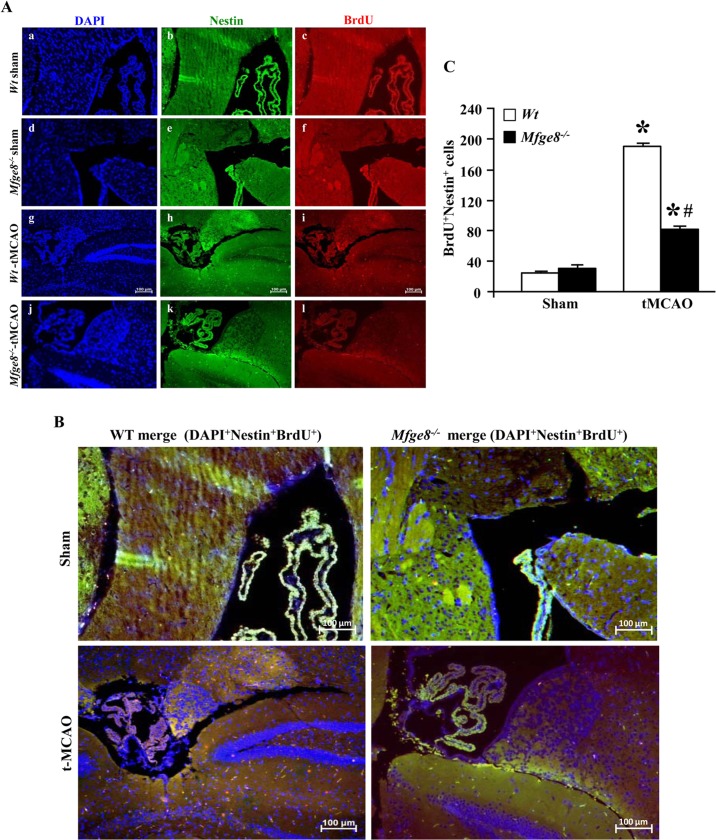
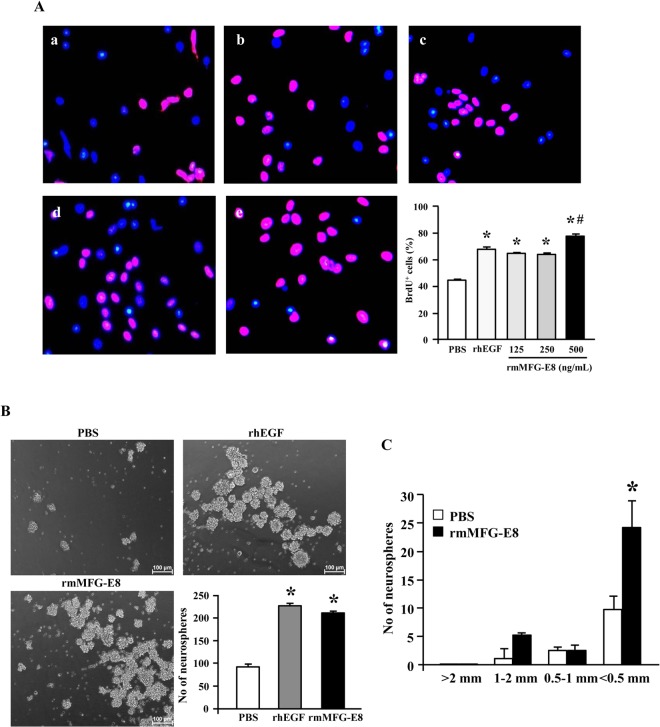
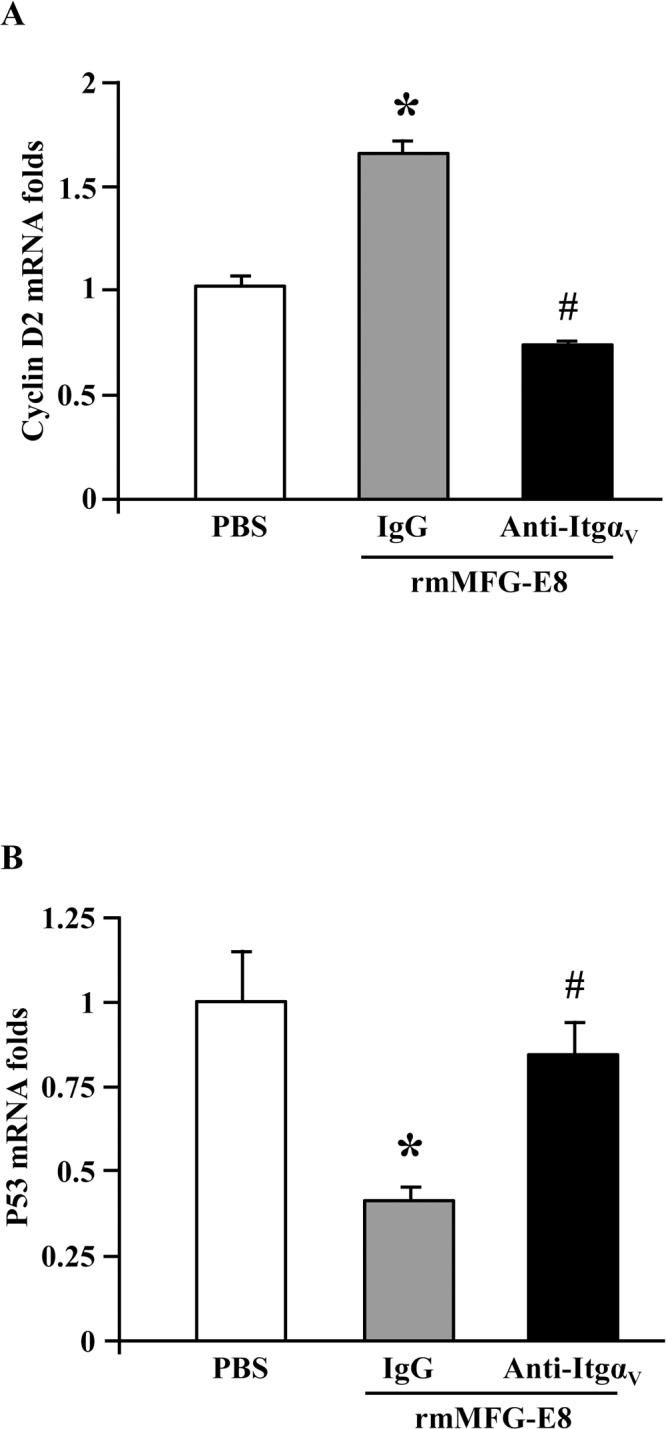
The mediators in activating neural stem cells during the regenerative process of neurogenesis following stroke have not been fully identified. Milk fat globule-EGF Factor VIII (MFG-E8), a secreted glycoprotein serves several cellular functions by binding to its receptor, αv β3-integrin. However, its role in regulating neural stem cells after stroke has not been determined yet. We therefore, aim to reveal whether MFG-E8 promotes neural stem cell proliferation and migration during stroke. Stroke was induced in wild-type (Wt) and MFG-E8-deficinet (Mfge8-/-) mice by transient middle cerebral artery occlusion (tMCAO). Commercially available recombinant mouse MFG-E8 (rmMFG-E8) was used for mechanistic assays in neural stem cell line, while the in house prepared recombinant human MFG-E8 (rhMFG-E8) was used for in vivo administration into rats with tMCAO. The in vitro effects of recombinant rmMFG-E8 for the neural stem cell proliferation and migration were determined by BrdU and transwell migration assay, respectively. The expression of cyclin D2, p53 and netrin-1, was analyzed by qPCR. We report that the treatment of rhMFG-E8 significantly improved the neurological deficit score, body weight lost and neural stem cell proliferation in a rat model of tMCAO. Conversely, decreased neural stem cell proliferation was observed in Mfge8-/- mice in comparison with the Wt counterparts underwent tMCAO. rmMFG-E8 stimulated the proliferation of mouse embryonic neural stem cells via upregulation of cyclin D2 and downregulation of p53, which is mediated by αv β3-integrin. rmMFG-E8 also promoted mouse embryonic neural stem cell migration via αv β3-integrin dependent manner in upregulating netrin-1. Our findings suggest MFG-E8 to promote neural stem cell proliferation and migration, which therefore establishes a promising therapeutic strategy for cerebral ischemia.
中风后神经发生的再生过程中激活神经干细胞的介质尚未完全确定。乳脂肪球表皮生长因子 VIII(MFG-E8)是一种分泌糖蛋白,通过与其受体αvβ3-整合素结合发挥多种细胞功能。然而,其在中风后调节神经干细胞的作用尚未确定。因此,我们旨在揭示 MFG-E8 是否促进中风后神经干细胞的增殖和迁移。通过短暂性大脑中动脉闭塞(tMCAO)在野生型(Wt)和 MFG-E8 缺陷型(Mfge8-/-)小鼠中诱导中风。商业上可获得的重组小鼠 MFG-E8(rmMFG-E8)用于神经干细胞系的机制研究,而自制的重组人 MFG-E8(rhMFG-E8)用于 tMCAO 大鼠的体内给药。通过 BrdU 和 Transwell 迁移测定分别确定重组 rmMFG-E8 对神经干细胞增殖和迁移的体外作用。通过 qPCR 分析细胞周期蛋白 D2、p53 和 netrin-1 的表达。我们报告 rhMFG-E8 治疗可显著改善 tMCAO 大鼠模型的神经功能缺损评分、体重减轻和神经干细胞增殖。相反,与经历 tMCAO 的 Wt 对照相比,Mfge8-/-小鼠的神经干细胞增殖减少。rmMFG-E8 通过上调细胞周期蛋白 D2 和下调 p53 刺激小鼠胚胎神经干细胞的增殖,这是通过αvβ3-整合素介导的。rmMFG-E8 还通过上调 netrin-1 以αvβ3-整合素依赖的方式促进小鼠胚胎神经干细胞的迁移。我们的研究结果表明 MFG-E8 可促进神经干细胞的增殖和迁移,从而为脑缺血建立了一种有前途的治疗策略。