Mavridis K, Gueugnon F, Petit-Courty A, Courty Y, Barascu A, Guyetant S, Scorilas A
Department of Biochemistry and Molecular Biology, University of Athens, Panepistimiopolis, 15701 Athens, Greece.
Centre d'Etude des Pathologies Respiratoires, INSERM UMR1100, F-37032 Tours, France.
Br J Cancer. 2015 Apr 28;112(9):1527-35. doi: 10.1038/bjc.2015.119. Epub 2015 Mar 31.
MicroRNA expression signatures can promote personalised care for non-small cell lung cancer (NSCLC) patients. Our aim was to evaluate the previously unexplored prognostic potential of miR-197, a key oncogenic molecule for NSCLC.
Total RNA isolation (n=124 NSCLC and n=21 tumour-adjacent normal tissues), was performed using the QIAsymphony SP workstation. The quantity and quality of RNA were assessed by spectrophotometric analysis and an Agilent 2100 bioanalyzer. Polyadenylation and reverse transcription were subsequently carried out. MiR-197 expression levels were measured by qPCR, after quality control (inter-assay CV=7.8%). Internal validation procedures were followed by assigning training and test sets and robust biostatistical analyses were performed, including bootstrap resampling.
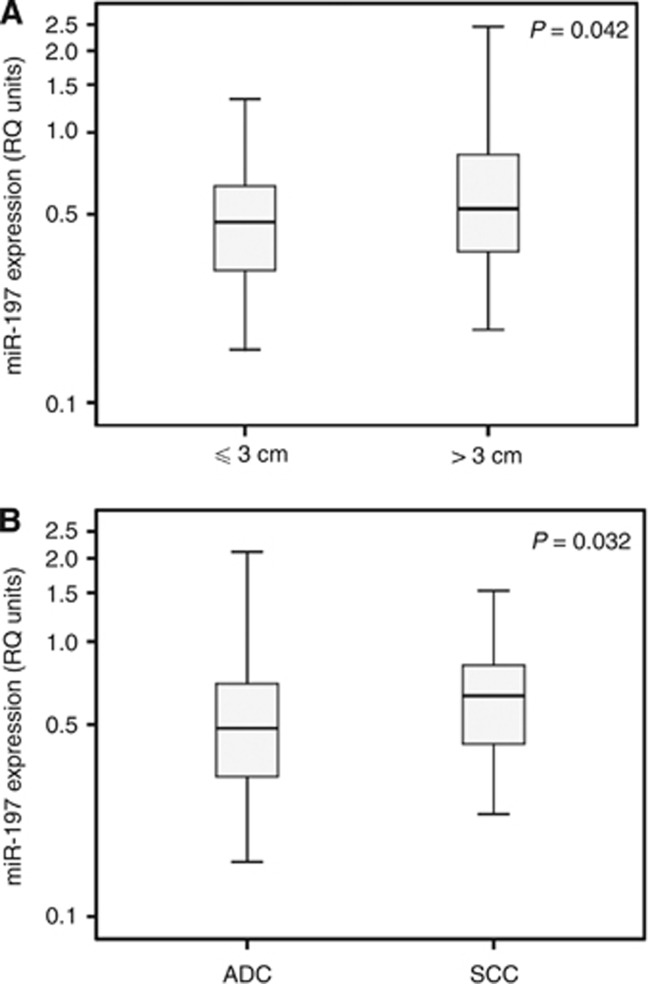
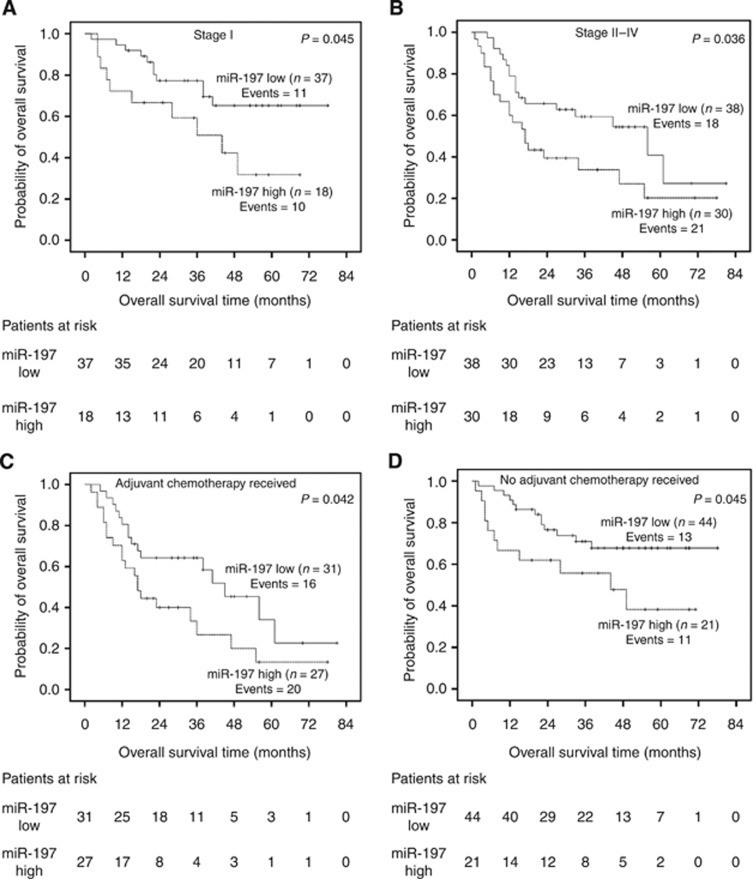
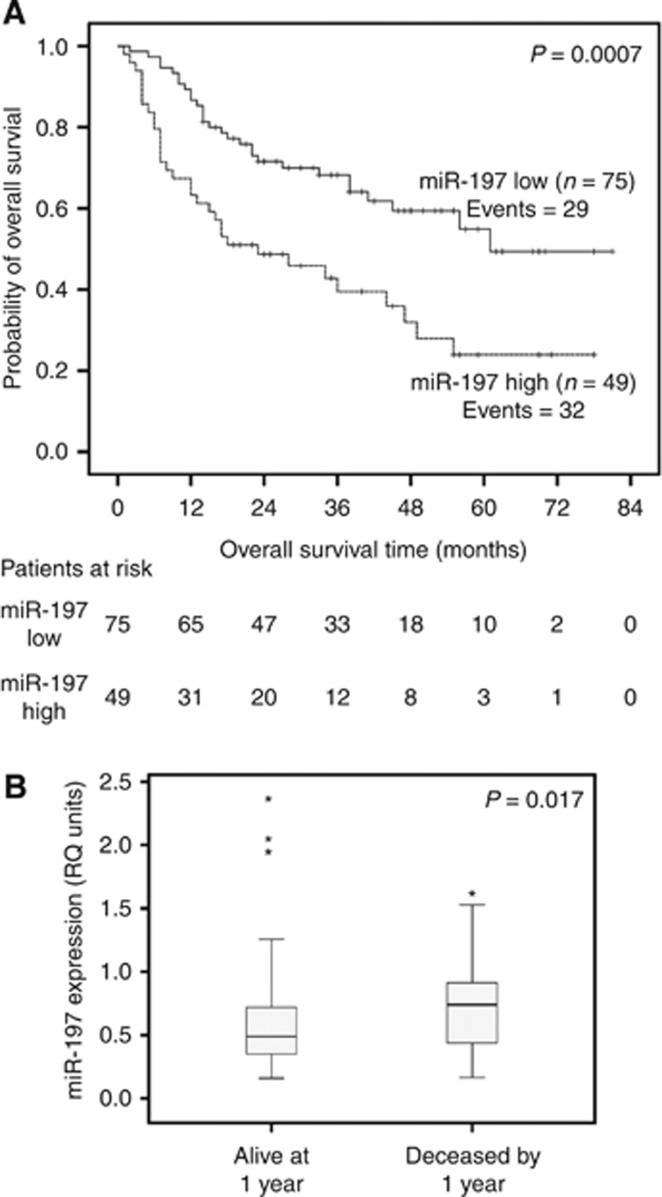
MiR-197 is associated with larger tumours (P=0.042) and the squamous cell carcinoma histotype (P=0.032). Interestingly, after adjusting for important prognostic indicators, miR-197 expression was identified as a novel independent predictor of unfavourable prognosis for NSCLC patients (HR=1.97, 95% CI=1.10-3.38, P=0.013). We also demonstrate that miR-197 retains its prognostic performance in both early-stage I (P=0.045) and more advanced-stage individuals (P=0.036).
The cost-effective expression analysis of miR-197 could constitute a novel molecular tool for NSCLC management.
微小RNA表达特征可促进非小细胞肺癌(NSCLC)患者的个性化治疗。我们的目的是评估miR-197此前未被探索的预后潜力,miR-197是NSCLC的关键致癌分子。
使用QIAsymphony SP工作站进行总RNA提取(n = 124例NSCLC组织和n = 21例肿瘤邻近正常组织)。通过分光光度分析和安捷伦2100生物分析仪评估RNA的数量和质量。随后进行多聚腺苷酸化和逆转录。在质量控制(批间变异系数=7.8%)后,通过qPCR测量miR-197表达水平。通过划分训练集和测试集进行内部验证程序,并进行稳健的生物统计学分析,包括自助重抽样。
miR-197与更大的肿瘤(P = 0.042)和鳞状细胞癌组织学类型(P = 0.032)相关。有趣的是,在调整重要的预后指标后,miR-197表达被确定为NSCLC患者不良预后的新独立预测因子(HR = 1.97,95%CI = 1.10 - 3.38,P = 0.013)。我们还证明,miR-197在早期I期(P = 0.045)和更晚期个体(P = 0.036)中均保留其预后性能。
miR-197具有成本效益的表达分析可能构成NSCLC管理的一种新的分子工具。