Cheung Kin, Chan Chi Keung, Chang Mei Yan, Chu Po Ha, Fung Wai Fong, Kwan Kit Chi, Lau Nga Yan, Li Wai Kin, Mak Hiu Man
School of Nursing, The Hong Kong Polytechnic University, Hong Kong, China.
Medical ward, Tai Po Nethersole Hospital, Hong Kong, China.
Am J Infect Control. 2015 Jul 1;43(7):729-34. doi: 10.1016/j.ajic.2015.03.007. Epub 2015 Apr 11.
We aimed to investigate the frequency of standard precautions (SPs) compliance and the factors affecting the compliance among nursing students (NSs).
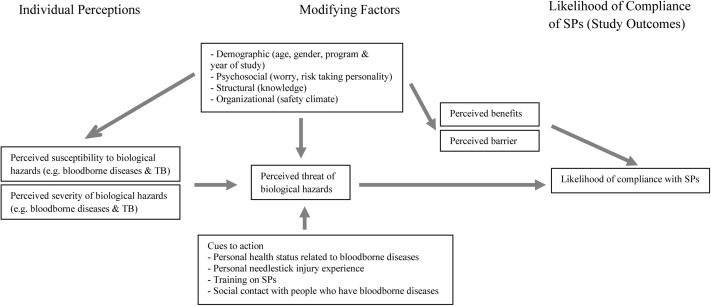
A cross-sectional survey study guided by the health belief model was conducted in 2009. The study questionnaire is valid (content validity index, 0.81) and reliable (Cronbach α range, 0.65-0.94).
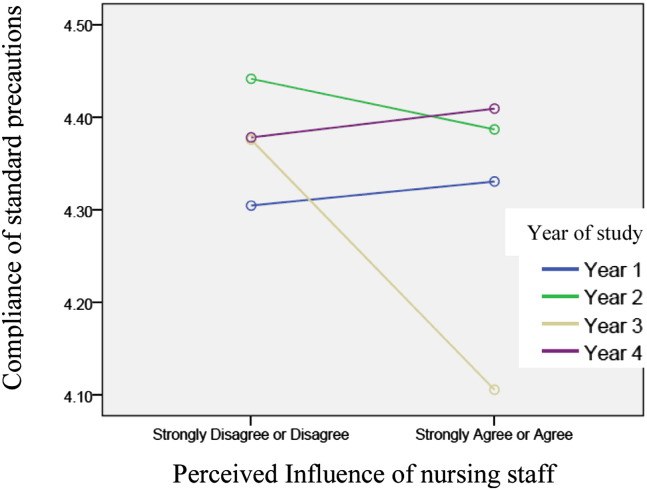
There were 678 questionnaires analyzed, with a response rate of 68.9%. The mean frequency score of SPs compliance was 4.38 ± 0.40 out of 5. Tukey honest significant difference post hoc test indicated that year 2 and year 4 students had better SPs compliance than year 3 students. Further analysis using a univariate general linear model identified an interaction effect of perceived influence of nursing staff and year of study (F1,593 = 3.72; P < .05). The 5 following predictors for SPs compliance were identified: knowledge of SPs, perceived barriers, adequacy of training, management support, and influence of nursing staff.
Although the SPs compliance among NSs was high, the compliance varied by year of study and was affected by the nursing staff. Furthermore, SPs compliance among NSs can be enhanced by increasing SPs knowledge, providing more SPs training, promoting management support, reducing identified SPs barriers, and improving nursing staff compliance to SPs.
我们旨在调查护理专业学生(NSs)遵守标准预防措施(SPs)的频率以及影响其遵守情况的因素。
2009年开展了一项以健康信念模型为指导的横断面调查研究。研究问卷有效(内容效度指数为0.81)且可靠(克朗巴哈α系数范围为0.65 - 0.94)。
共分析了678份问卷,回复率为68.9%。SPs遵守情况的平均频率得分在5分制中为4.38 ± 0.40。Tukey真实显著差异事后检验表明,二年级和四年级学生的SPs遵守情况优于三年级学生。使用单变量一般线性模型的进一步分析确定了护理人员的感知影响与学习年份之间的交互作用(F1,593 = 3.72;P <.05)。确定了以下5个SPs遵守情况的预测因素:SPs知识、感知障碍、培训充足性、管理支持和护理人员的影响。
尽管NSs对SPs的遵守情况较高,但遵守情况因学习年份而异,并受到护理人员的影响。此外,可通过增加SPs知识、提供更多SPs培训、促进管理支持、减少已确定的SPs障碍以及提高护理人员对SPs的遵守情况来增强NSs对SPs的遵守。