Zhao Cui-Xia, Jiang Cheng-Ming, Zhou Lei, Li Shu, Rao Li-Lin, Zheng Rui
School of Psychology, Shandong Normal University Jinan, China.
College of Economics and Management, Zhejiang University of Technology Hangzhou, China.
Front Psychol. 2015 Mar 27;6:311. doi: 10.3389/fpsyg.2015.00311. eCollection 2015.
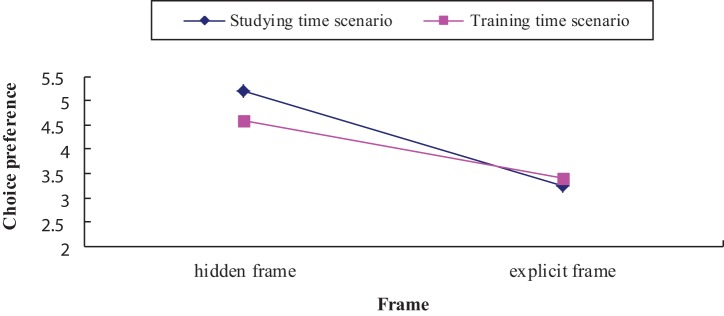
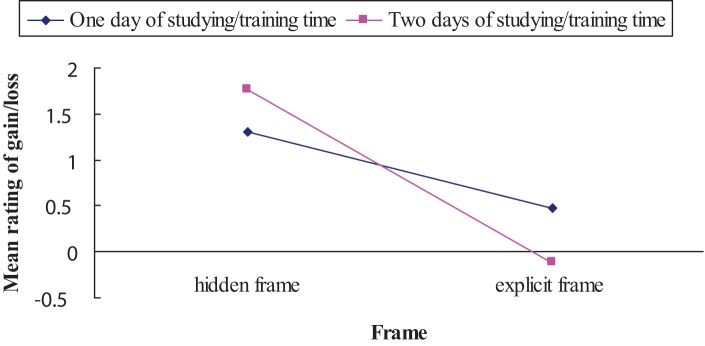
An interesting phenomenon called "hidden opportunity cost of time effect" was detected in intertemporal choices. The majority of our participants preferred the smaller but sooner (SS) option to the larger but later (LL) option if opportunity cost was explicit. However, a higher proportion of participants preferred the LL to SS option if opportunity cost was hidden. This shift violates the invariance principle and opens a new way to encourage future-oriented behavior. By simply mentioning the "obvious" opportunity cost of alternatives, decision makers can be more informed in prioritizing their long-term goals rather than short-term goals.
在跨期选择中发现了一种有趣的现象,称为“时间效应的隐性机会成本”。如果机会成本是明确的,我们的大多数参与者更喜欢较小但较早(SS)的选项,而不是较大但较晚(LL)的选项。然而,如果机会成本是隐性的,更高比例的参与者更喜欢LL选项而不是SS选项。这种转变违反了不变性原则,并为鼓励面向未来的行为开辟了一条新途径。通过简单提及替代方案的“明显”机会成本,决策者在优先考虑长期目标而非短期目标时可以获得更多信息。