Merrill B M, Barnett S F, LeStourgeon W M, Williams K R
Department of Molecular Biophysics and Biochemistry, Yale University, New Haven, CT 06510.
Nucleic Acids Res. 1989 Nov 11;17(21):8441-9. doi: 10.1093/nar/17.21.8441.
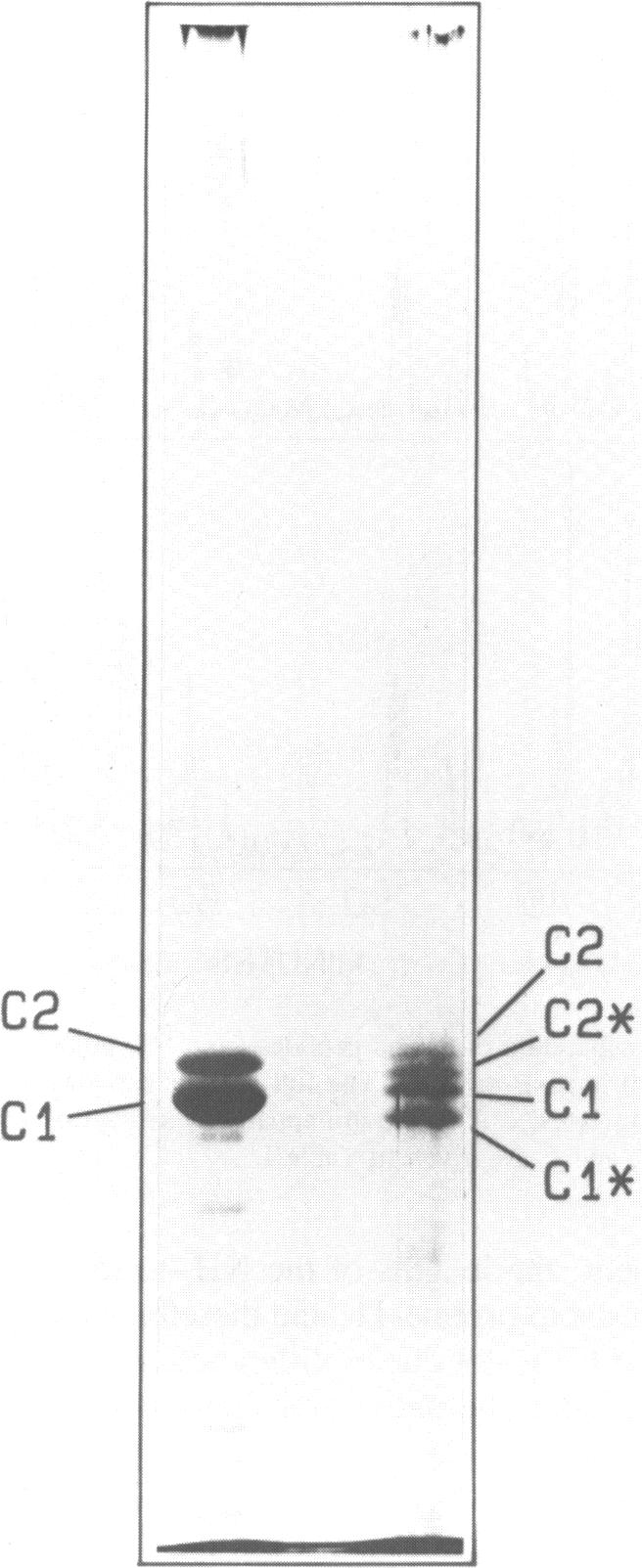
Partial acid cleavage, comparative HPLC tryptic peptide mapping and amino acid sequencing of the C1 and C2 proteins of HeLa heterogeneous nuclear ribonucleoprotein (hnRNP) particles demonstrate that proteins C1 and C2 differ in primary structure by the presence of a 13 amino acid insert sequence in C2. This C2 insert sequence occurs after either glycine 106 or serine 107 in C1. The additional 13 amino acids that are present in C2 account for the observed molecular weight difference between the C1 and C2 hnRNP proteins on SDS polyacrylamide gel electrophoresis. Because C1 and C2 appear identical except for the 13 residue insert and because the 3' and 5' untranslated regions of the corresponding mRNAs also appear to be the same (Swanson et al., Mol. Cell. Biol. 7: 1731-1739), it is possible that both polypeptides are produced from a single transcription unit through an alternative splicing mechanism.
对HeLa异质核核糖核蛋白(hnRNP)颗粒的C1和C2蛋白进行部分酸裂解、比较HPLC胰蛋白酶肽图谱分析和氨基酸测序,结果表明,C1和C2蛋白在一级结构上存在差异,C2中存在一个13个氨基酸的插入序列。该C2插入序列出现在C1中甘氨酸106或丝氨酸107之后。C2中额外的13个氨基酸解释了在SDS聚丙烯酰胺凝胶电泳上观察到的C1和C2 hnRNP蛋白之间的分子量差异。由于除了13个残基的插入序列外,C1和C2看起来相同,并且相应mRNA的3'和5'非翻译区似乎也相同(Swanson等人,《分子与细胞生物学》7: 1731 - 1739),所以这两种多肽有可能是通过可变剪接机制从单个转录单元产生的。