Schuman Meredith C, Allmann Silke, Baldwin Ian T
Department of Molecular Ecology, Max Planck Institute for Chemical Ecology, Jena, Germany.
Department of Plant Physiology, Swammerdam Institute of Life Sciences, University of Amsterdam, Amsterdam, Netherlands.
Elife. 2015 Apr 15;4:e04490. doi: 10.7554/eLife.04490.
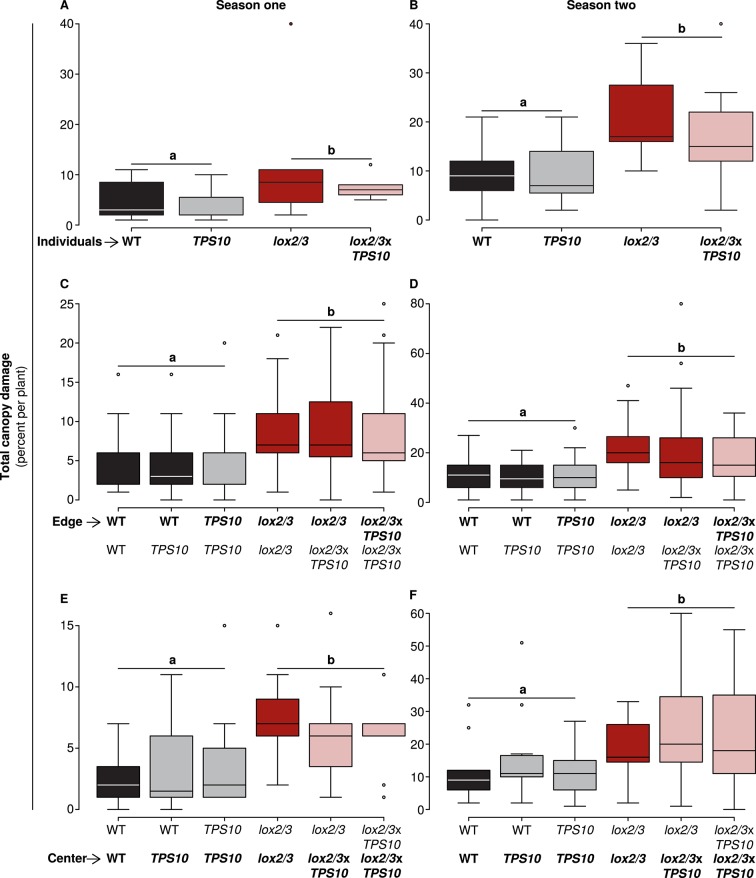
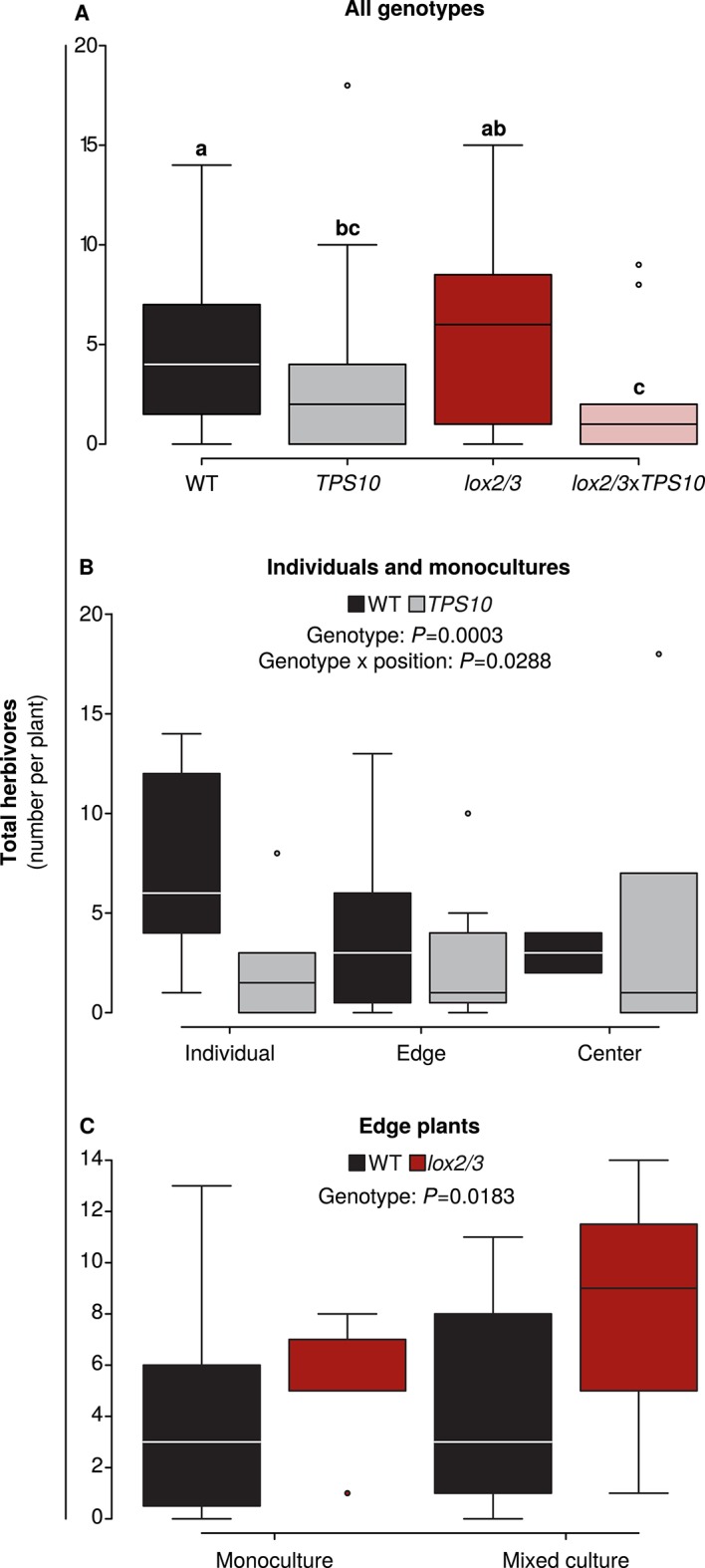
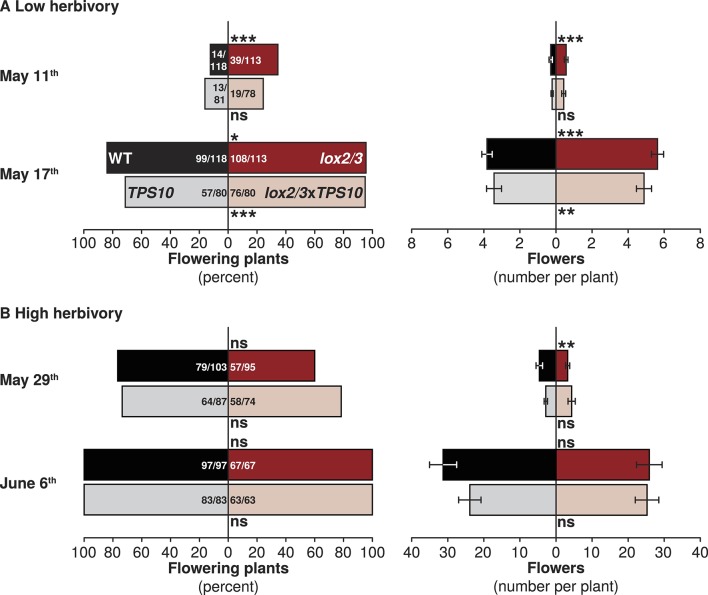
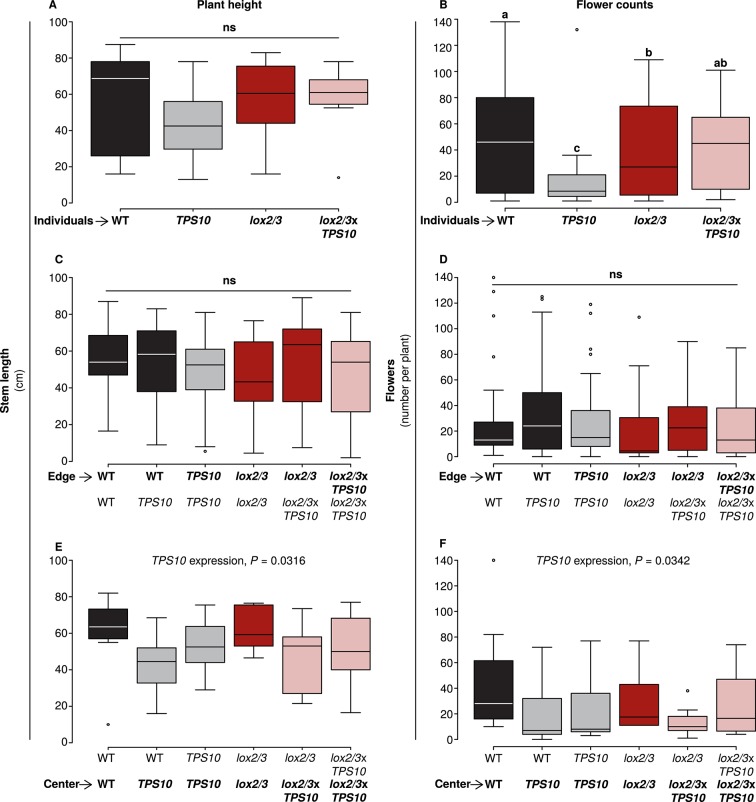
Plants are at the trophic base of terrestrial ecosystems, and the diversity of plant species in an ecosystem is a principle determinant of community structure. This may arise from diverse functional traits among species. In fact, genetic diversity within species can have similarly large effects. However, studies of intraspecific genetic diversity have used genotypes varying in several complex traits, obscuring the specific phenotypic variation responsible for community-level effects. Using lines of the wild tobacco Nicotiana attenuata genetically altered in specific well-characterized defense traits and planted into experimental populations in their native habitat, we investigated community-level effects of trait diversity in populations of otherwise isogenic plants. We conclude that the frequency of defense traits in a population can determine the outcomes of these traits for individuals. Furthermore, our results suggest that some ecosystem-level services afforded by genetically diverse plant populations could be recaptured in intensive monocultures engineered to be functionally diverse.
植物处于陆地生态系统的营养基础位置,生态系统中植物物种的多样性是群落结构的主要决定因素。这可能源于物种间不同的功能性状。事实上,物种内的遗传多样性也会产生类似的巨大影响。然而,对种内遗传多样性的研究使用的基因型在几个复杂性状上存在差异,从而模糊了导致群落水平效应的具体表型变异。我们利用在特定特征明确的防御性状上经过基因改造的野生烟草(Nicotiana attenuata)品系,并将其种植到它们原生栖息地的实验种群中,研究了其他方面同基因植物种群中性状多样性的群落水平效应。我们得出结论,种群中防御性状的频率可以决定这些性状对个体的影响结果。此外,我们的研究结果表明,基因多样的植物种群所提供的一些生态系统水平的服务,可以在设计为功能多样的集约化单一栽培中重新获得。