Aizman Irina, Vinodkumar Deepti, McGrogan Michael, Bates Damien
1 Department of Research, SanBio, Inc. , Mountain View, California.
2 Department of Production Development, SanBio, Inc. , Mountain View, California.
Stem Cells Dev. 2015 Jul 15;24(14):1623-34. doi: 10.1089/scd.2015.0083. Epub 2015 May 20.
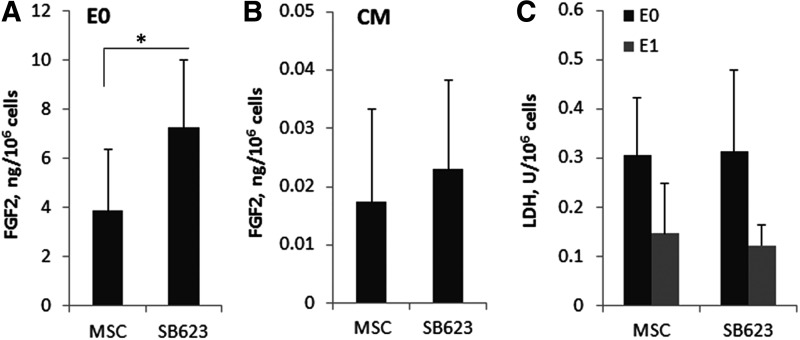
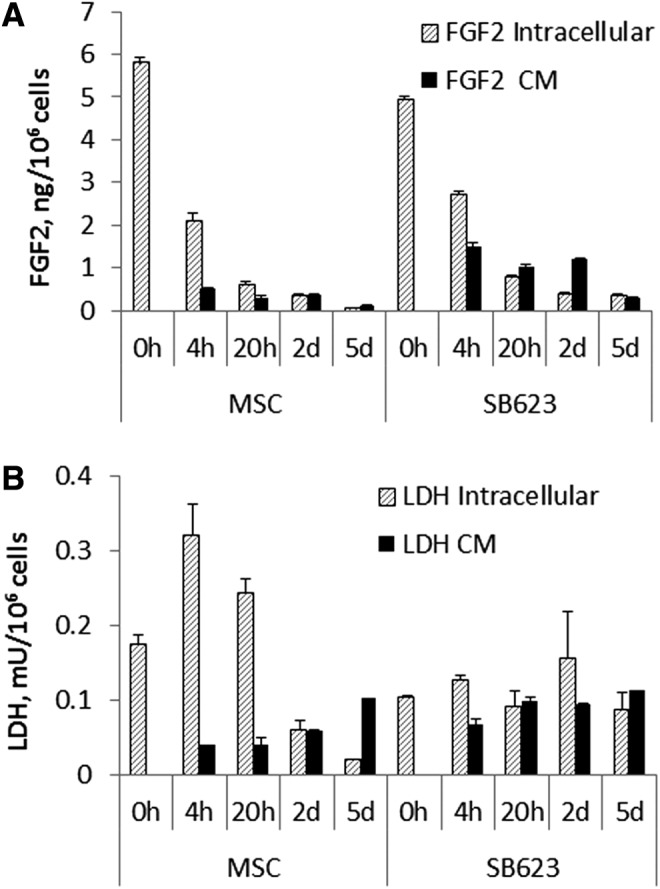
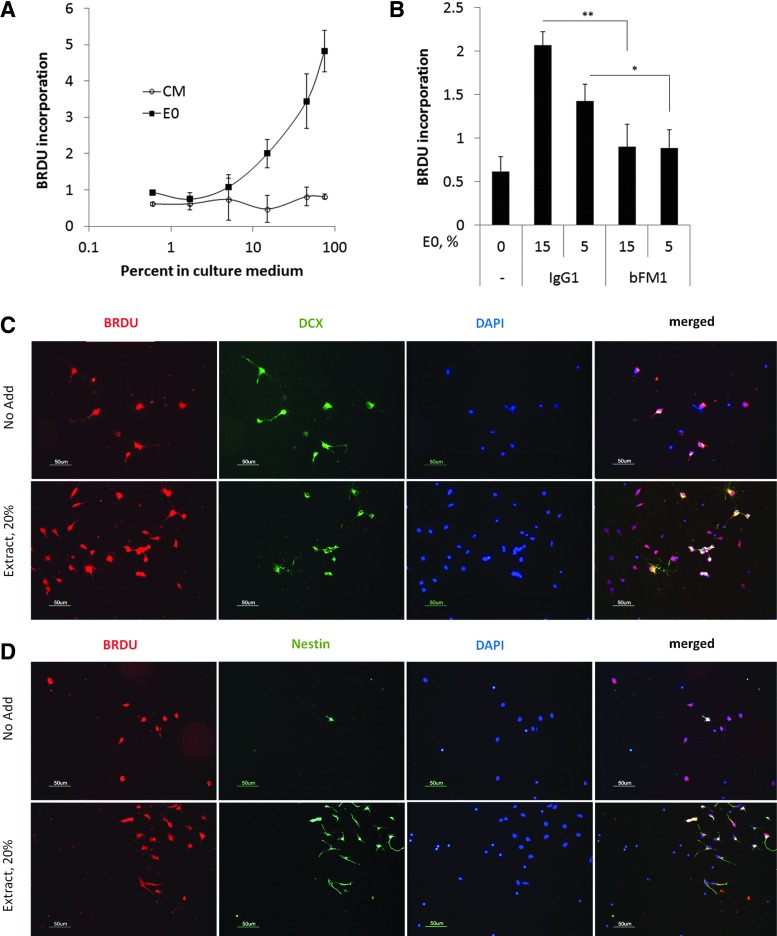
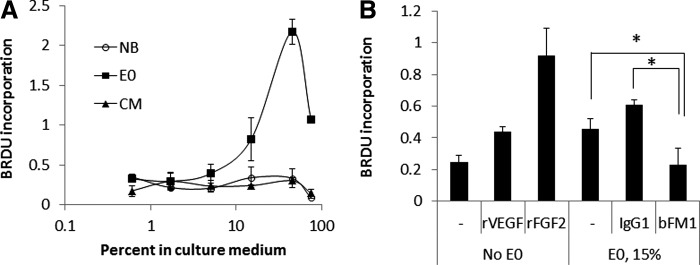
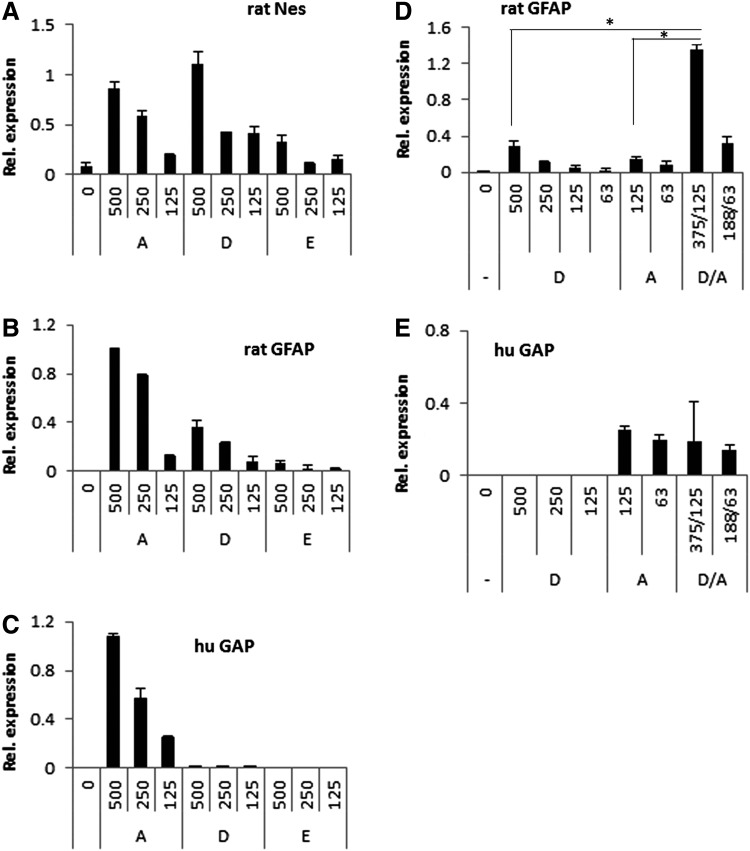
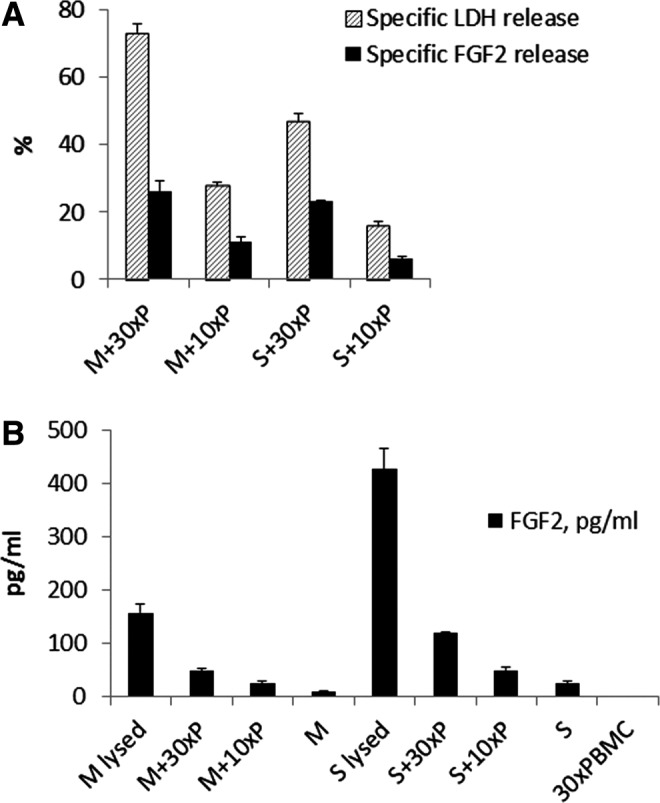
Beneficial effects of intracerebral transplantation of mesenchymal stromal cells (MSC) and their derivatives are believed to be mediated mostly by factors produced by engrafted cells. However, the mesenchymal cell engraftment rate is low, and the majority of grafted cells disappear within a short post-transplantation period. Here, we hypothesize that dying transplanted cells can affect surrounding tissues by releasing their active intracellular components. To elucidate the type, amounts, and potency of these putative intracellular factors, freeze/thaw extracts of MSC or their derivatives were tested in enzyme-linked immunosorbent assays and bioassays. We found that fibroblast growth factor (FGF)2 and FGF1, but not vascular endothelial growth factor and monocyte chemoattractant protein 1 levels were high in extracts despite being low in conditioned media. Extracts induced concentration-dependent proliferation of rat cortical neural progenitor cells and human umbilical vein endothelial cells; these proliferative responses were specifically blocked by FGF2-neutralizing antibody. In the neuropoiesis assay with rat cortical cells, both MSC extracts and killed cells induced expression of nestin, but not astrocyte differentiation. However, suspensions of killed cells strongly potentiated the astrogenic effects of live MSC. In transplantation-relevant MSC injury models (peripheral blood cell-mediated cytotoxicity and high cell density plating), MSC death coincided with the release of intracellular FGF2. The data showed that MSC contain a major depot of active FGF2 that is released upon cell injury and is capable of acutely stimulating neuropoiesis and angiogenesis. We therefore propose that both dying and surviving grafted MSC contribute to tissue regeneration.
间充质基质细胞(MSC)及其衍生物的脑内移植的有益效果被认为主要是由植入细胞产生的因子介导的。然而,间充质细胞的植入率很低,并且大多数移植细胞在移植后的短时间内消失。在这里,我们假设死亡的移植细胞可以通过释放其活性细胞内成分来影响周围组织。为了阐明这些假定的细胞内因子的类型、数量和效力,在酶联免疫吸附测定和生物测定中测试了MSC或其衍生物的冻融提取物。我们发现,尽管条件培养基中的成纤维细胞生长因子(FGF)2和FGF1水平较低,但提取物中的水平较高。提取物诱导大鼠皮质神经祖细胞和人脐静脉内皮细胞浓度依赖性增殖;这些增殖反应被FGF2中和抗体特异性阻断。在大鼠皮质细胞的神经发生测定中,MSC提取物和死亡细胞均诱导巢蛋白表达,但不诱导星形胶质细胞分化。然而,死亡细胞的悬浮液强烈增强了活MSC的星形胶质细胞生成作用。在与移植相关的MSC损伤模型(外周血细胞介导的细胞毒性和高细胞密度接种)中,MSC死亡与细胞内FGF2的释放同时发生。数据表明,MSC含有大量活性FGF2储存库,在细胞损伤时释放,能够急性刺激神经发生和血管生成。因此,我们提出死亡和存活的移植MSC都有助于组织再生。