Chen Chong, Shen Feng-Yan, Zhao Xuan, Zhou Tao, Xu Dao-Jie, Wang Zhi-Ru, Wang Ying-Wei
Department of Anesthesiology and Intensive Care Medicine, Xinhua Hospital, College of Medicine, Shanghai Jiaotong University, China Graduate School, Institute of Science and Technology Austria, Klosterneuburg, Austria.
Department of Anesthesiology and Intensive Care Medicine, Xinhua Hospital, College of Medicine, Shanghai Jiaotong University, China.
ASN Neuro. 2015 Apr 13;7(2). doi: 10.1177/1759091415575845. Print 2015 Mar-Apr.
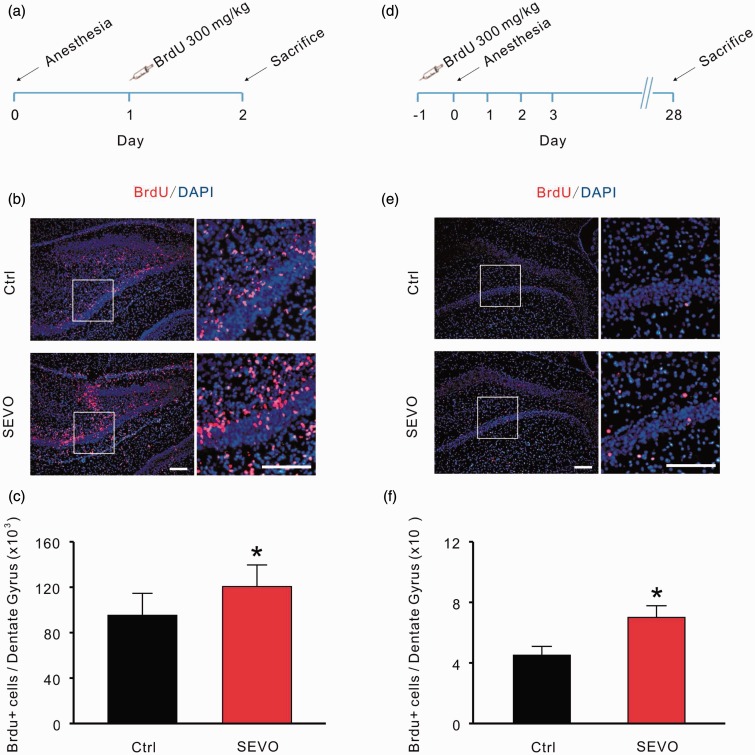
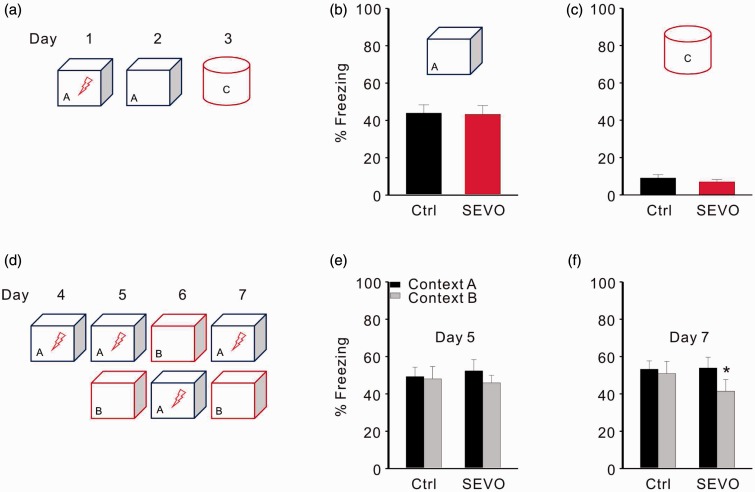
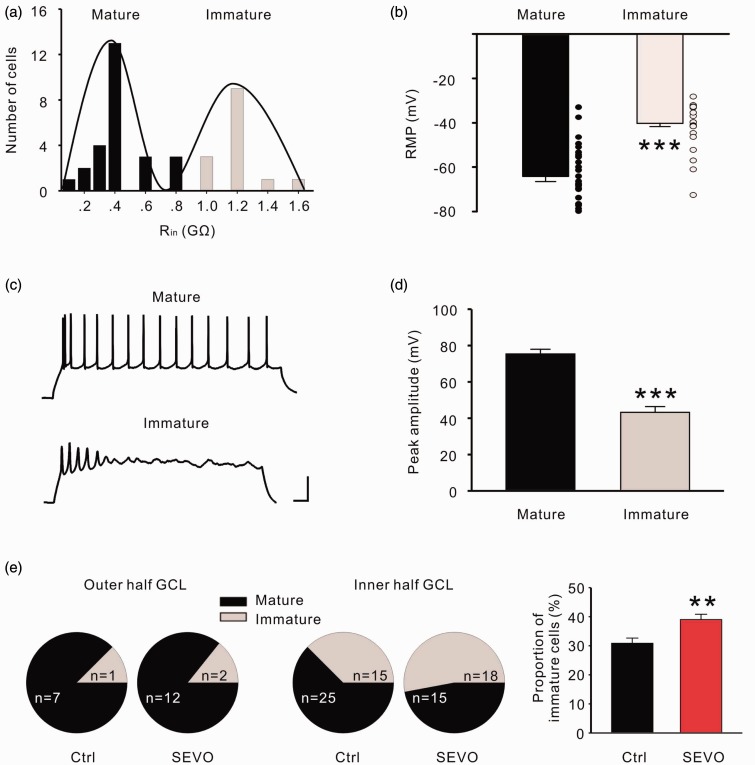
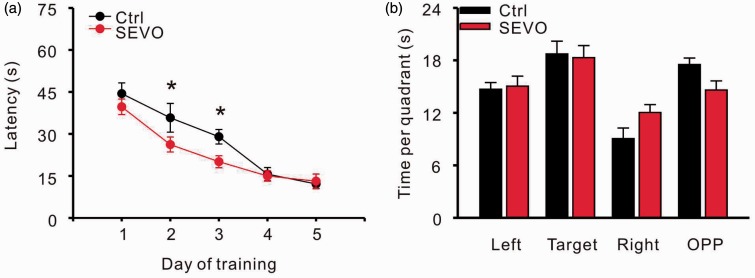
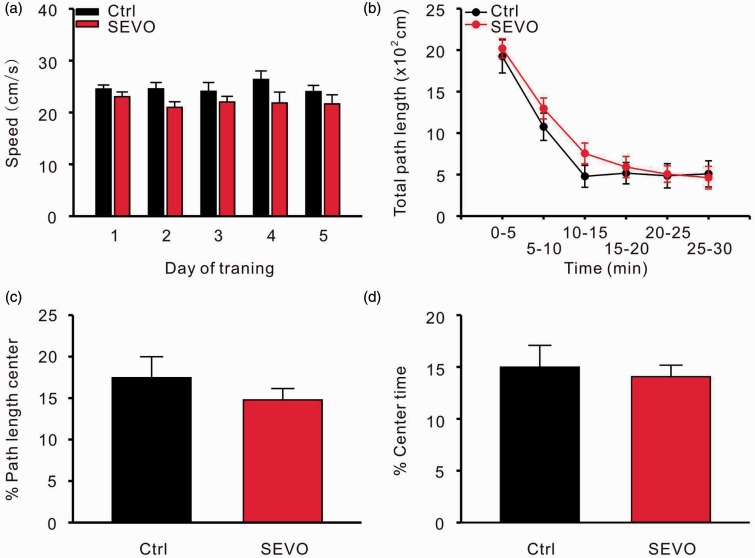
Huge body of evidences demonstrated that volatile anesthetics affect the hippocampal neurogenesis and neurocognitive functions, and most of them showed impairment at anesthetic dose. Here, we investigated the effect of low dose (1.8%) sevoflurane on hippocampal neurogenesis and dentate gyrus-dependent learning. Neonatal rats at postnatal day 4 to 6 (P4-6) were treated with 1.8% sevoflurane for 6 hours. Neurogenesis was quantified by bromodeoxyuridine labeling and electrophysiology recording. Four and seven weeks after treatment, the Morris water maze and contextual-fear discrimination learning tests were performed to determine the influence on spatial learning and pattern separation. A 6-hour treatment with 1.8% sevoflurane promoted hippocampal neurogenesis and increased the survival of newborn cells and the proportion of immature granular cells in the dentate gyrus of neonatal rats. Sevoflurane-treated rats performed better during the training days of the Morris water maze test and in contextual-fear discrimination learning test. These results suggest that a subanesthetic dose of sevoflurane promotes hippocampal neurogenesis in neonatal rats and facilitates their performance in dentate gyrus-dependent learning tasks.
大量证据表明,挥发性麻醉药会影响海马神经发生和神经认知功能,并且大多数在麻醉剂量下会表现出损害。在此,我们研究了低剂量(1.8%)七氟醚对海马神经发生和齿状回依赖性学习的影响。出生后第4至6天(P4 - 6)的新生大鼠用1.8%七氟醚处理6小时。通过溴脱氧尿苷标记和电生理记录对神经发生进行定量。处理后4周和7周,进行莫里斯水迷宫和情境恐惧辨别学习测试,以确定对空间学习和模式分离的影响。用1.8%七氟醚处理6小时可促进新生大鼠海马神经发生,并增加新生细胞的存活率以及齿状回中未成熟颗粒细胞的比例。七氟醚处理的大鼠在莫里斯水迷宫测试的训练期间以及情境恐惧辨别学习测试中表现更好。这些结果表明,亚麻醉剂量的七氟醚可促进新生大鼠海马神经发生,并促进它们在齿状回依赖性学习任务中的表现。