Lin Wei-Ting, Chen Ran-Chou, Lu Wen-Wei, Liu Shing-Hwa, Yang Feng-Yi
Department of Biomedical Imaging and Radiological Sciences, National Yang-Ming University, Taipei, Taiwan.
1] Department of Biomedical Imaging and Radiological Sciences, National Yang-Ming University, Taipei, Taiwan [2] Department of Radiology, Taipei City Hospital, Taipei, Taiwan.
Sci Rep. 2015 Apr 15;5:9671. doi: 10.1038/srep09671.
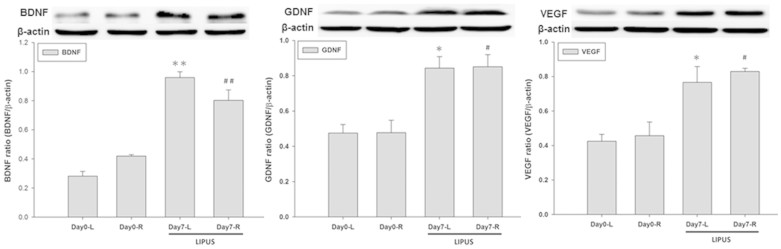
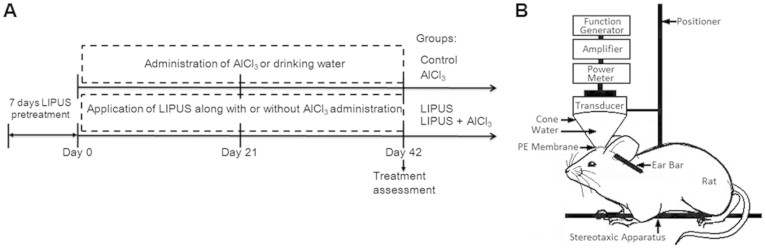
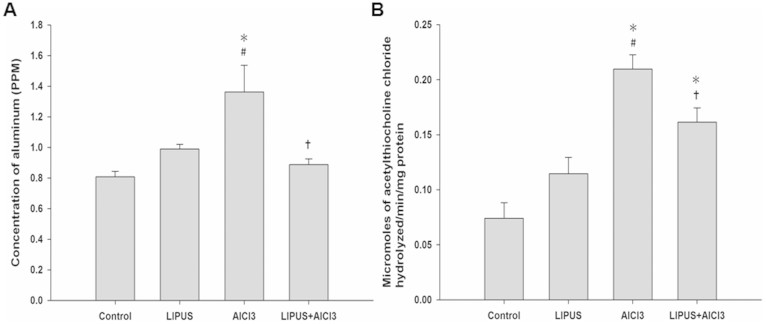
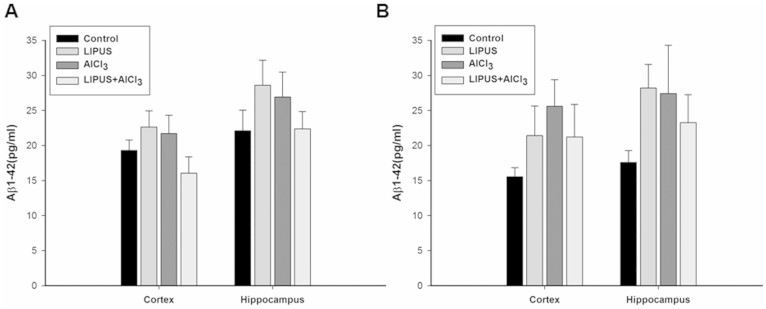
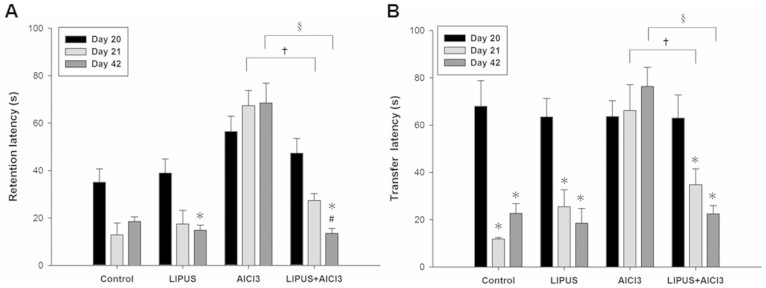
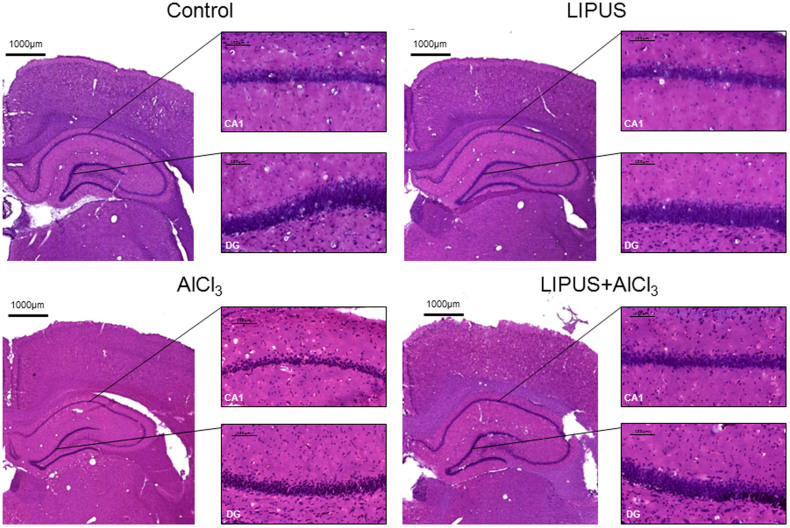
The protein expressions of neurotrophic factors can be enhanced by low-intensity pulsed ultrasound (LIPUS) stimulation in the brain. The purpose of this study was to demonstrate the protective effect of LIPUS stimulation against aluminum-induced cerebral damage in Alzheimer's disease rat model. LIPUS was administered 7 days before each aluminum chloride (AlCl3) administration, and concomitantly given with AlCl3 daily for a period of 6 weeks. Neurotrophic factors in hippocampus were measured by western blot analysis. Behavioral changes in the Morris water maze and elevated plus maze were examined in rats after administration of AlCl3. Various biochemical analyses were performed to evaluate the extent of brain damages. LIPUS is capable of prompting levels of brain-derived neurotrophic factor (BDNF), glial cell line-derived neurotrophic factor (GDNF), and vascular endothelial growth factor (VEGF) in rat brain. AlCl3 administration resulted in a significant increase in the aluminum concentration, acetylcholinesterase activity and beta-amyloid (Aβ) deposition in AlCl3 treated rats. LIPUS stimulation significantly attenuated aluminum concentration, acetylcholinesterase activity, Aβ deposition and karyopyknosis in AlCl3 treated rats. Furthermore, LIPUS significantly improved memory retention in AlCl3-induced memory impairment. These experimental results indicate that LIPUS has neuroprotective effects against AlCl3-induced cerebral damages and cognitive dysfunction.
低强度脉冲超声(LIPUS)刺激可增强大脑中神经营养因子的蛋白表达。本研究旨在证明LIPUS刺激对阿尔茨海默病大鼠模型中铝诱导的脑损伤的保护作用。在每次给予氯化铝(AlCl3)前7天给予LIPUS,并在每天给予AlCl3的同时持续6周。通过蛋白质印迹分析测量海马中的神经营养因子。在给予AlCl3后检查大鼠在莫里斯水迷宫和高架十字迷宫中的行为变化。进行各种生化分析以评估脑损伤的程度。LIPUS能够提高大鼠脑中脑源性神经营养因子(BDNF)、胶质细胞系源性神经营养因子(GDNF)和血管内皮生长因子(VEGF)的水平。给予AlCl3导致AlCl3处理的大鼠铝浓度、乙酰胆碱酯酶活性和β-淀粉样蛋白(Aβ)沉积显著增加。LIPUS刺激显著减轻了AlCl3处理的大鼠的铝浓度、乙酰胆碱酯酶活性、Aβ沉积和核固缩。此外,LIPUS显著改善了AlCl3诱导的记忆损伤中的记忆保持。这些实验结果表明,LIPUS对AlCl3诱导的脑损伤和认知功能障碍具有神经保护作用。