Barbier François, Péron Thomas, Lecerf Marion, Perez-Garcia Maria-Dolores, Barrière Quentin, Rolčík Jakub, Boutet-Mercey Stéphanie, Citerne Sylvie, Lemoine Remi, Porcheron Benoît, Roman Hanaé, Leduc Nathalie, Le Gourrierec José, Bertheloot Jessica, Sakr Soulaiman
Agrocampus-Ouest, Institut de Recherche en Horticulture et Semences (INRA, Agrocampus-Ouest, Université d'Angers), SFR 149 QUASAV, F-49045 Angers, France.
Agrocampus-Ouest, Institut de Recherche en Horticulture et Semences (INRA, Agrocampus-Ouest, Université d'Angers), SFR 149 QUASAV, F-49045 Angers, France INRA, Institut de Recherche en Horticulture et Semences (INRA, Agrocampus-Ouest, Université d'Angers), SFR 149 QUASAV, F-49071 Beaucouzé, France.
J Exp Bot. 2015 May;66(9):2569-82. doi: 10.1093/jxb/erv047. Epub 2015 Apr 13.
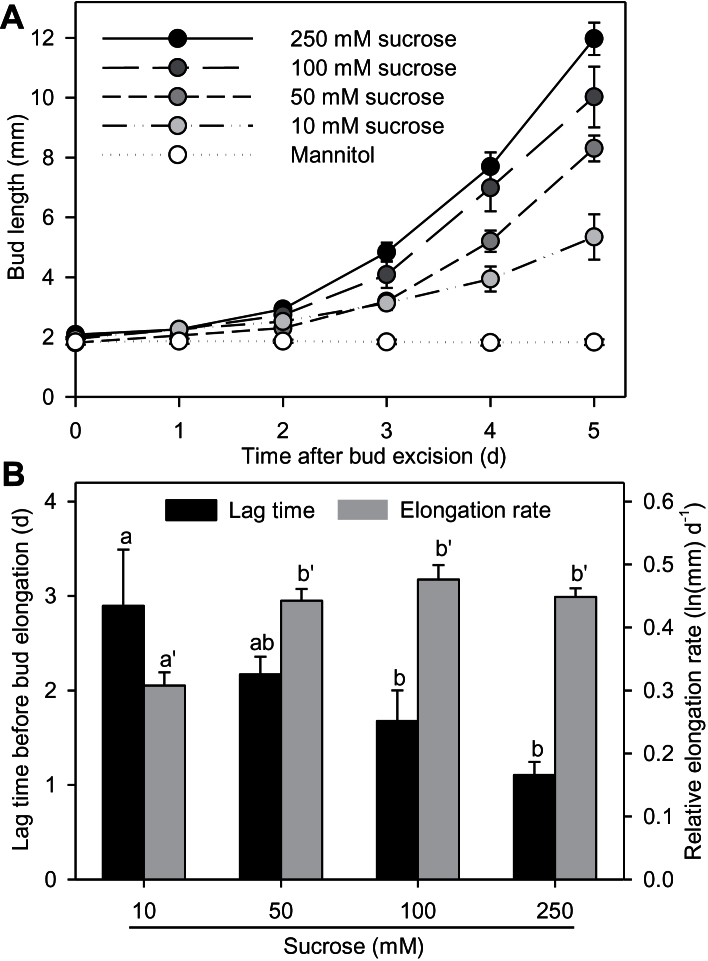
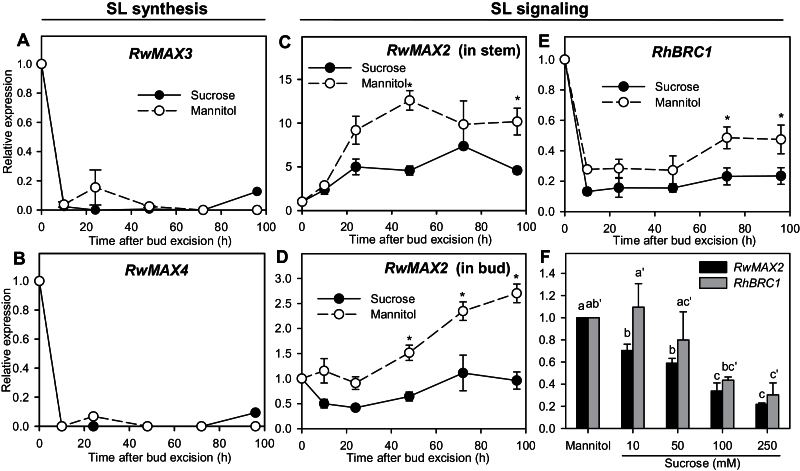
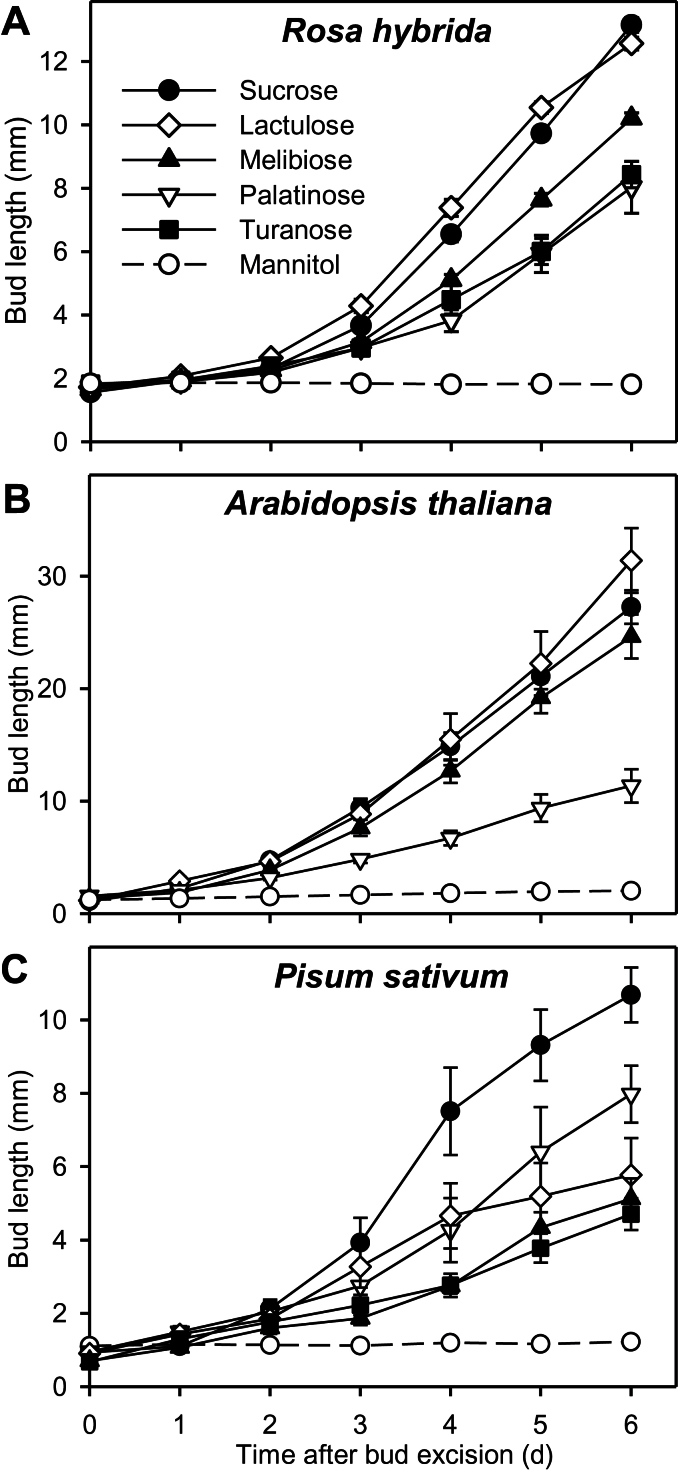
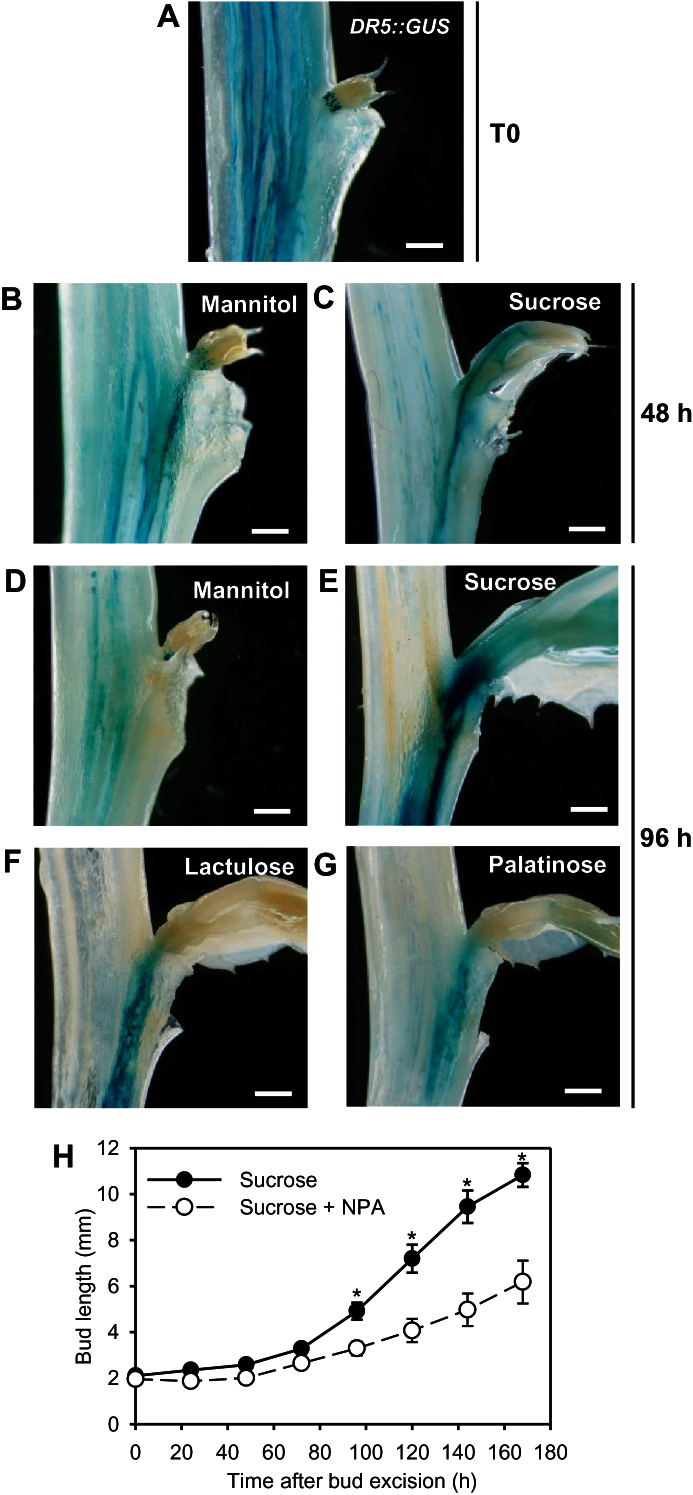
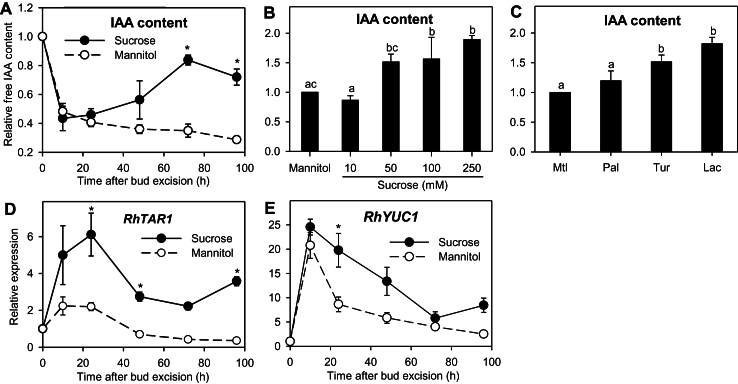
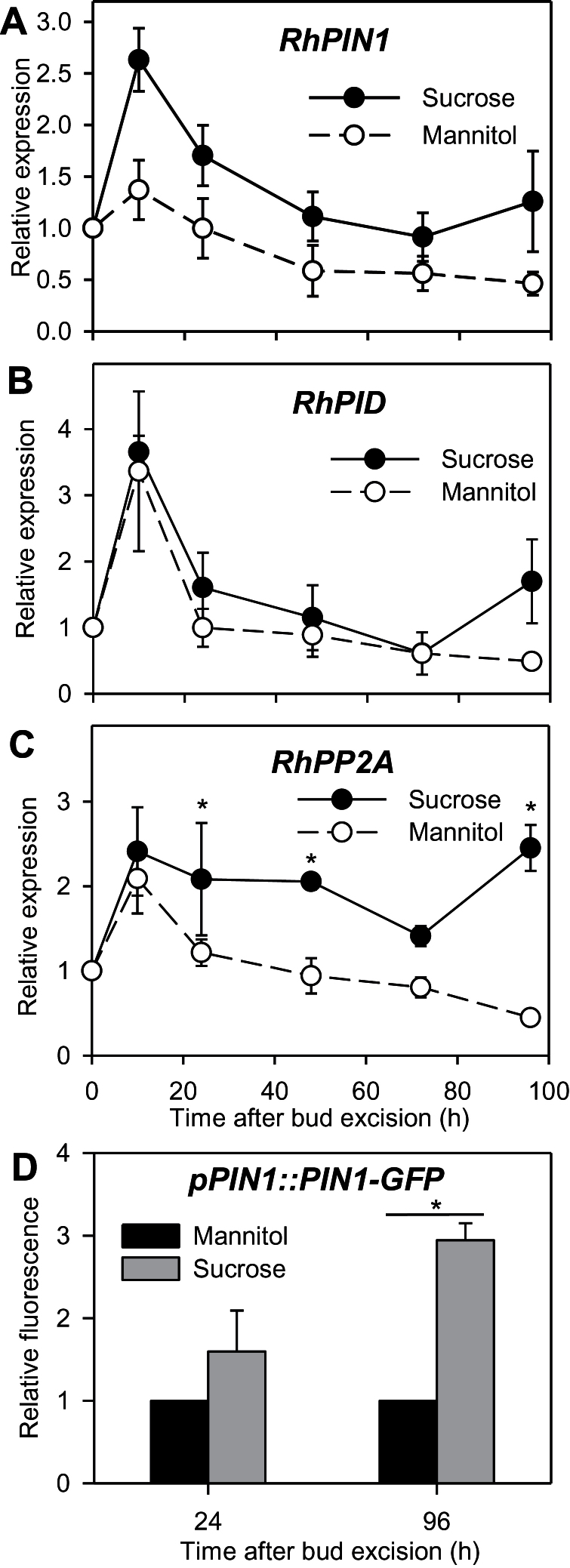
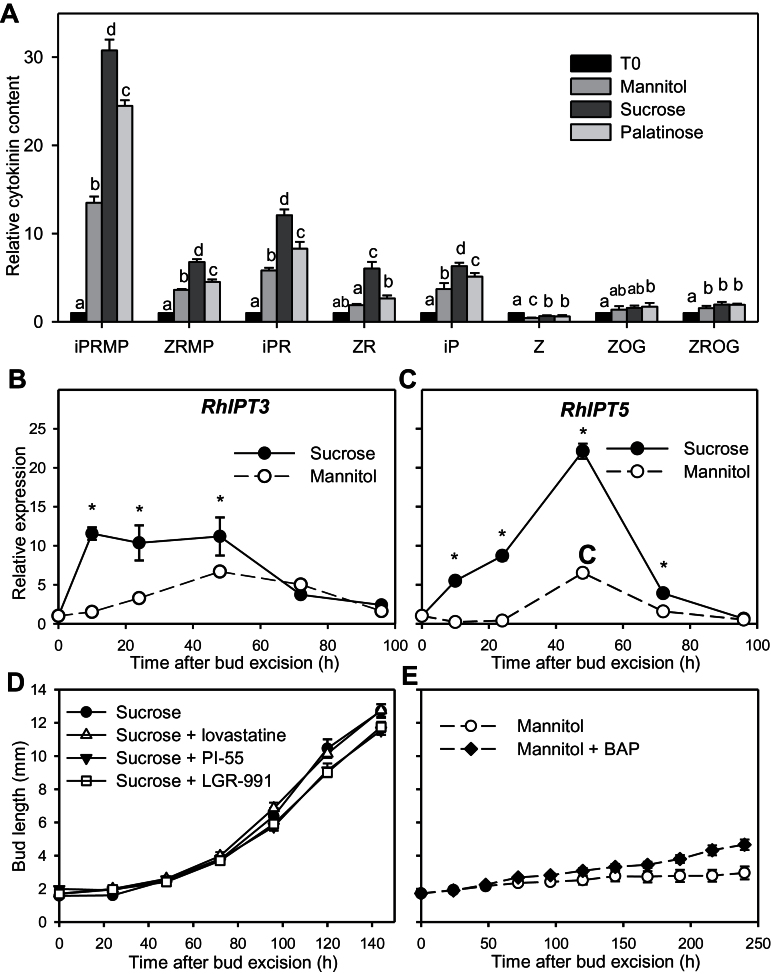
Sugar has only recently been identified as a key player in triggering bud outgrowth, while hormonal control of bud outgrowth is already well established. To get a better understanding of sugar control, the present study investigated how sugar availability modulates the hormonal network during bud outgrowth in Rosa hybrida. Other plant models, for which mutants are available, were used when necessary. Buds were grown in vitro to manipulate available sugars. The temporal patterns of the hormonal regulatory network were assessed in parallel with bud outgrowth dynamics. Sucrose determined bud entrance into sustained growth in a concentration-dependent manner. Sustained growth was accompanied by sustained auxin production in buds, and sustained auxin export in a DR5::GUS-expressing pea line. Several events occurred ahead of sucrose-stimulated bud outgrowth. Sucrose upregulated early auxin synthesis genes (RhTAR1, RhYUC1) and the auxin efflux carrier gene RhPIN1, and promoted PIN1 abundance at the plasma membrane in a pPIN1::PIN1-GFP-expressing tomato line. Sucrose downregulated both RwMAX2, involved in the strigolactone-transduction pathway, and RhBRC1, a repressor of branching, at an early stage. The presence of sucrose also increased stem cytokinin content, but sucrose-promoted bud outgrowth was not related to that pathway. In these processes, several non-metabolizable sucrose analogues induced sustained bud outgrowth in R. hybrida, Pisum sativum, and Arabidopsis thaliana, suggesting that sucrose was involved in a signalling pathway. In conclusion, we identified potential hormonal candidates for bud outgrowth control by sugar. They are central to future investigations aimed at disentangling the processes that underlie regulation of bud outgrowth by sugar.
直到最近,糖才被确定为触发芽生长的关键因素,而芽生长的激素调控早已为人熟知。为了更好地理解糖的调控作用,本研究调查了糖的可利用性如何在杂交蔷薇芽生长过程中调节激素网络。必要时使用了其他有可用突变体的植物模型。芽在体外培养以控制可利用的糖。激素调控网络的时间模式与芽生长动态同时进行评估。蔗糖以浓度依赖的方式决定芽进入持续生长状态。持续生长伴随着芽中持续的生长素产生,以及在表达DR5::GUS的豌豆品系中持续的生长素输出。在蔗糖刺激芽生长之前发生了几个事件。蔗糖上调早期生长素合成基因(RhTAR1、RhYUC1)和生长素流出载体基因RhPIN1,并在表达pPIN1::PIN1-GFP的番茄品系中促进质膜上PIN1的丰度。蔗糖在早期下调参与独脚金内酯转导途径的RwMAX2和分枝抑制因子RhBRC1。蔗糖的存在也增加了茎中的细胞分裂素含量,但蔗糖促进的芽生长与该途径无关。在这些过程中,几种不可代谢的蔗糖类似物在杂交蔷薇、豌豆和拟南芥中诱导了持续的芽生长,这表明蔗糖参与了一个信号通路。总之,我们确定了糖控制芽生长的潜在激素候选物。它们对于未来旨在阐明糖调控芽生长背后过程的研究至关重要。