Zanette Dalila Lucíola, Lorenzi Julio Cesar Cetrulo, Panepucci Rodrigo Alexandre, Palma Patricia Vianna Bonini, Dos Santos Daiane Fernanda, Prata Karen Lima, Silva Wilson Araújo
Department of Genetics, Ribeirão Preto Medical School, University of São Paulo, Ribeirão Preto, São Paulo, Brazil; Regional Blood Center of Ribeirão Preto and Center for Cell-Based Therapy-CEPID/FAPESP, Ribeirão Preto, São Paulo, Brazil; National Institute of Science and Technology in Stem cell and Cell Therapy, Ribeirão Preto, Brazil.
Regional Blood Center of Ribeirão Preto and Center for Cell-Based Therapy-CEPID/FAPESP, Ribeirão Preto, São Paulo, Brazil; National Institute of Science and Technology in Stem cell and Cell Therapy, Ribeirão Preto, Brazil.
PLoS One. 2015 Apr 13;10(4):e0120137. doi: 10.1371/journal.pone.0120137. eCollection 2015.
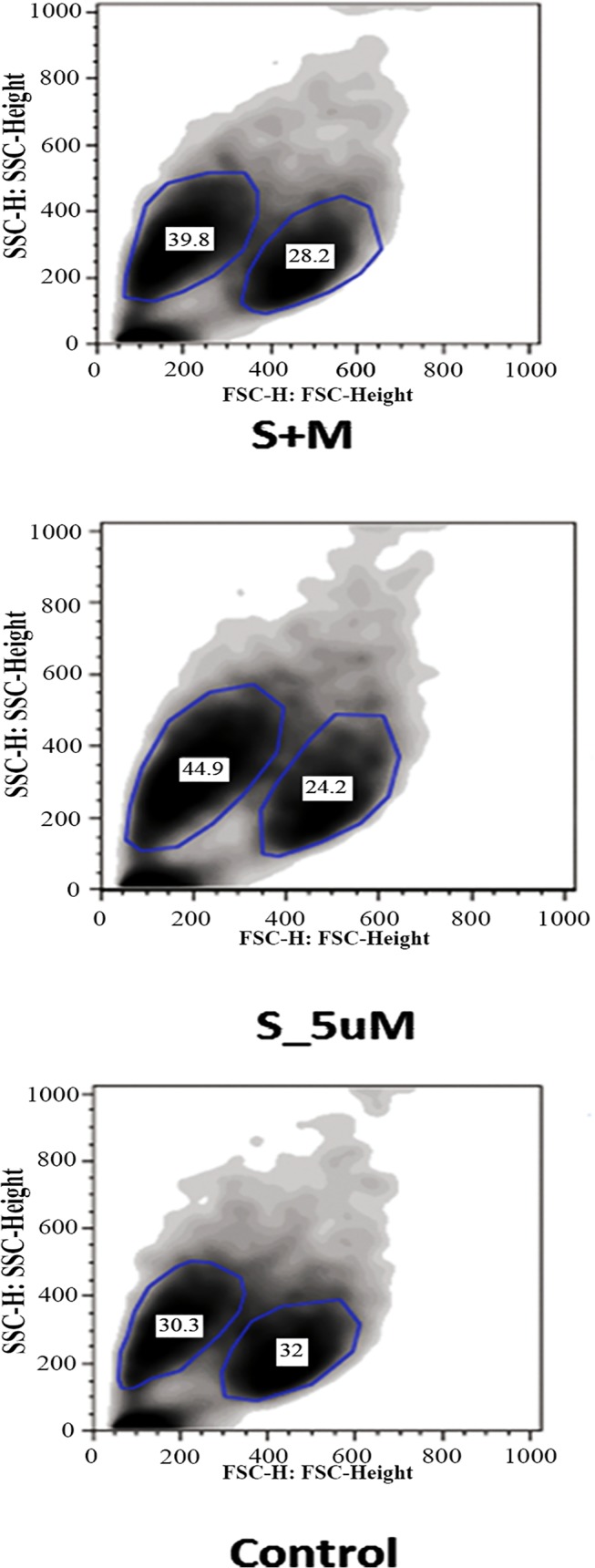
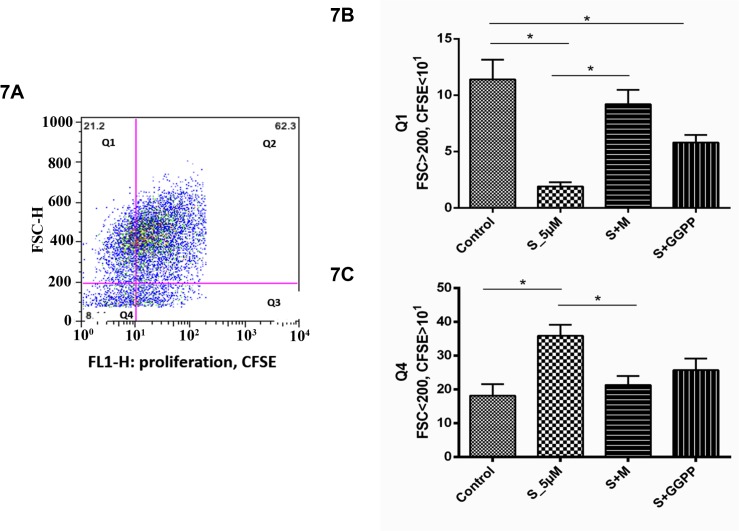
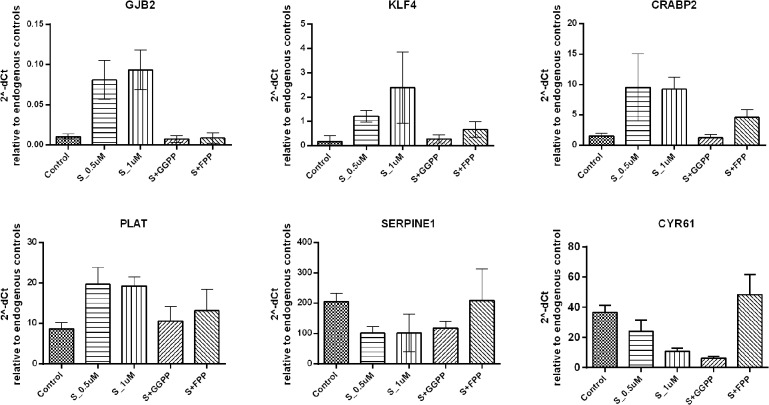
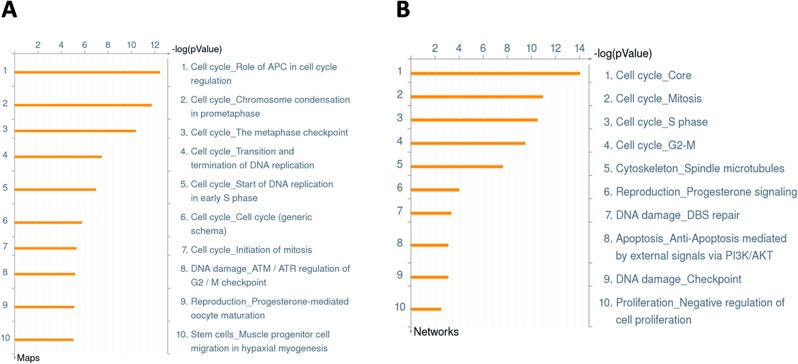
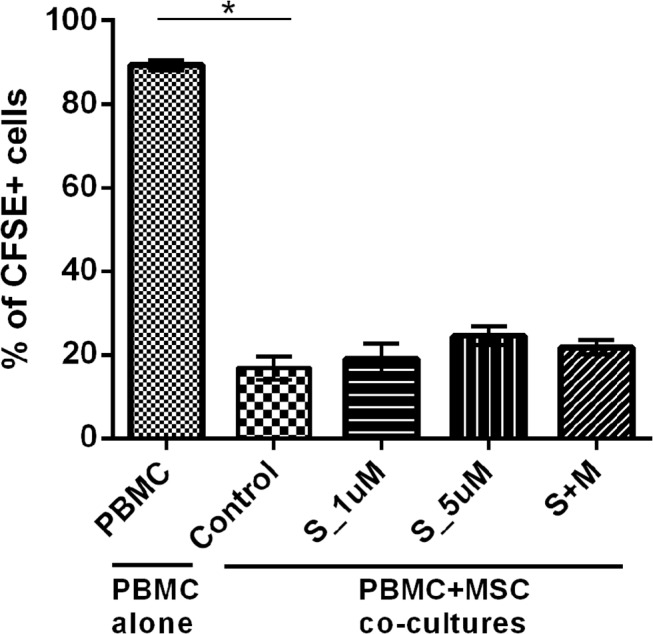
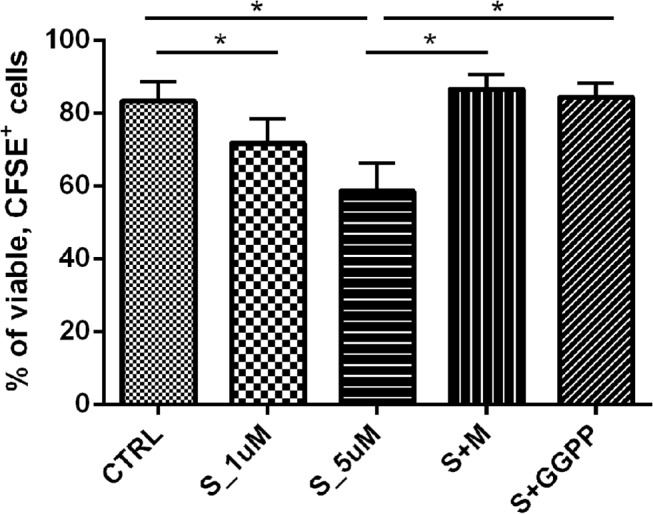
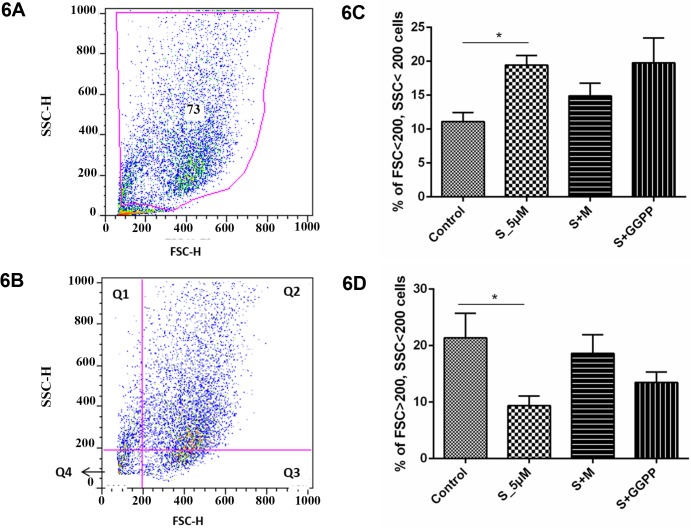
Statins are widely used hypocholesterolemic drugs that block the mevalonate pathway, responsible for the biosysnthesis of cholesterol. However, statins also have pleiotropic effects that interfere with several signaling pathways. Mesenchymal stromal cells (MSC) are a heterogeneous mixture of cells that can be isolated from a variety of tissues and are identified by the expression of a panel of surface markers and by their ability to differentiate in vitro into osteocytes, adipocytes and chondrocytes. MSC were isolated from amniotic membranes and bone marrows and characterized based on ISCT (International Society for Cell Therapy) minimal criteria. Simvastatin-treated cells and controls were directly assayed by CFSE (Carboxyfluorescein diacetate succinimidyl ester) staining to assess their cell proliferation and their RNA was used for microarray analyses and quantitative PCR (qPCR). These MSC were also evaluated for their ability to inhibit PBMC (peripheral blood mononuclear cells) proliferation. We show here that simvastatin negatively modulates MSC proliferation in a dose-dependent way and regulates the expression of proliferation-related genes. Importantly, we observed that simvastatin increased the percentage of a subset of smaller MSC, which also were actively proliferating. The association of MSC decreased size with increased pluripotency and the accumulating evidence that statins may prevent cellular senescence led us to hypothesize that simvastatin induces a smaller subpopulation that may have increased ability to maintain the entire pool of MSC and also to protect them from cellular senescence induced by long-term cultures/passages in vitro. These results may be important to better understand the pleiotropic effects of statins and its effects on the biology of cells with regenerative potential.
他汀类药物是广泛使用的降胆固醇药物,可阻断负责胆固醇生物合成的甲羟戊酸途径。然而,他汀类药物也具有多效性作用,会干扰多种信号通路。间充质基质细胞(MSC)是一种异质性细胞混合物,可从多种组织中分离出来,并通过一组表面标志物的表达以及它们在体外分化为骨细胞、脂肪细胞和软骨细胞的能力来鉴定。从羊膜和骨髓中分离出MSC,并根据国际细胞治疗协会(ISCT)的最低标准进行表征。用羧基荧光素二乙酸琥珀酰亚胺酯(CFSE)染色直接检测辛伐他汀处理的细胞和对照,以评估它们的细胞增殖情况,并将其RNA用于微阵列分析和定量聚合酶链反应(qPCR)。还评估了这些MSC抑制外周血单个核细胞(PBMC)增殖的能力。我们在此表明,辛伐他汀以剂量依赖的方式负向调节MSC增殖,并调节增殖相关基因的表达。重要的是,我们观察到辛伐他汀增加了较小的MSC亚群的百分比,这些MSC也在积极增殖。MSC大小减小与多能性增加相关,而且越来越多的证据表明他汀类药物可能预防细胞衰老,这使我们推测,辛伐他汀诱导出一个较小的亚群,该亚群可能具有更强的能力来维持MSC的整个群体,并保护它们免受体外长期培养/传代诱导的细胞衰老。这些结果对于更好地理解他汀类药物的多效性作用及其对具有再生潜力细胞生物学的影响可能很重要。