Wen Tzai-Hung, Chin Wei Chien Benny
Department of Geography, National Taiwan University, No. 1, Sec. 4, Roosevelt Road, Taipei 10617, Taiwan.
Int J Environ Res Public Health. 2015 Apr 14;12(4):4170-84. doi: 10.3390/ijerph120404170.
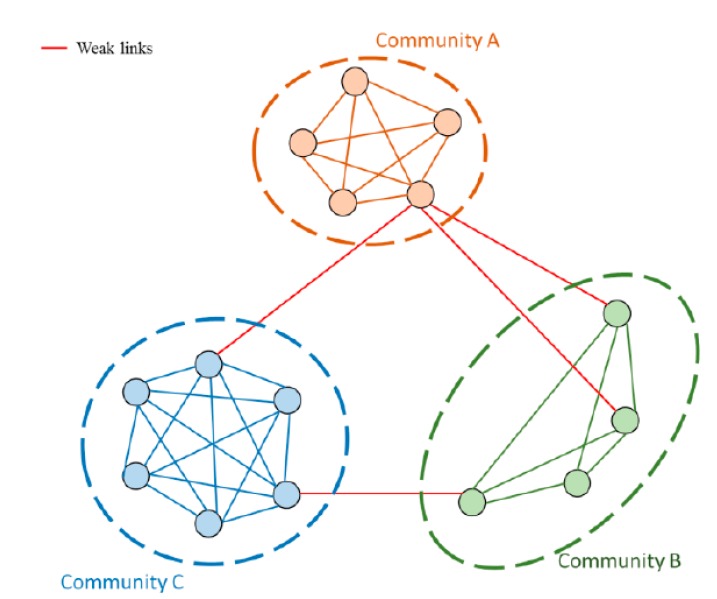
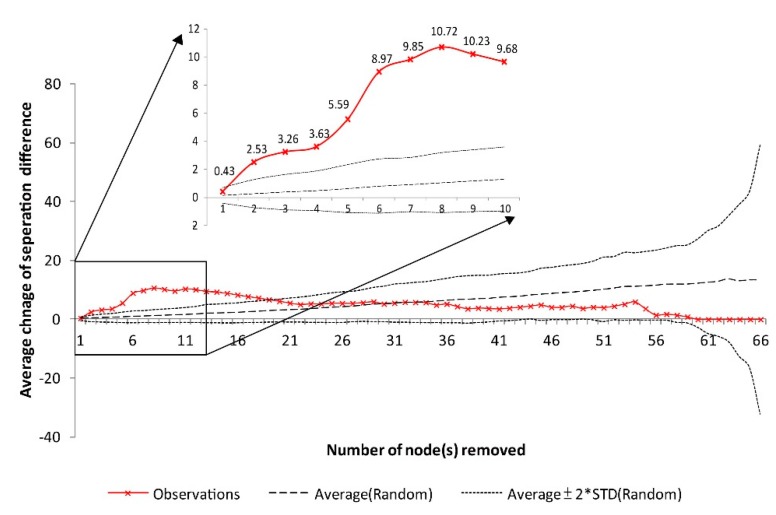
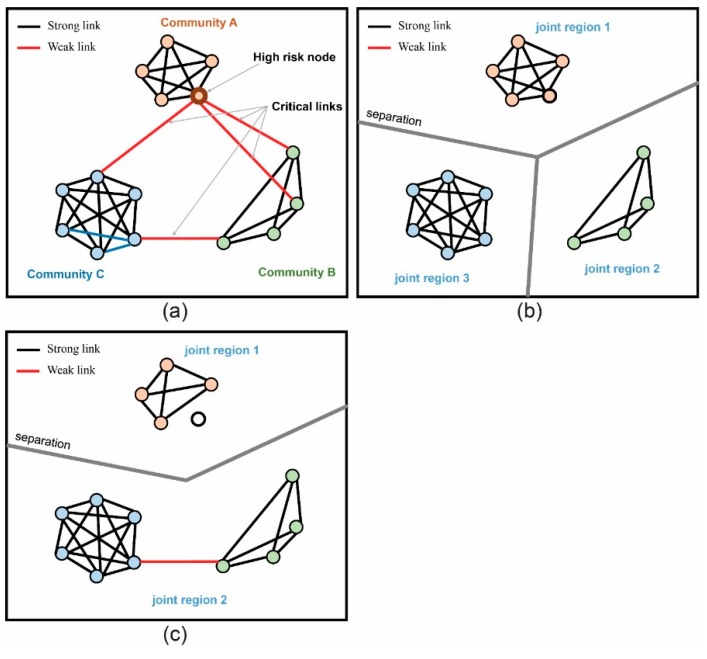
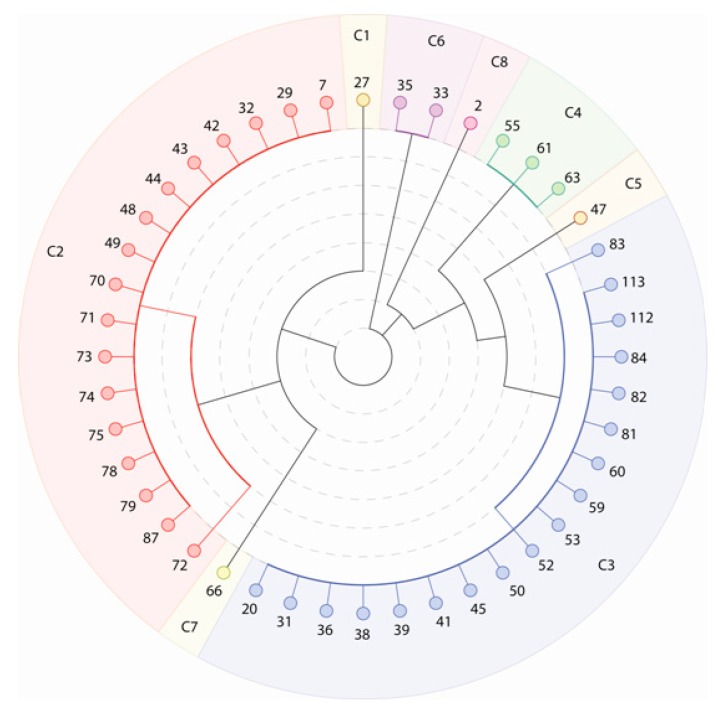
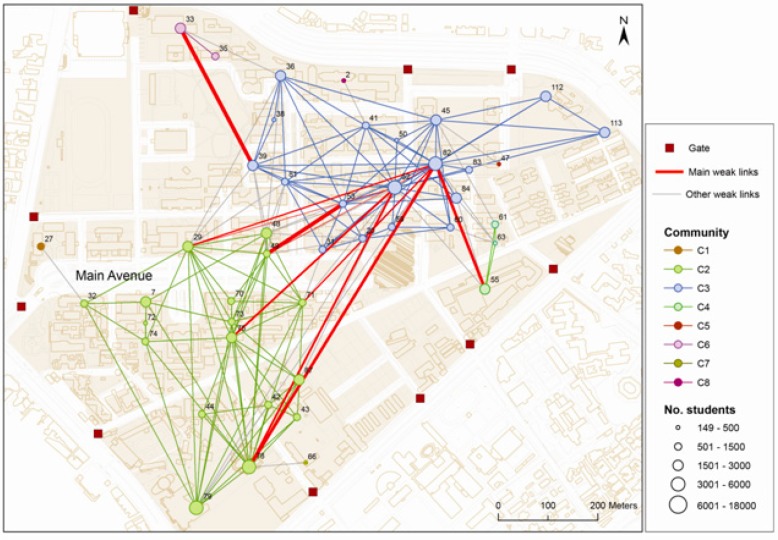
Respiratory diseases mainly spread through interpersonal contact. Class suspension is the most direct strategy to prevent the spread of disease through elementary or secondary schools by blocking the contact network. However, as university students usually attend courses in different buildings, the daily contact patterns on a university campus are complicated, and once disease clusters have occurred, suspending classes is far from an efficient strategy to control disease spread. The purpose of this study is to propose a methodological framework for generating campus location networks from a routine administration database, analyzing the community structure of the network, and identifying the critical links and nodes for blocking respiratory disease transmission. The data comes from the student enrollment records of a major comprehensive university in Taiwan. We combined the social network analysis and spatial interaction model to establish a geo-referenced community structure among the classroom buildings. We also identified the critical links among the communities that were acting as contact bridges and explored the changes in the location network after the sequential removal of the high-risk buildings. Instead of conducting a questionnaire survey, the study established a standard procedure for constructing a location network on a large-scale campus from a routine curriculum database. We also present how a location network structure at a campus could function to target the high-risk buildings as the bridges connecting communities for blocking disease transmission.
呼吸系统疾病主要通过人际接触传播。停课是通过中小学阻断接触网络来预防疾病传播的最直接策略。然而,由于大学生通常在不同的教学楼上课,大学校园的日常接触模式很复杂,一旦出现疾病聚集,停课远非控制疾病传播的有效策略。本研究的目的是提出一个方法框架,用于从常规管理数据库生成校园位置网络,分析网络的社区结构,并识别阻断呼吸道疾病传播的关键链路和节点。数据来自台湾一所主要综合性大学的学生入学记录。我们结合社会网络分析和空间相互作用模型,在教学楼之间建立了地理参考社区结构。我们还识别了作为接触桥梁的社区之间的关键链路,并探讨了依次移除高风险建筑后位置网络的变化。该研究不是进行问卷调查,而是从常规课程数据库建立了一个在大规模校园构建位置网络的标准程序。我们还展示了校园位置网络结构如何发挥作用,将高风险建筑作为连接社区的桥梁来阻断疾病传播。