Chin Wei-Chien-Benny, Wen Tzai-Hung, Sabel Clive E, Wang I-Hsiang
Department of Geography, National Taiwan University, Taipei City, 10617, Taiwan.
Department of Environmental Science, Aarhus University, 4000, Roskilde, Denmark.
Sci Rep. 2017 Oct 3;7(1):12565. doi: 10.1038/s41598-017-12852-z.
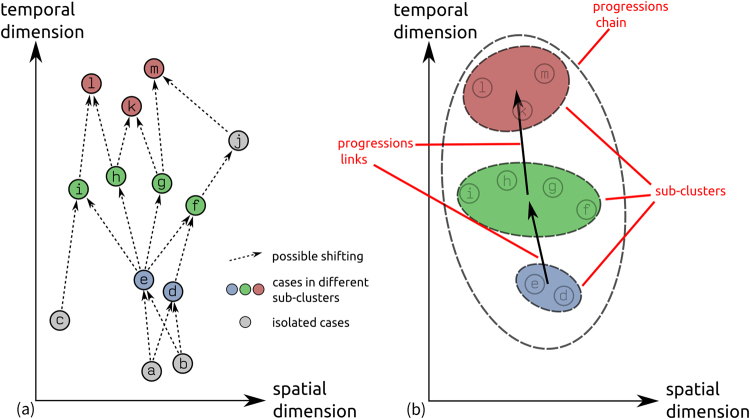
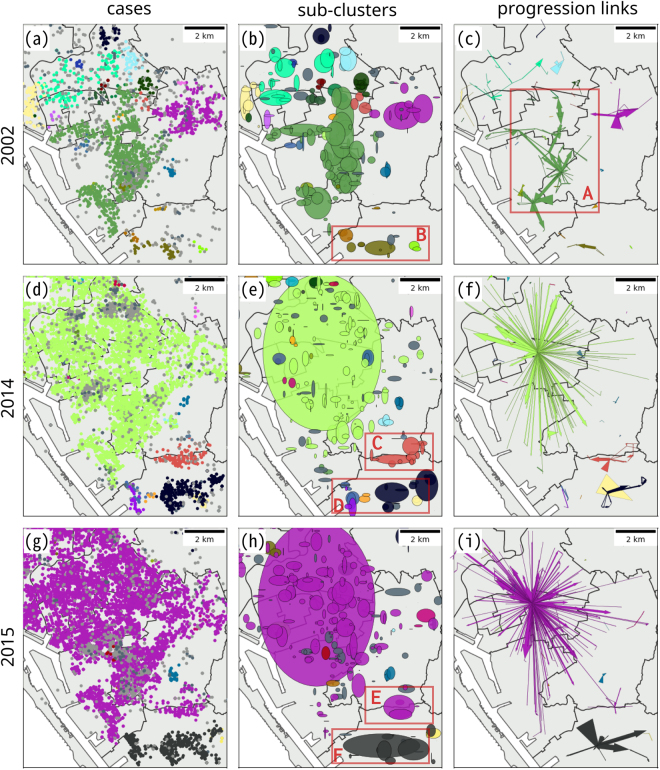
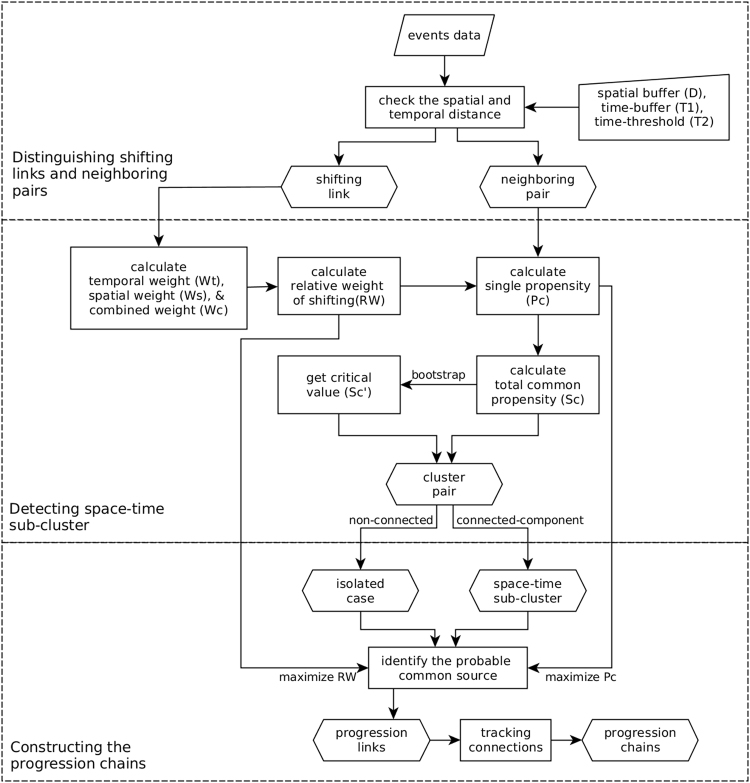
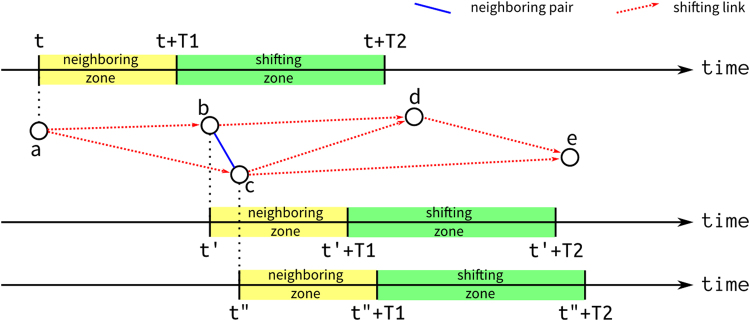
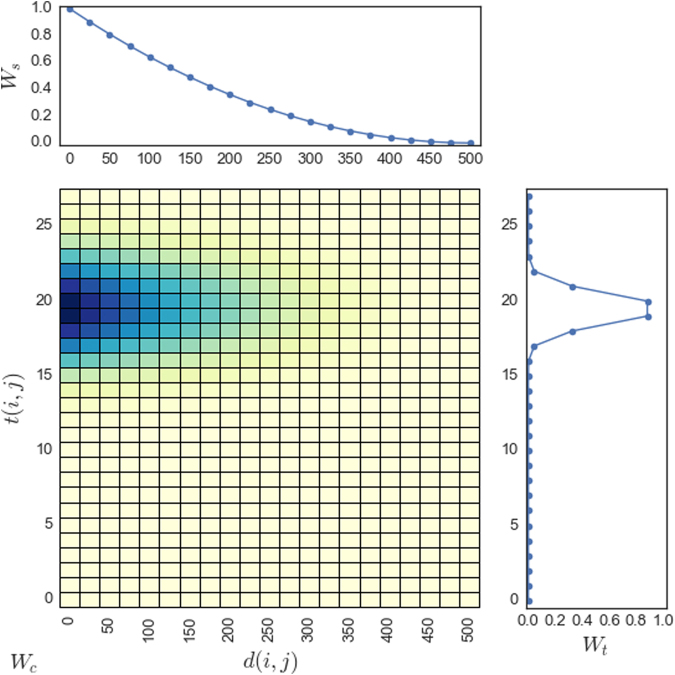
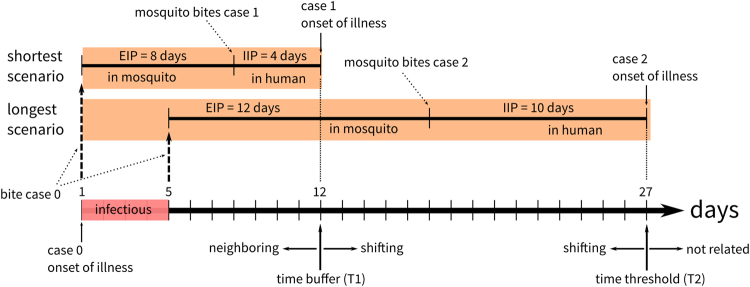
A diffusion process can be considered as the movement of linked events through space and time. Therefore, space-time locations of events are key to identify any diffusion process. However, previous clustering analysis methods have focused only on space-time proximity characteristics, neglecting the temporal lag of the movement of events. We argue that the temporal lag between events is a key to understand the process of diffusion movement. Using the temporal lag could help to clarify the types of close relationships. This study aims to develop a data exploration algorithm, namely the TrAcking Progression In Time And Space (TaPiTaS) algorithm, for understanding diffusion processes. Based on the spatial distance and temporal interval between cases, TaPiTaS detects sub-clusters, a group of events that have high probability of having common sources, identifies progression links, the relationships between sub-clusters, and tracks progression chains, the connected components of sub-clusters. Dengue Fever cases data was used as an illustrative case study. The location and temporal range of sub-clusters are presented, along with the progression links. TaPiTaS algorithm contributes a more detailed and in-depth understanding of the development of progression chains, namely the geographic diffusion process.
扩散过程可被视为相关事件在空间和时间中的移动。因此,事件的时空位置是识别任何扩散过程的关键。然而,以往的聚类分析方法仅关注时空邻近特征,而忽略了事件移动的时间滞后。我们认为,事件之间的时间滞后是理解扩散运动过程的关键。利用时间滞后有助于厘清紧密关系的类型。本研究旨在开发一种数据探索算法,即时空追踪进展(TaPiTaS)算法,以理解扩散过程。基于病例之间的空间距离和时间间隔,TaPiTaS检测子集群(即一组很可能有共同源头的事件),识别进展链接(子集群之间的关系),并追踪进展链(子集群的连通组件)。登革热病例数据被用作一个说明性案例研究。呈现了子集群的位置和时间范围以及进展链接。TaPiTaS算法有助于更详细、深入地理解进展链的发展,即地理扩散过程。