Ruberto Irene, Marques Ernesto, Burke Donald S, Van Panhuis Willem G
Department of Epidemiology, University of Pittsburgh Graduate School of Public Health, Pittsburgh, Pennsylvania, United States of America.
Center for Vaccine Research, University of Pittsburgh, Pittsburgh, Pennsylvania, United States of America.
PLoS Negl Trop Dis. 2015 Apr 14;9(4):e0003511. doi: 10.1371/journal.pntd.0003511. eCollection 2015 Apr.
The use of high quality disease surveillance data has become increasingly important for public health action against new threats. In response, countries have developed a wide range of disease surveillance systems enabled by technological advancements. The heterogeneity and complexity of country data systems have caused a growing need for international organizations such as the World Health Organization (WHO) to coordinate the standardization, integration, and dissemination of country disease data at the global level for research and policy. The availability and consistency of currently available disease surveillance data at the global level are unclear. We investigated this for dengue surveillance data provided online by the WHO.
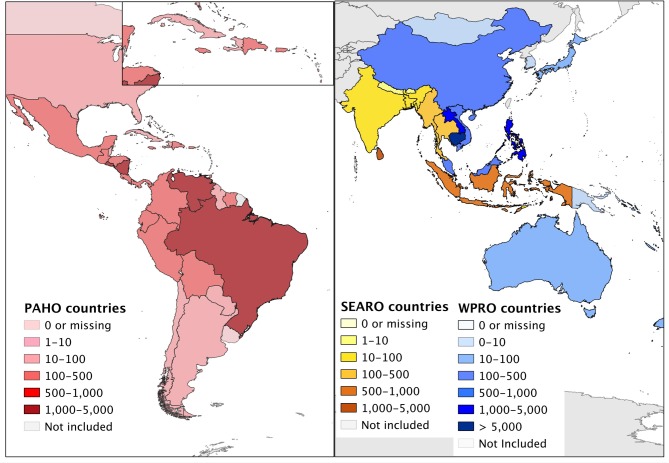
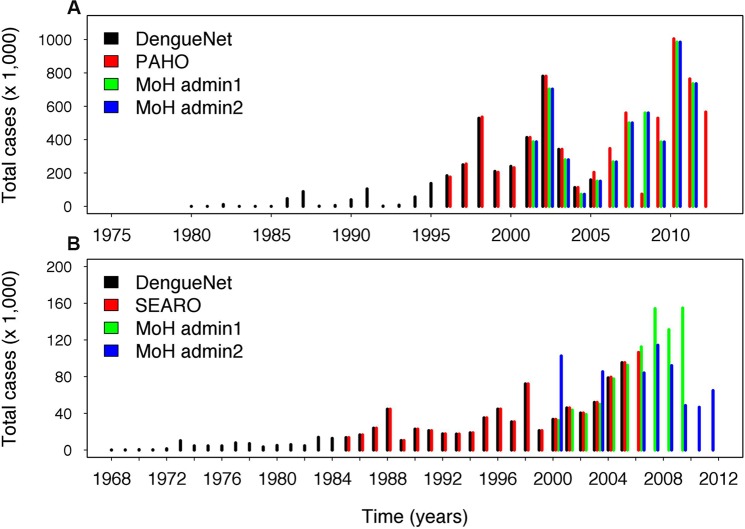
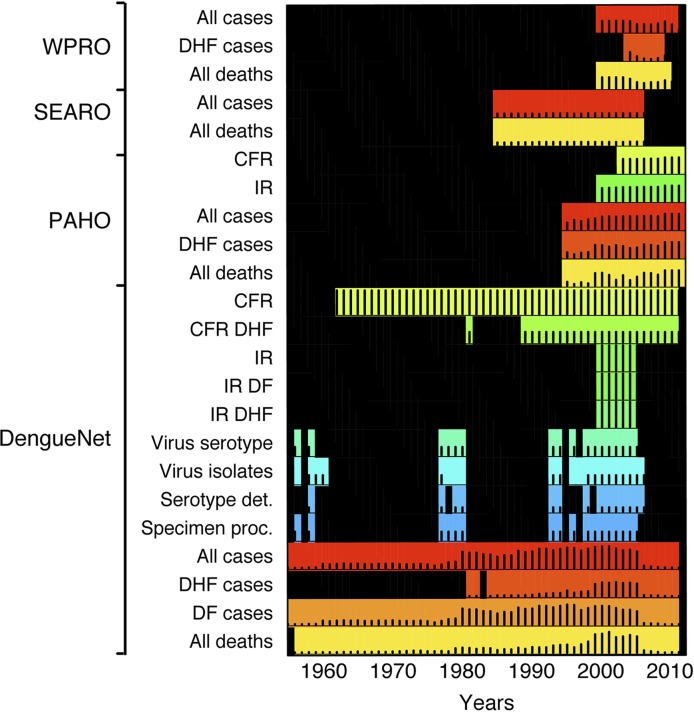
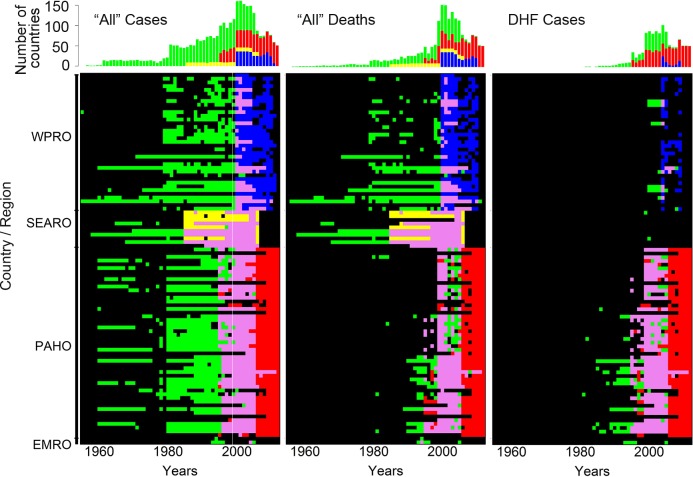
We extracted all dengue surveillance data provided online by WHO Headquarters and Regional Offices (RO's). We assessed the availability and consistency of these data by comparing indicators within and between sources. We also assessed the consistency of dengue data provided online by two example countries (Brazil and Indonesia). Data were available from WHO for 100 countries since 1955 representing a total of 23 million dengue cases and 82 thousand deaths ever reported to WHO. The availability of data on DengueNet and some RO's declined dramatically after 2005. Consistency was lacking between sources (84% across all indicators representing a discrepancy of almost half a million cases). Within sources, data at high spatial resolution were often incomplete.
The decline of publicly available, integrated dengue surveillance data at the global level will limit opportunities for research, policy, and advocacy. A new financial and operational framework will be necessary for innovation and for the continued availability of integrated country disease data at the global level.
高质量疾病监测数据对于应对新威胁的公共卫生行动愈发重要。为此,各国借助技术进步开发了广泛的疾病监测系统。各国数据系统的异质性和复杂性使得世界卫生组织(WHO)等国际组织愈发需要在全球层面协调各国疾病数据的标准化、整合及传播,以用于研究和政策制定。目前全球层面疾病监测数据的可获取性和一致性尚不清楚。我们针对WHO在线提供的登革热监测数据进行了调查。
我们提取了WHO总部和区域办事处(RO)在线提供的所有登革热监测数据。通过比较不同来源内部及之间的指标,我们评估了这些数据的可获取性和一致性。我们还评估了两个示例国家(巴西和印度尼西亚)在线提供的登革热数据的一致性。自1955年以来,WHO可获取100个国家的数据,共计2300万例登革热病例和8.2万例死亡病例曾上报给WHO。2005年后,DengueNet和部分RO的数据可获取性大幅下降。不同来源之间缺乏一致性(所有指标中有84%存在差异,相差近50万例)。在各来源内部,高空间分辨率的数据往往不完整。
全球层面公开可用的综合登革热监测数据的减少将限制研究、政策制定和宣传的机会。需要一个新的财务和运营框架来推动创新,并确保全球层面持续可获取综合的国家疾病数据。