
通过金属蒸汽合成法制备的葡萄糖包被的超顺磁性氧化铁纳米颗粒被选择性地内化到表达GLUT1转运蛋白的胰腺腺癌细胞系中。
Glucose-coated superparamagnetic iron oxide nanoparticles prepared by metal vapour synthesis are electively internalized in a pancreatic adenocarcinoma cell line expressing GLUT1 transporter.
作者信息
Barbaro Daniele, Di Bari Lorenzo, Gandin Valentina, Evangelisti Claudio, Vitulli Giovanni, Schiavi Eleonora, Marzano Cristina, Ferretti Anna M, Salvadori Piero
机构信息
Section of Endocrinology, General Hospital, Livorno, Viale Alfieri 36, 57100 Livorno, Italy.
Department of Chemistry and Industrial Chemistry, University of Pisa, Via Moruzzi 3, 56124 Pisa, Italy.
出版信息
PLoS One. 2015 Apr 15;10(4):e0123159. doi: 10.1371/journal.pone.0123159. eCollection 2015.
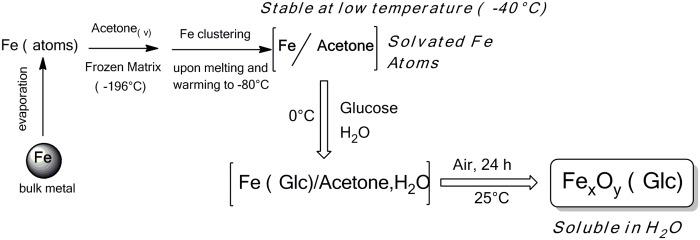
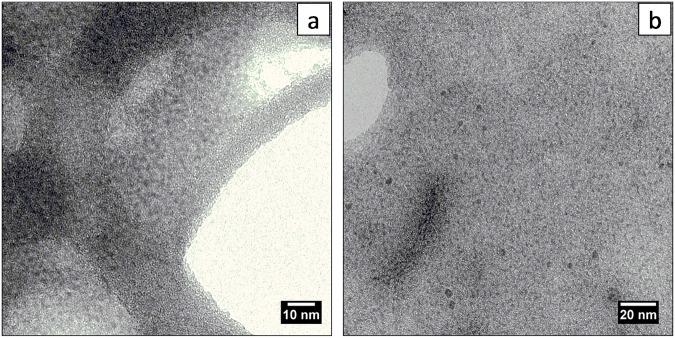
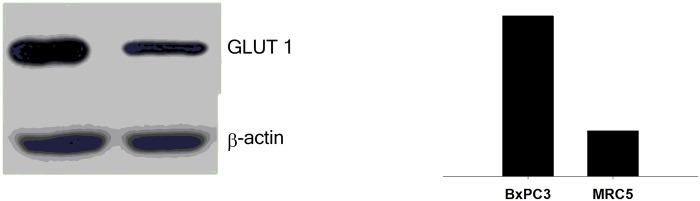
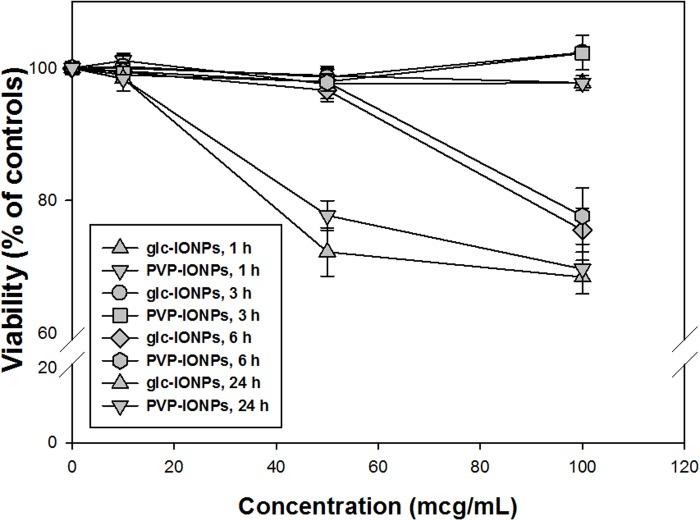
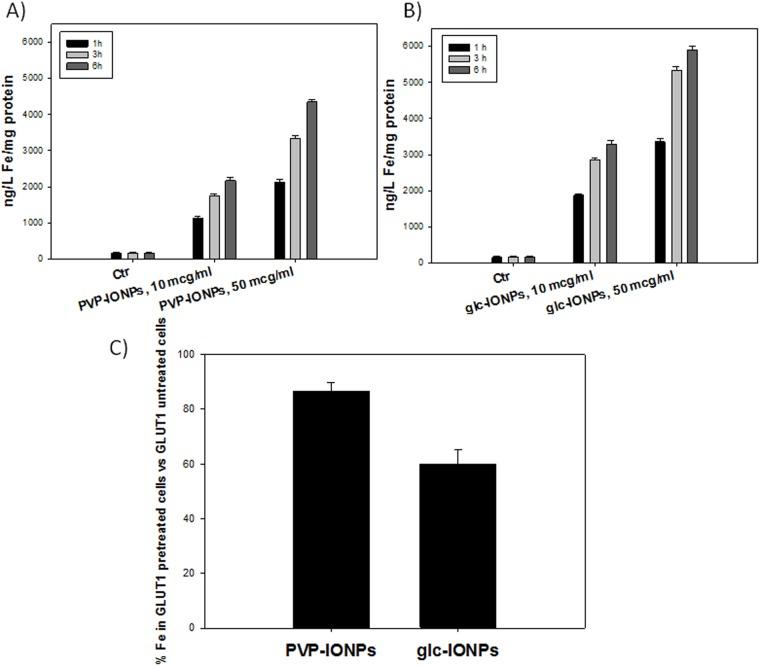
Iron oxide nanoparticles (IONP) can have a variety of biomedical applications due to their visualization properties through Magnetic Resonance Imaging (MRI) and heating with radio frequency or alternating magnetic fields. In the oncological field, coating IONP with organic compounds to provide specific features and to achieve the ability of binding specific molecular targets appears to be very promising. To take advantage of the high avidity of tumor cells for glucose, we report the development of very small glucose-coated IONP (glc-IONP) by employing an innovative technique, Metal Vapor Synthesis (MVS). Moreover, we tested the internalization of our gl-IONP on a tumor line, BxPC3, over-expressing GLUT 1 transporter. Both glc-IONP and polyvinylpyrrolidone-IONP (PVP-IONP), as control, were prepared with MVS and were tested on BxPC3 at various concentrations. To evaluate the role of GLUT-1 transporter, we also investigated the effect of adding a polyclonal anti-GLUT1 antibody. After proper treatment, the iron value was assessed by atomic absorption spectrometer, reported in mcg/L and expressed in mg of protein. Our IONP prepared with MVS were very small and homogeneously distributed in a narrow range (1.75-3.75 nm) with an average size of 2.7 nm and were super-paramagnetic. Glc-IONP were internalized by BxPC3 cells in a larger amount than PVP-IONP. After 6h of treatment with 50 mcg/mL of IONPs, the content of Fe was 1.5 times higher in glc-IONP-treated cells compared with PVP-IONP-treated cells. After 1h pre-treatment with anti-GLUT1, a reduction of 41% cellular accumulation of glc-IONP was observed. Conversely, the uptake of PVP-IONPs was reduced only by 14% with antibody pretreatment. In conclusion, MVS allowed us to prepare small, homogeneous, super-paramagnetic glc-IONP, which are electively internalized by a tumor line over-expressing GLUT1. Our glc-IONP appear to have many requisites for in vivo use.
氧化铁纳米颗粒(IONP)因其可通过磁共振成像(MRI)可视化以及能在射频或交变磁场作用下发热,而具有多种生物医学应用。在肿瘤学领域,用有机化合物包覆IONP以赋予其特定特性并实现结合特定分子靶点的能力,似乎非常有前景。为利用肿瘤细胞对葡萄糖的高亲和力,我们报告了采用创新技术——金属蒸汽合成法(MVS)开发的极小的葡萄糖包覆IONP(glc - IONP)。此外,我们在过表达GLUT 1转运蛋白的肿瘤细胞系BxPC3上测试了我们的glc - IONP的内化情况。glc - IONP和作为对照的聚乙烯吡咯烷酮 - IONP(PVP - IONP)均采用MVS制备,并在不同浓度下对BxPC3进行测试。为评估GLUT - 1转运蛋白的作用,我们还研究了添加多克隆抗GLUT1抗体的效果。经过适当处理后,通过原子吸收光谱仪评估铁含量,以微克/升报告并以毫克蛋白表示。我们用MVS制备的IONP非常小,在1.75 - 3.75纳米的窄范围内均匀分布,平均尺寸为2.7纳米,且具有超顺磁性。与PVP - IONP相比,glc - IONP被BxPC3细胞内化的量更多。在用50微克/毫升的IONP处理6小时后,与PVP - IONP处理的细胞相比,glc - IONP处理的细胞中铁含量高1.5倍。在用抗GLUT1预处理1小时后,观察到glc - IONP的细胞内累积减少了41%。相反,抗体预处理后PVP - IONP的摄取仅减少了14%。总之,MVS使我们能够制备出小的、均匀的、超顺磁性的glc - IONP,其可被过表达GLUT1的肿瘤细胞系选择性内化。我们的glc - IONP似乎具备许多体内应用的条件。


 Zotero 插件