Fleet Richard, Pelletier Christina, Marcoux Jérémie, Maltais-Giguère Julie, Archambault Patrick, Audette Louis David, Plant Jeff, Bégin François, Tounkara Fatoumata Korika, Poitras Julien
Department of Family and Emergency Medicine, Laval University, Quebec, Quebec, Canada; Research Chair in Emergency Medicine, Laval University-CHAU Hôtel-Dieu de Lévis Hospital, Lévis City, Quebec, Canada.
Department of Family and Emergency Medicine, Laval University, Quebec, Quebec, Canada.
PLoS One. 2015 Apr 15;10(4):e0123746. doi: 10.1371/journal.pone.0123746. eCollection 2015.
Rural emergency departments (EDs) are important safety nets for the 20% of Canadians who live there. A serious problem in access to health care services in these regions has emerged. However, there are considerable geographic disparities in access to trauma center in Canada. The main objective of this project was to compare access to local 24/7 support services in rural EDs in Quebec and Ontario as well as distances to Levels 1 and 2 trauma centers.
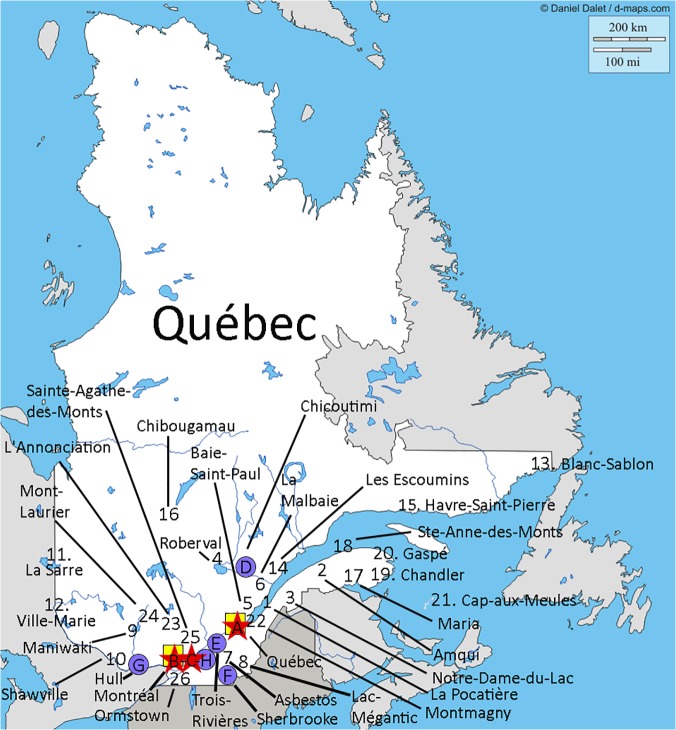
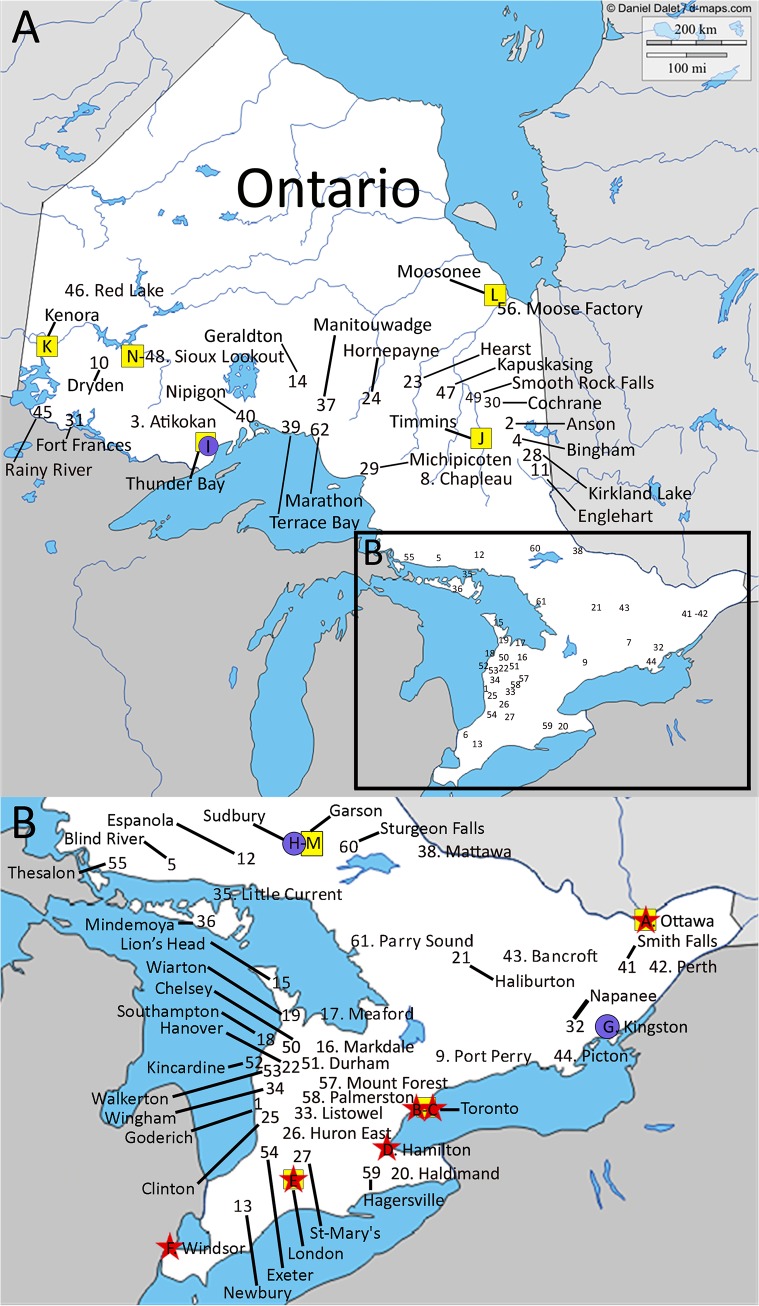
Rural EDs were identified through the Canadian Healthcare Association's Guide to Canadian Healthcare Facilities. We selected hospitals with 24/7 ED physician coverage and hospitalization beds that were located in rural communities. There were 26 rural EDs in Quebec and 62 in Ontario meeting these criteria. Data were collected from ministries of health, local health authorities, and ED statistics. Fisher's exact test, the t-test or Wilcoxon-Mann-Whitney test, were performed to compare rural EDs of Quebec and Ontario.
All selected EDs of Quebec and Ontario agreed to participate in the study. The number of EDs visits was higher in Quebec than in Ontario (19 322 ± 6 275 vs 13 446 ± 8 056, p = 0.0013). There were no significant differences between Quebec and Ontario's local population and small town population density. Quebec's EDs have better access to advance imaging services such as CT scanner (77% vs 15%, p < .0001) and most the consultant support and ICU (92% vs 31%, p < .0001). Finally, more than 40% of rural EDs in Quebec and Ontario are more than 300 km away from Levels 1 and 2 trauma centers.
Considering that Canada has a Universal health care system, the discrepancies between Quebec and Ontario in access to support services are intriguing. A nationwide study is justified to address this issue.
农村急诊科是20%居住在加拿大农村地区居民的重要安全保障。这些地区在获得医疗服务方面出现了一个严重问题。然而,加拿大在创伤中心的可及性方面存在显著的地理差异。本项目的主要目标是比较魁北克省和安大略省农村急诊科获得当地全天候支持服务的情况以及到一级和二级创伤中心的距离。
通过加拿大医疗协会的《加拿大医疗设施指南》确定农村急诊科。我们选择了位于农村社区且有急诊科医生全天候值班和设有住院床位的医院。魁北克省有26家农村急诊科,安大略省有62家符合这些标准。数据收集自各省卫生部、地方卫生当局以及急诊科统计数据。采用费舍尔精确检验、t检验或威尔科克森-曼-惠特尼检验来比较魁北克省和安大略省的农村急诊科。
魁北克省和安大略省所有选定的急诊科均同意参与研究。魁北克省急诊科的就诊人数高于安大略省(19322±6275人次对13446±8056人次,p = 0.0013)。魁北克省和安大略省的当地人口及小镇人口密度无显著差异。魁北克省的急诊科能更好地获得先进影像服务,如CT扫描仪(77%对15%,p <.0001),并且大多数能获得会诊支持和重症监护病房服务(92%对31%,p <.0001)。最后,魁北克省和安大略省超过40%的农村急诊科距离一级和二级创伤中心超过300公里。
鉴于加拿大实行全民医疗保健系统,魁北克省和安大略省在获得支持服务方面的差异令人关注。开展一项全国性研究来解决这个问题是合理的。