Collins Christopher M, Speck Samuel H
Emory Vaccine Center, Emory University School of Medicine, Atlanta, Georgia, United States of America; Department of Microbiology and Immunology, Emory University School of Medicine, Atlanta, Georgia, United States of America.
PLoS Pathog. 2015 Apr 13;11(4):e1004831. doi: 10.1371/journal.ppat.1004831. eCollection 2015 Apr.
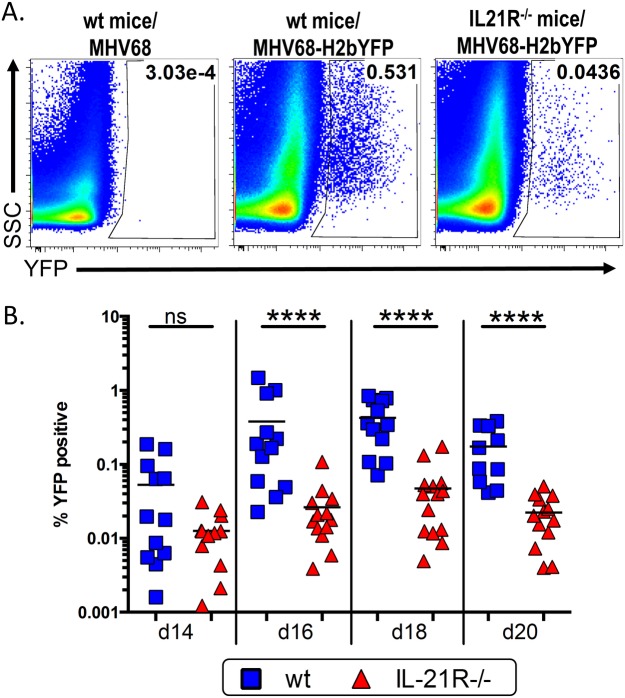
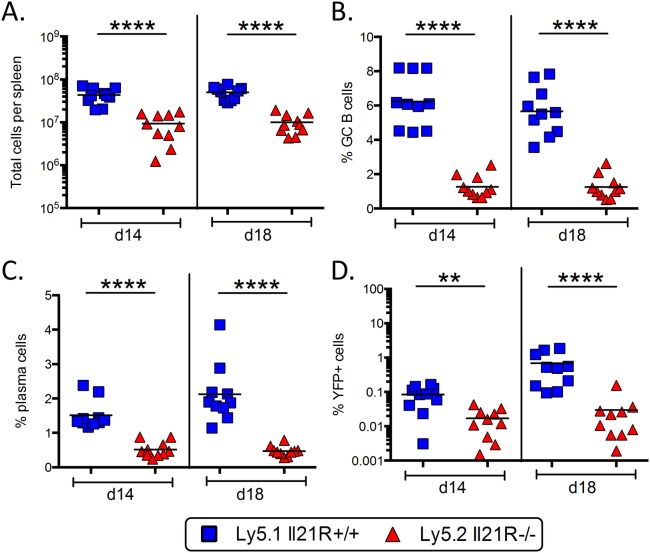
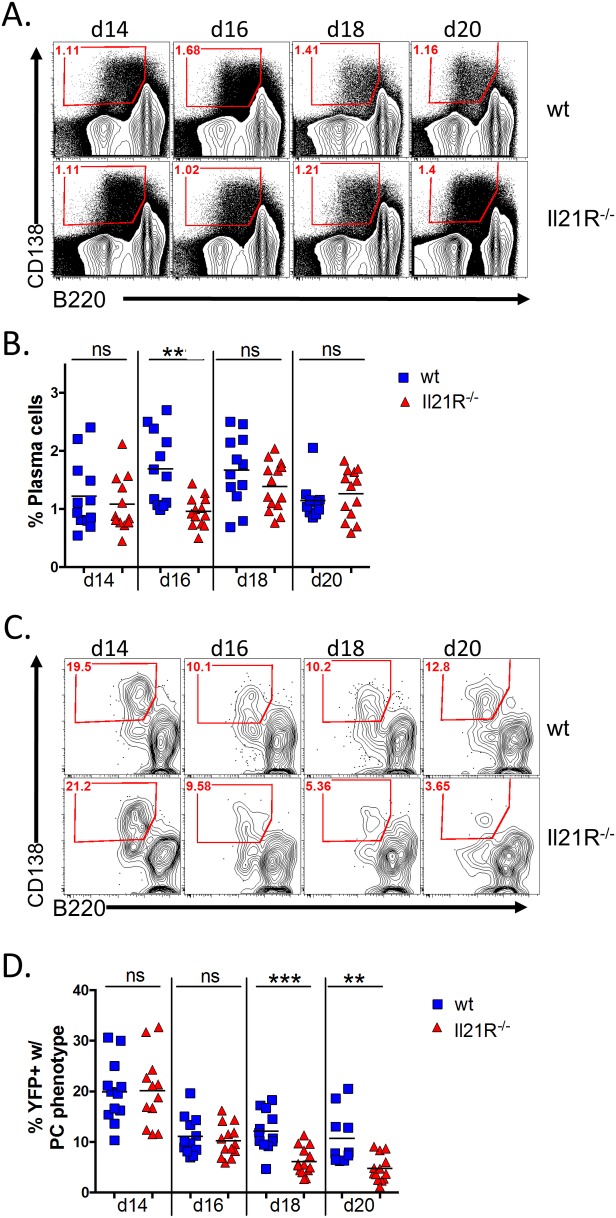
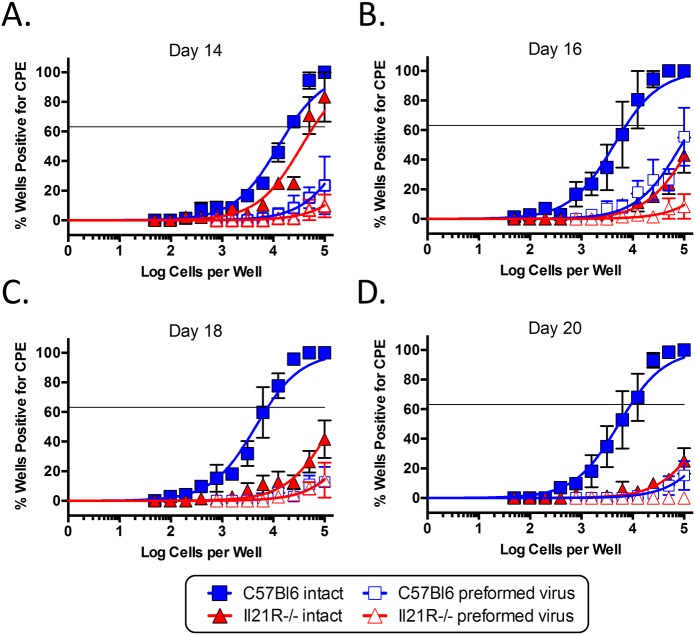
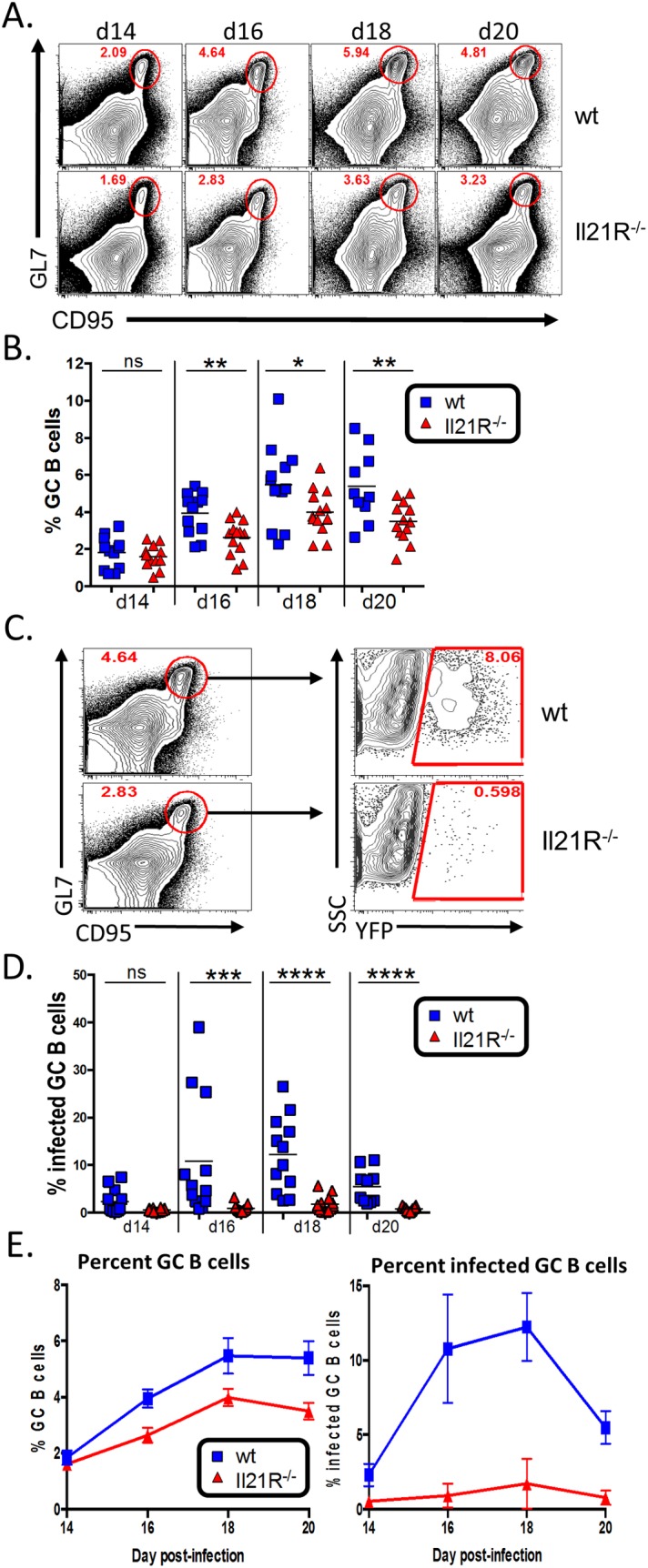
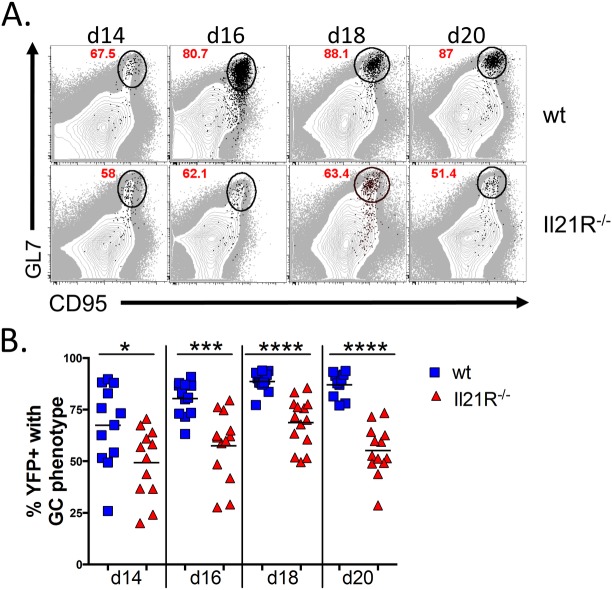
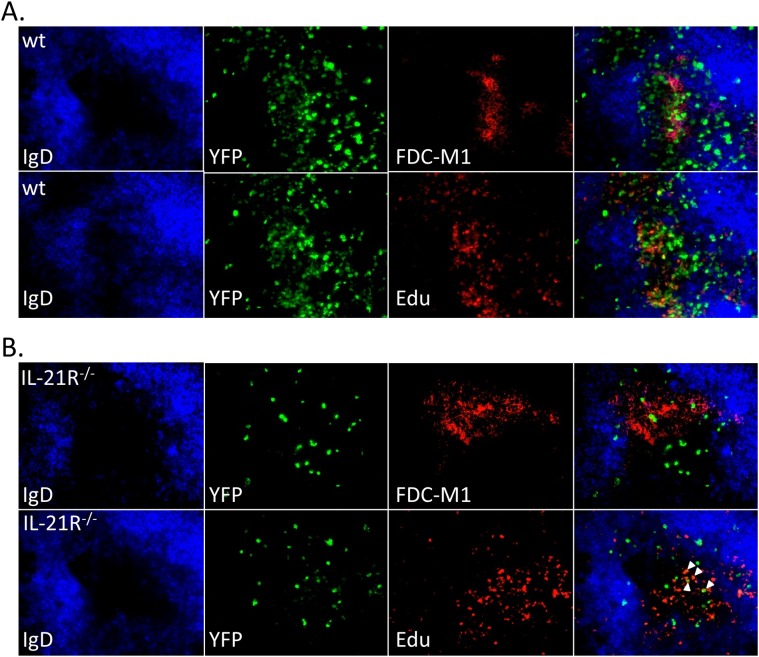
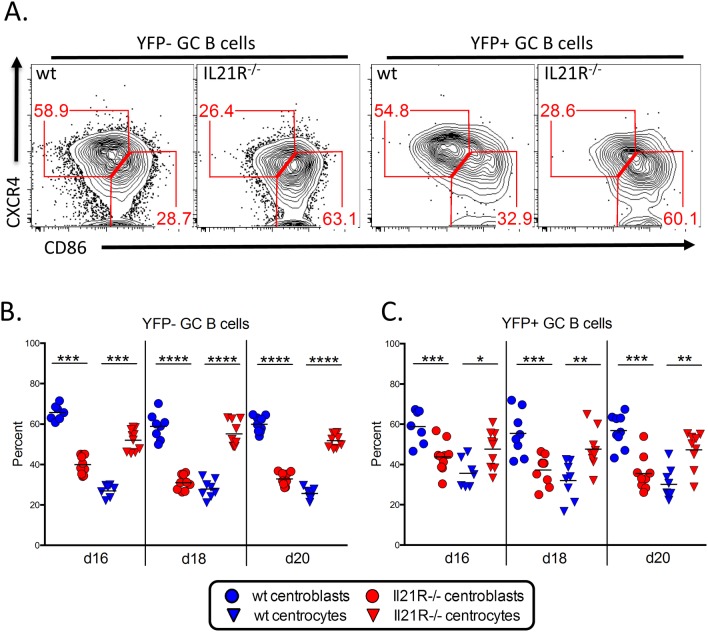
The human gammaherpesviruses take advantage of normal B cell differentiation pathways to establish life-long infection in memory B cells. Murine gammaherpesvirus 68 (MHV68) infection of laboratory strains of mice also leads to life-long infection in memory B cells. To gain access to the memory B cell population, MHV68 infected B cells pass through the germinal center reaction during the onset of latency and require signals from T follicular helper (TFH) cells for proliferation. Interleukin 21 (IL-21), one of the secreted factors produced by TFH cells, plays an important role in both the maintenance of the germinal center response as well as in the generation of long-lived plasma cells. Using IL-21R deficient mice, we show that IL-21 signaling is required for efficient establishment of MHV68 infection. In the absence of IL-21 signaling, fewer infected splenocytes are able to gain access to either the germinal center B cell population or the plasma cell population--the latter being a major site of MHV68 reactivation. Furthermore, the germinal center B cell population in IL-21R(-/-) mice is skewed towards the non-proliferating centrocyte phenotype, resulting in reduced expansion of infected B cells. Additionally, the reduced frequency of infected plasma cells results in a significant reduction in the frequency of splenocytes capable of reactivating virus. This defect in establishment of MHV68 infection is intrinsic to B cells, as MHV68 preferentially establishes infection in IL-21R sufficient B cells in mixed bone marrow chimeric mice. Taken together, these data indicate that IL-21 signaling plays multiple roles during establishment of MHV68 infection, and identify IL-21 as a critical TFH cell-derived factor for efficient establishment of gammaherpesvirus B cell latency.
人类γ疱疹病毒利用正常B细胞分化途径在记忆B细胞中建立终身感染。实验室小鼠品系感染鼠γ疱疹病毒68(MHV68)也会导致记忆B细胞的终身感染。为了进入记忆B细胞群体,MHV68感染的B细胞在潜伏期开始时通过生发中心反应,并且需要来自滤泡辅助性T(TFH)细胞的信号来进行增殖。白细胞介素21(IL-21)是TFH细胞产生的分泌因子之一,在生发中心反应的维持以及长寿浆细胞的产生中都发挥着重要作用。使用IL-21R缺陷小鼠,我们发现IL-21信号对于高效建立MHV68感染是必需的。在缺乏IL-21信号的情况下,能够进入生发中心B细胞群体或浆细胞群体(后者是MHV68重新激活的主要部位)的受感染脾细胞较少。此外,IL-21R(-/-)小鼠中的生发中心B细胞群体偏向于不增殖的中心细胞表型,导致受感染B细胞的扩增减少。此外,受感染浆细胞频率的降低导致能够重新激活病毒的脾细胞频率显著降低。MHV68感染建立的这种缺陷是B细胞固有的,因为在混合骨髓嵌合小鼠中,MHV68优先在IL-21R充足的B细胞中建立感染。综上所述,这些数据表明IL-21信号在MHV68感染建立过程中发挥多种作用,并确定IL-21是高效建立γ疱疹病毒B细胞潜伏期的关键TFH细胞衍生因子。