Dahlmann Franziska, Biedenkopf Nadine, Babler Anne, Jahnen-Dechent Willi, Karsten Christina B, Gnirß Kerstin, Schneider Heike, Wrensch Florian, O'Callaghan Christopher A, Bertram Stephanie, Herrler Georg, Becker Stephan, Pöhlmann Stefan, Hofmann-Winkler Heike
Infection Biology Unit, German Primate Center, Göttingen.
Institute of Virology, Philipps-University Marburg.
J Infect Dis. 2015 Oct 1;212 Suppl 2(Suppl 2):S247-57. doi: 10.1093/infdis/jiv140. Epub 2015 Apr 14.
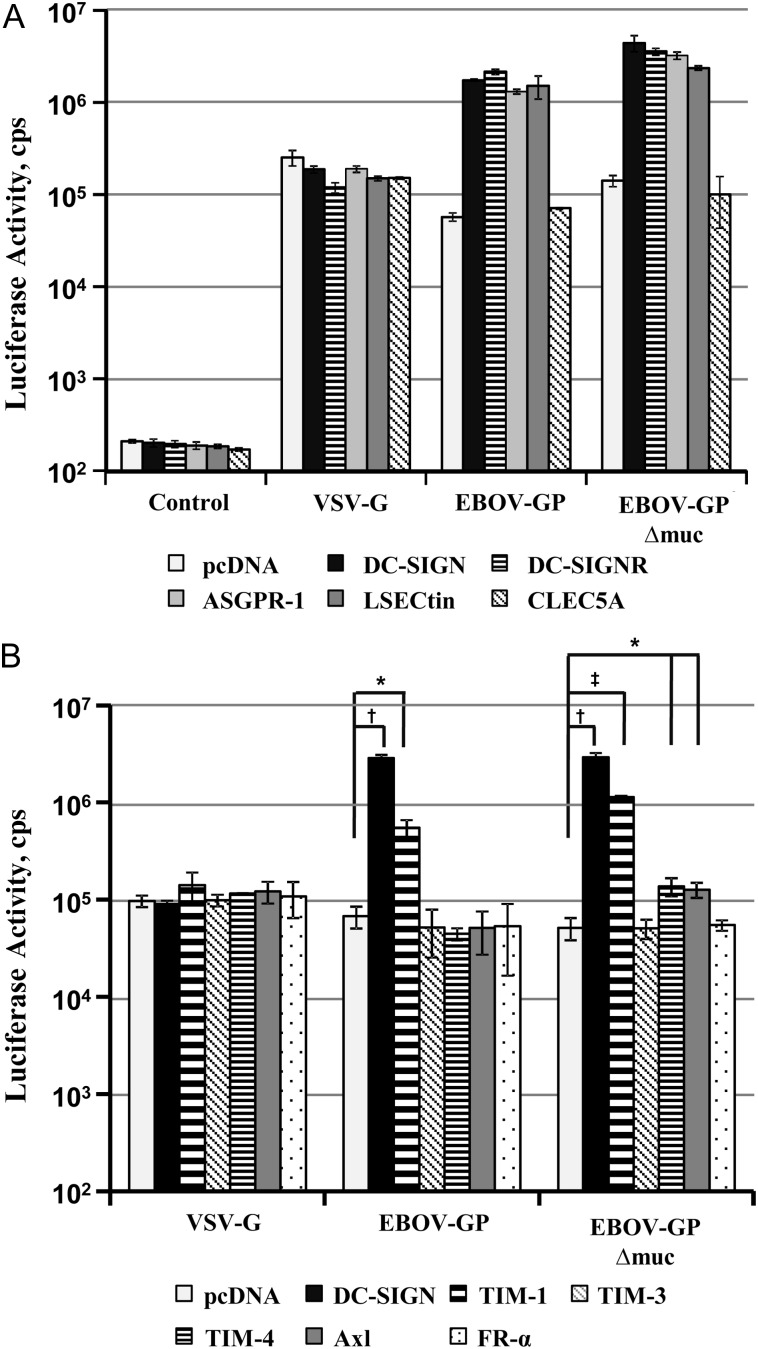
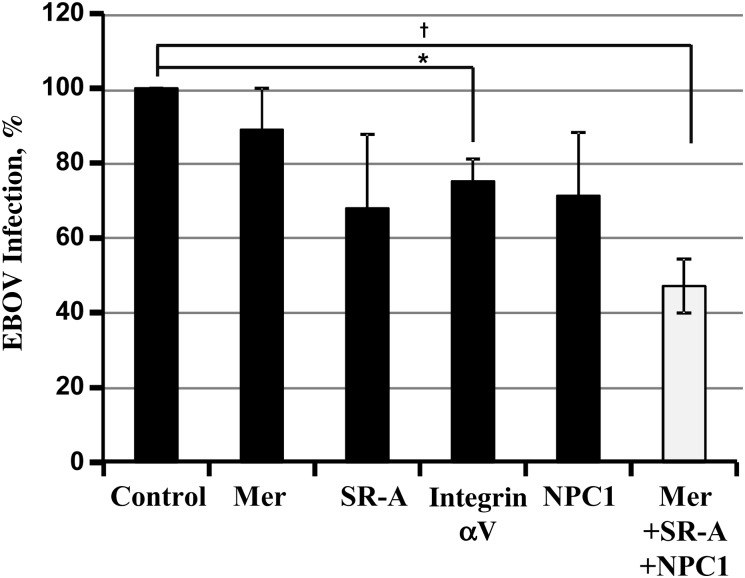
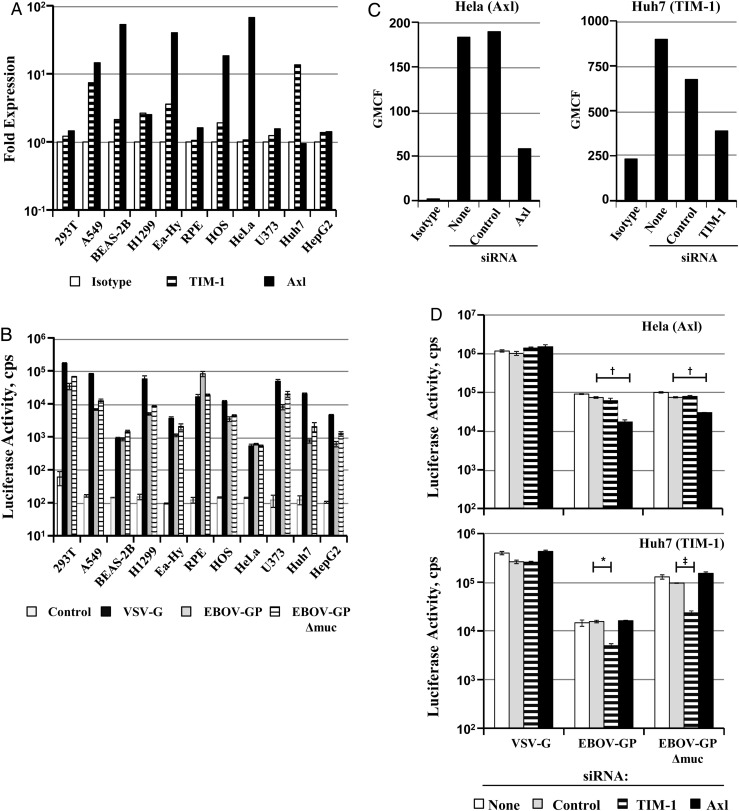
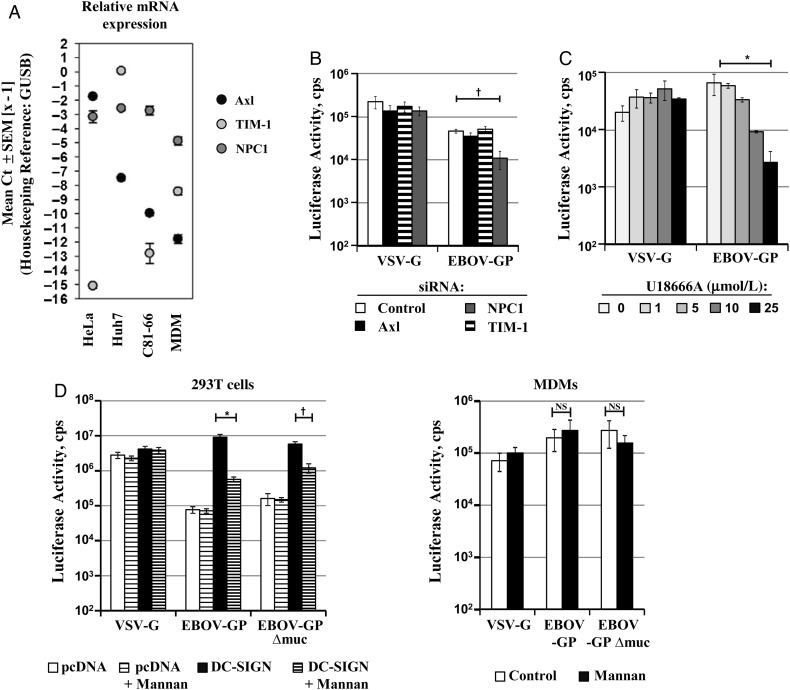
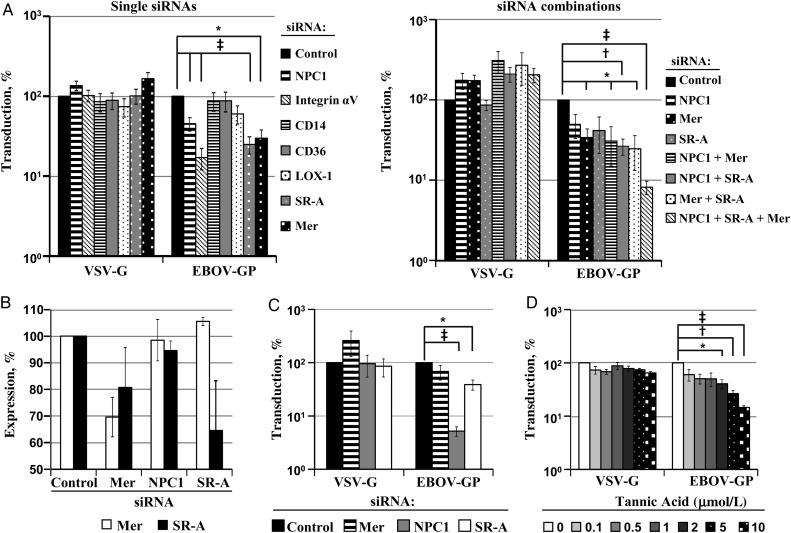
Ebolaviruses constitute a public health threat, particularly in Central and Western Africa. Host cell factors required for spread of ebolaviruses may serve as targets for antiviral intervention. Lectins, TAM receptor tyrosine kinases (Tyro3, Axl, Mer), T cell immunoglobulin and mucin domain (TIM) proteins, integrins, and Niemann-Pick C1 (NPC1) have been reported to promote entry of ebolaviruses into certain cellular systems. However, the factors used by ebolaviruses to invade macrophages, major viral targets, are poorly defined. Here, we show that mannose-specific lectins, TIM-1 and Axl augment entry into certain cell lines but do not contribute to Ebola virus (EBOV)-glycoprotein (GP)-driven transduction of macrophages. In contrast, expression of Mer, integrin αV, and NPC1 was required for efficient GP-mediated transduction and EBOV infection of macrophages. These results define cellular factors hijacked by EBOV for entry into macrophages and, considering that Mer and integrin αV promote phagocytosis of apoptotic cells, support the concept that EBOV relies on apoptotic mimicry to invade target cells.
埃博拉病毒构成了公共卫生威胁,在中非和西非地区尤为如此。埃博拉病毒传播所需的宿主细胞因子可能成为抗病毒干预的靶点。据报道,凝集素、TAM受体酪氨酸激酶(Tyro3、Axl、Mer)、T细胞免疫球蛋白和粘蛋白结构域(TIM)蛋白、整合素以及尼曼-匹克C1(NPC1)可促进埃博拉病毒进入某些细胞系统。然而,埃博拉病毒用于侵入主要病毒靶标巨噬细胞的因子却鲜为人知。在此,我们表明,甘露糖特异性凝集素、TIM-1和Axl可增强进入某些细胞系的能力,但对埃博拉病毒(EBOV)糖蛋白(GP)介导的巨噬细胞转导没有作用。相反,Mer、整合素αV和NPC1的表达是GP介导的有效转导以及巨噬细胞感染EBOV所必需的。这些结果确定了EBOV用于侵入巨噬细胞的细胞因子,鉴于Mer和整合素αV可促进凋亡细胞的吞噬作用,这支持了EBOV依靠模仿凋亡来侵入靶细胞的观点。