Geng Xin, Sun Tao, Li Jing-Hui, Zhao Ning, Wang Yong, Yu Hua-Lin
Second Department of Neurosurgery, First Affiliated Hospital of Kunming Medical University, Kunming, Yunnan Province, China.
Neural Regen Res. 2015 Mar;10(3):394-403. doi: 10.4103/1673-5374.153687.
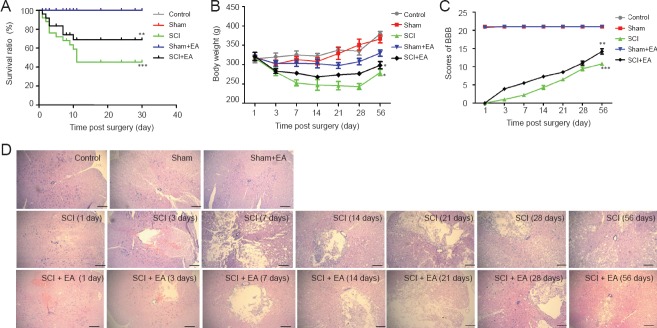
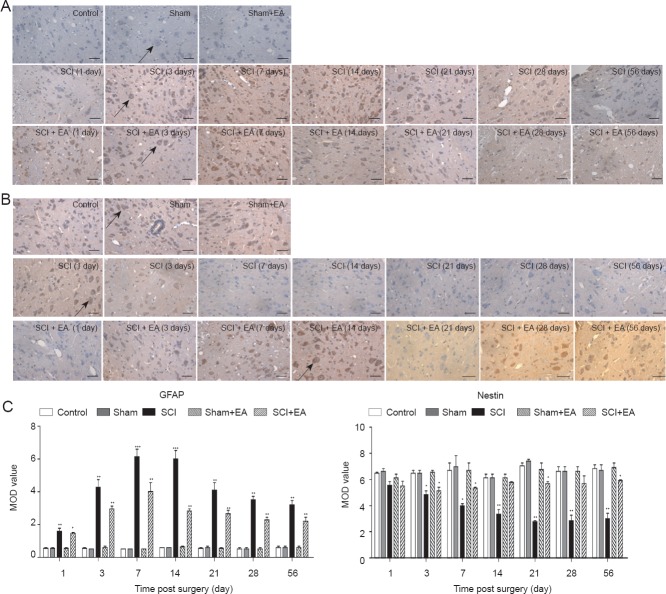
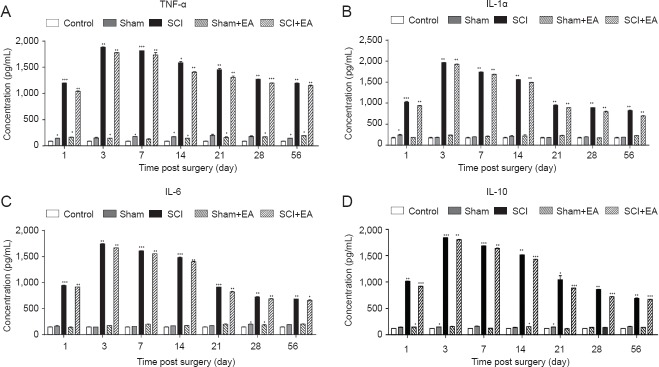
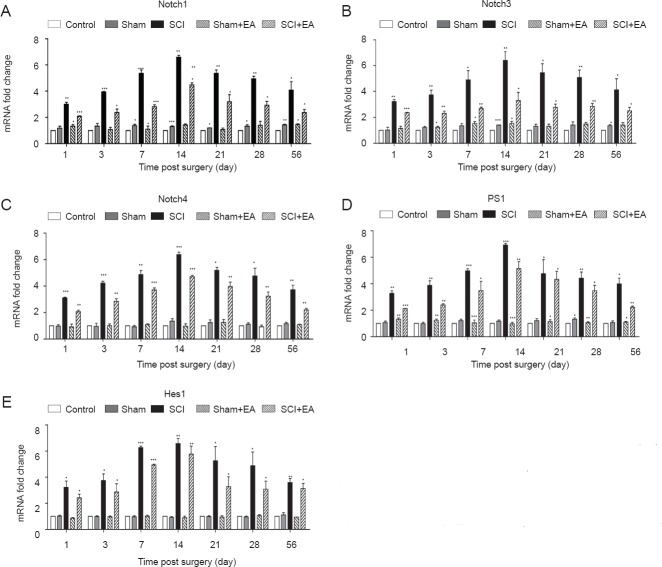
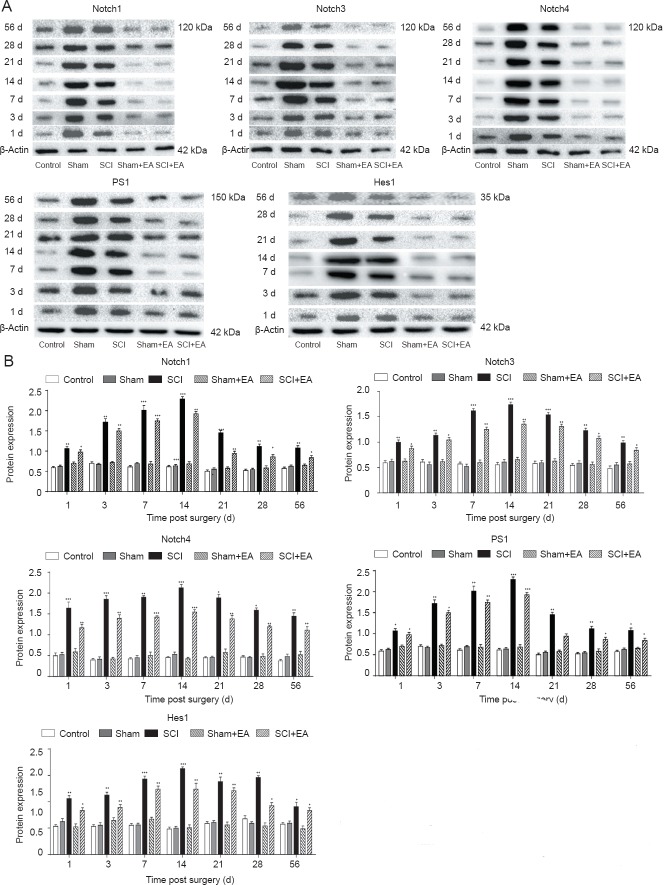
Electroacupuncture for the treatment of spinal cord injury has a good clinical curative effect, but the underlying mechanism is unclear. In our experiments, the spinal cord of adult Sprague-Dawley rats was clamped for 60 seconds. Dazhui (GV14) and Mingmen (GV4) acupoints of rats were subjected to electroacupuncture. Enzyme-linked immunosorbent assay revealed that the expression of serum inflammatory factors was apparently downregulated in rat models of spinal cord injury after electroacupuncture. Hematoxylin-eosin staining and immunohistochemistry results demonstrated that electroacupuncture contributed to the proliferation of neural stem cells in rat injured spinal cord, and suppressed their differentiation into astrocytes. Real-time quantitative PCR and western blot assays showed that electroacupuncture inhibited activation of the Notch signaling pathway induced by spinal cord injury. These findings indicate that electroacupuncture repaired the injured spinal cord by suppressing the Notch signaling pathway and promoting the proliferation of endogenous neural stem cells.
电针治疗脊髓损伤具有良好的临床疗效,但其潜在机制尚不清楚。在我们的实验中,对成年Sprague-Dawley大鼠的脊髓进行60秒的夹闭。对大鼠的大椎穴(GV14)和命门穴(GV4)进行电针治疗。酶联免疫吸附测定显示,电针治疗后脊髓损伤大鼠模型中血清炎症因子的表达明显下调。苏木精-伊红染色和免疫组织化学结果表明,电针促进了大鼠损伤脊髓中神经干细胞的增殖,并抑制了它们向星形胶质细胞的分化。实时定量PCR和蛋白质印迹分析表明,电针抑制了脊髓损伤诱导的Notch信号通路的激活。这些发现表明,电针通过抑制Notch信号通路和促进内源性神经干细胞的增殖来修复损伤的脊髓。