Wang Xin, Shi Su-Hua, Yao Hai-Jiang, Jing Quan-Kai, Mo Yu-Ping, Lv Wei, Song Liang-Yu, Yuan Xiao-Chen, Li Zhi-Gang, Qin Li-Na
School of Acupuncture-Moxibustion and Tuina, Beijing University of Chinese Medicine, Beijing, China.
Department of Rehabilitation, The Third Affiliated Hospital of Beijing University of Chinese Medicine, Beijing, China.
Neural Regen Res. 2016 Dec;11(12):2004-2011. doi: 10.4103/1673-5374.197145.
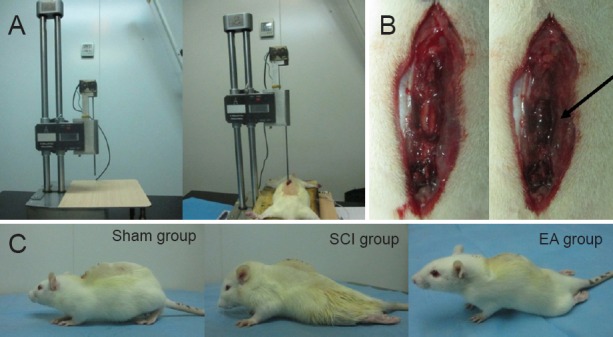
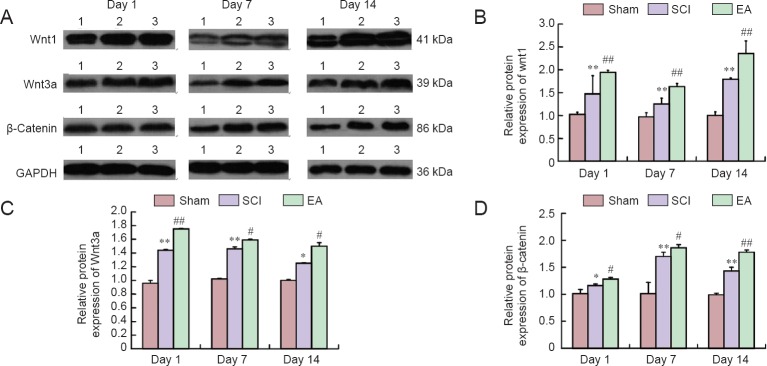
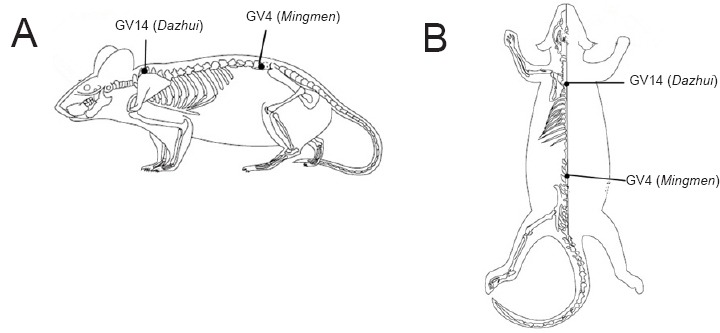
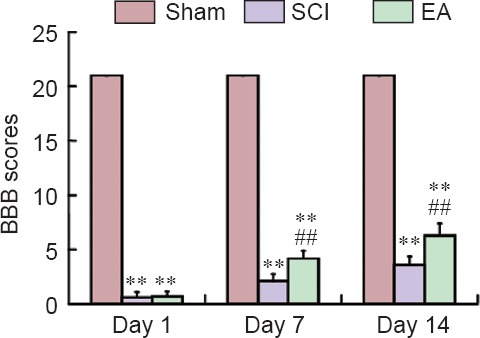
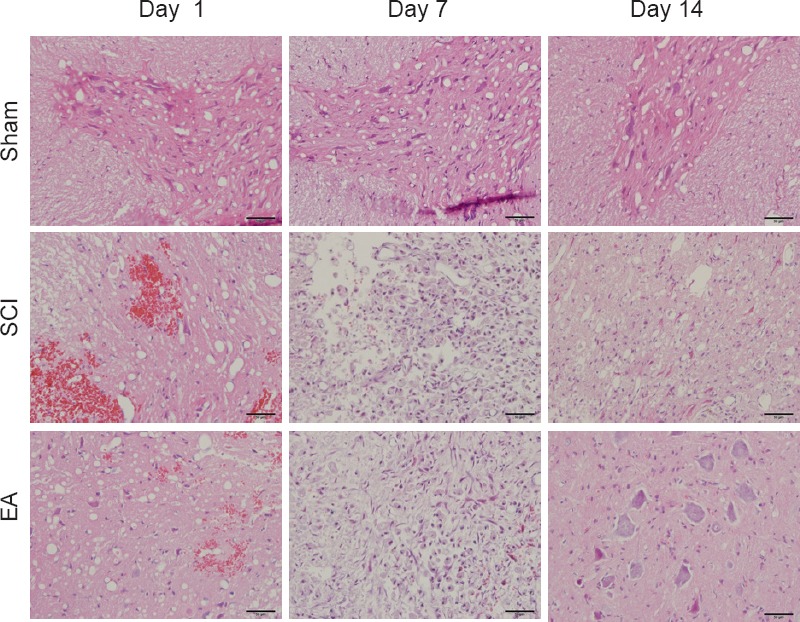
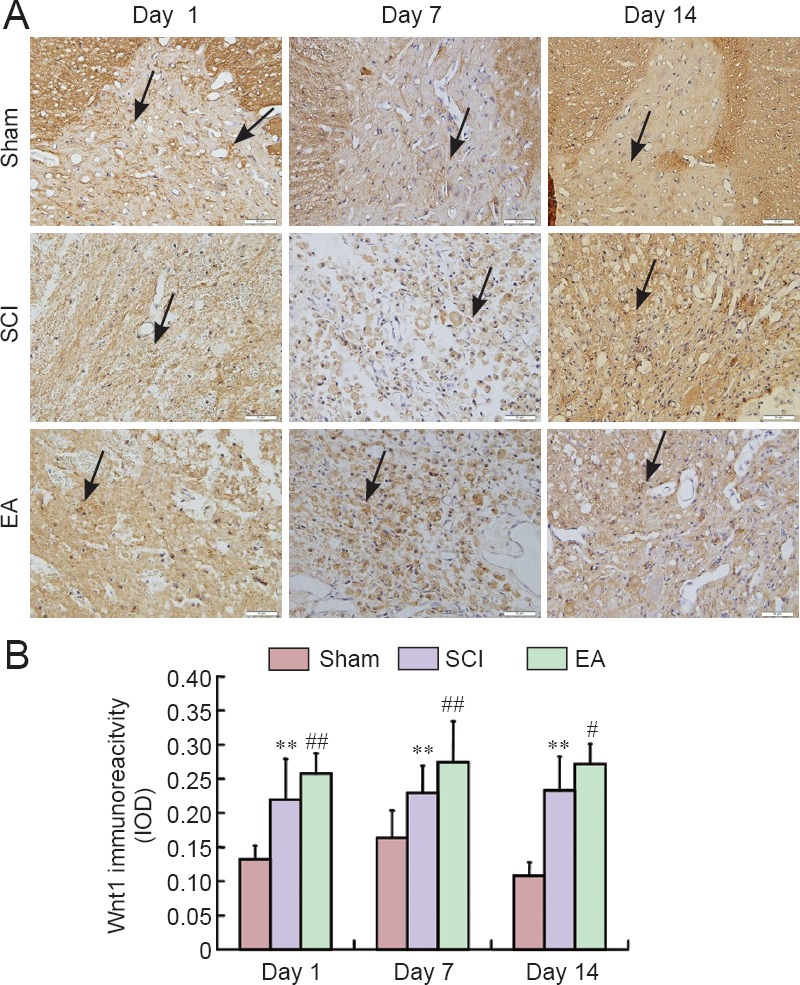
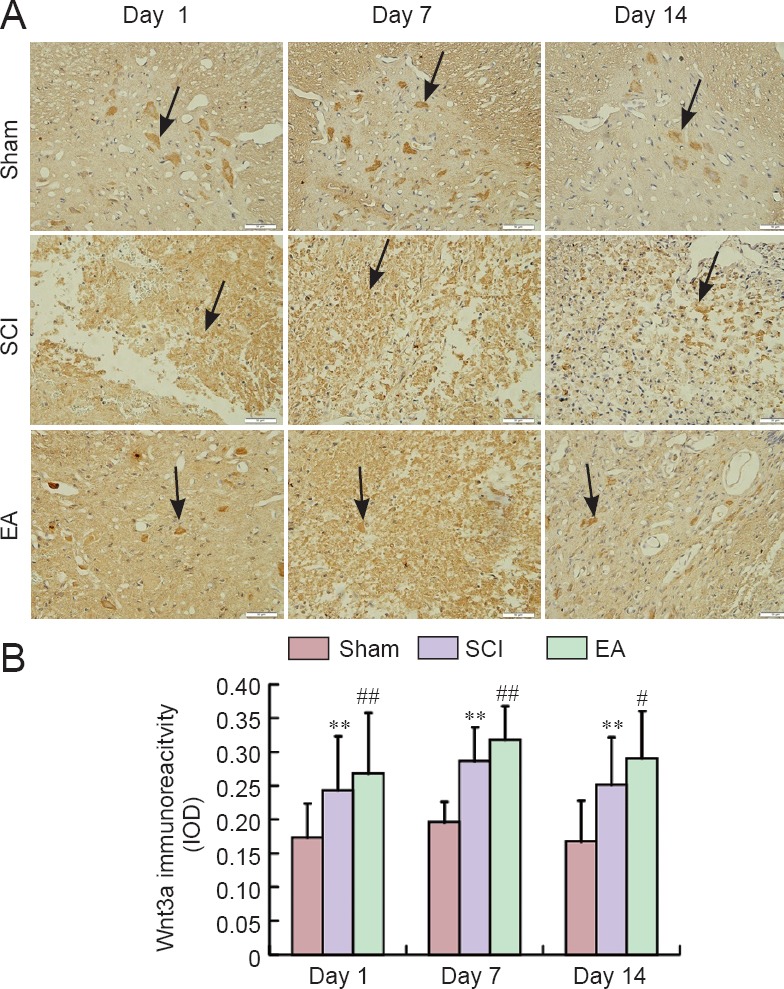
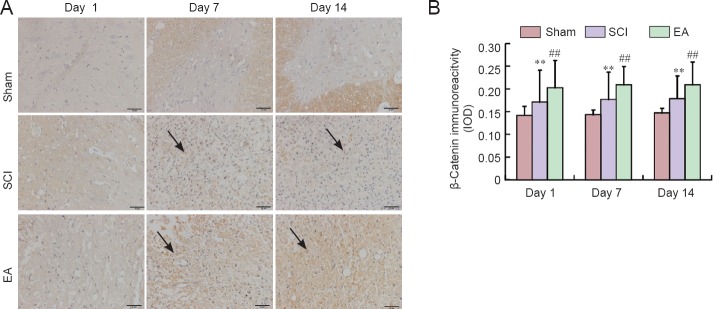
Electroacupuncture at (GV14) and (GV4) on the Governor Vessel has been shown to exhibit curative effects on spinal cord injury; however, the underlying mechanism remains poorly understood. In this study, we established rat models of spinal cord injury using a modified Allen's weight-drop method. Ninety-nine male Sprague-Dawley rats were randomly divided into three equal groups: sham (only laminectomy), SCI (induction of spinal cord injury at T), and EA (induction of spinal cord injury at T and electroacupuncture intervention at GV14 and GV4 for 20 minutes once a day). Rats in the SCI and EA groups were further randomly divided into the following subgroups: 1-day ( = 11), 7-day ( = 11), and 14-day ( = 11). At 1, 7, and 14 days after electroacupuncture treatment, the Basso, Beattie and Bresnahan locomotor rating scale showed obvious improvement in rat hind limb locomotor function, hematoxylin-eosin staining showed that the histological change of injured spinal cord tissue was obviously alleviated, and immunohistochemistry and western blot analysis showed that Wnt1, Wnt3a, β-catenin immunoreactivity and protein expression in the injured spinal cord tissue were greatly increased compared with the sham and SCI groups. These findings suggest that electroacupuncture at GV14 and GV4 upregulates Wnt1, Wnt3a, and β-catenin expression in the Wnt/β-catenin signaling pathway, exhibiting neuroprotective effects against spinal cord injury.
针刺督脉的大椎穴(GV14)和腰阳关穴(GV4)已被证明对脊髓损伤具有治疗作用;然而,其潜在机制仍知之甚少。在本研究中,我们采用改良的Allen重物坠落法建立大鼠脊髓损伤模型。99只雄性Sprague-Dawley大鼠随机分为三组,每组数量相等:假手术组(仅行椎板切除术)、脊髓损伤组(在T节段诱导脊髓损伤)和电针组(在T节段诱导脊髓损伤,并每天一次在GV14和GV4进行20分钟电针干预)。脊髓损伤组和电针组的大鼠进一步随机分为以下亚组:1天组(n = 11)、7天组(n = 11)和14天组(n = 11)。电针治疗后1天、7天和14天,Basso、Beattie和Bresnahan运动评分量表显示大鼠后肢运动功能明显改善,苏木精-伊红染色显示损伤脊髓组织的组织学变化明显减轻,免疫组织化学和蛋白质印迹分析显示,与假手术组和脊髓损伤组相比,损伤脊髓组织中Wnt1、Wnt3a、β-连环蛋白的免疫反应性和蛋白表达显著增加。这些结果表明,针刺GV14和GV4上调Wnt/β-连环蛋白信号通路中Wnt1、Wnt3a和β-连环蛋白的表达,对脊髓损伤具有神经保护作用。