Keulemans Filip, Shinya Akikazu, Lassila Lippo V J, Vallittu Pekka K, Kleverlaan Cornelis J, Feilzer Albert J, De Moor Roeland J G
Department of Restorative Dentistry and Endodontology, Dental School, Ghent University Hospital, Ghent University, De Pintelaan 185/P8, 9000 Gent, Belgium.
Department of Biomaterials Science, BioCity Turku Biomaterials Research Program, Institute of Dentistry, University of Turku, Lemminkäisenkatu 2, 20520 Turku, Finland ; Department of Crown and Bridge, School of Life Dentistry at Tokyo, The Nippon Dental University, 1-9-20 Fujimi, Chiyoda-ku, Tokyo 102-8158, Japan.
ScientificWorldJournal. 2015;2015:864389. doi: 10.1155/2015/864389. Epub 2015 Mar 24.
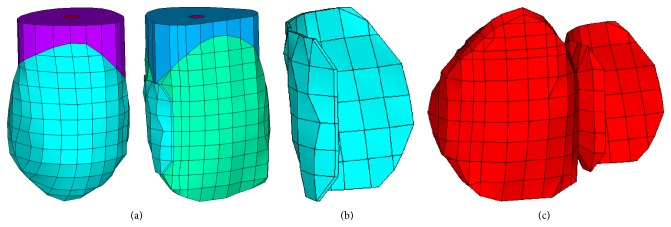
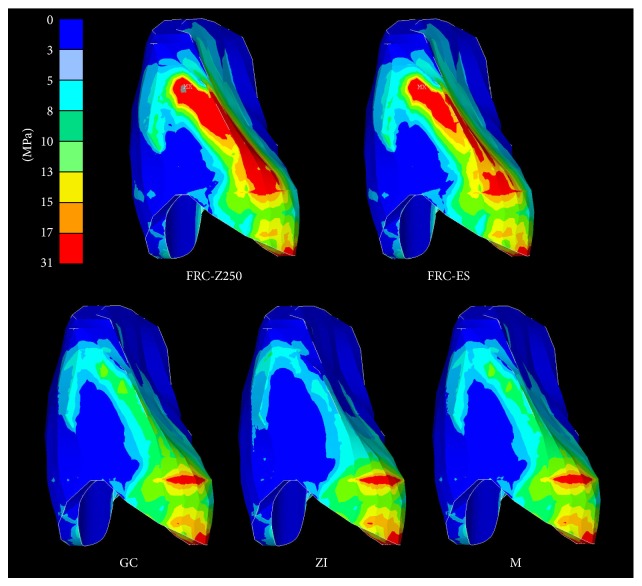
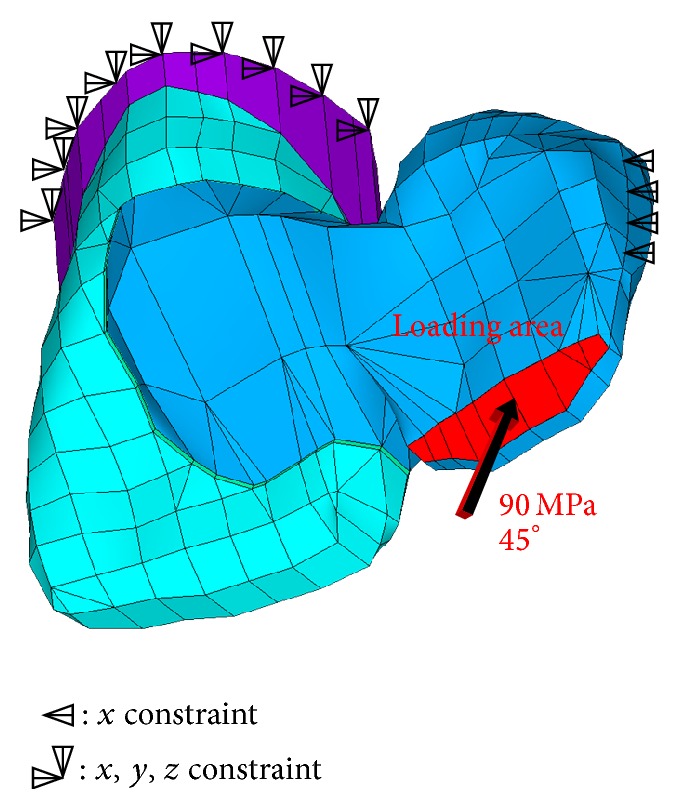
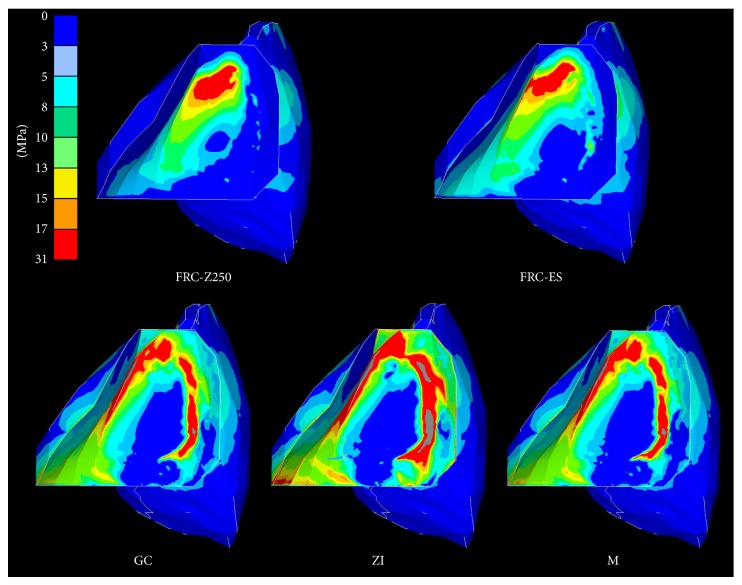
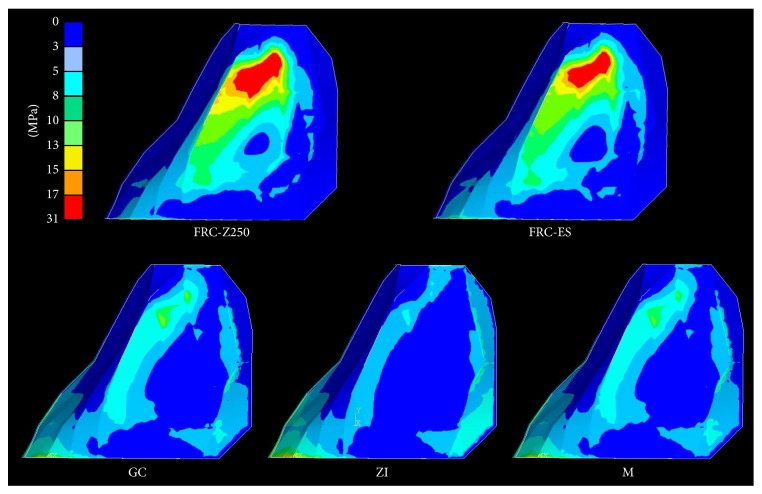
The aim of this study was to evaluate the influence of different framework materials on biomechanical behaviour of anterior two-unit cantilever resin-bonded fixed dental prostheses (RBFDPs). A three-dimensional finite element model of a two-unit cantilever RBFDP replacing a maxillary lateral incisor was created. Five framework materials were evaluated: direct fibre-reinforced composite (FRC-Z250), indirect fibre-reinforced composite (FRC-ES), gold alloy (M), glass ceramic (GC), and zirconia (ZI). Finite element analysis was performed and stress distribution was evaluated. A similar stress pattern, with stress concentrations in the connector area, was observed in RBFDPs for all materials. Maximal principal stress showed a decreasing order: ZI>M>GC>FRC-ES>FRC-Z250. The maximum displacement of RBFDPs was higher for FRC-Z250 and FRC-ES than for M, GC, and ZI. FE analysis depicted differences in location of the maximum stress at the luting cement interface between materials. For FRC-Z250 and FRC-ES, the maximum stress was located in the upper part of the proximal area of the retainer, whereas, for M, GC, and ZI, the maximum stress was located at the cervical outline of the retainer. The present study revealed differences in biomechanical behaviour between all RBFDPs. The general observation was that a RBFDP made of FRC provided a more favourable stress distribution.
本研究的目的是评估不同框架材料对前牙双单位悬臂式树脂粘结固定义齿(RBFDPs)生物力学行为的影响。建立了一个替代上颌侧切牙的双单位悬臂式RBFDP的三维有限元模型。评估了五种框架材料:直接纤维增强复合材料(FRC-Z250)、间接纤维增强复合材料(FRC-ES)、金合金(M)、玻璃陶瓷(GC)和氧化锆(ZI)。进行了有限元分析并评估了应力分布。在所有材料的RBFDPs中均观察到类似的应力模式,应力集中在连接区域。最大主应力呈现出以下递减顺序:ZI>M>GC>FRC-ES>FRC-Z250。FRC-Z250和FRC-ES的RBFDPs的最大位移高于M、GC和ZI。有限元分析描绘了材料之间粘结剂界面处最大应力位置的差异。对于FRC-Z250和FRC-ES,最大应力位于固位体近中区域的上部,而对于M、GC和ZI,最大应力位于固位体的颈部轮廓处。本研究揭示了所有RBFDPs之间生物力学行为的差异。总体观察结果是,由FRC制成的RBFDP提供了更有利的应力分布。