Lee Shih-Yi, Ku Hui-Chun, Kuo Yueh-Hsiung, Chiu His-Lin, Su Ming-Jai
Institute of Pharmacology, College of Medicine, National Taiwan University, No.1, Sec.1, Jen-Ai Road, Taipei, 100, Taiwan.
Division of Pulmonary and Critical Care Medicine, Mackay Memorial Hospital, Taipei, Taiwan.
J Biomed Sci. 2015 Mar 18;22(1):18. doi: 10.1186/s12929-015-0125-3.
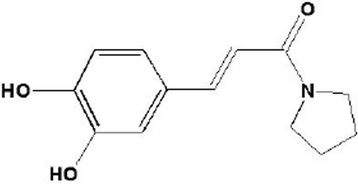
Coronary heart disease is a leading cause of death in the world and therapy to reduce injury is still needed. The uncoupling of glycolysis and glucose oxidation induces lactate accumulation during myocardial ischemia/reperfusion (I/R) injury. Cell death occurs and finally leads to myocardial infarction. Caffeic acid, one of the major phenolic constituents in nature, acts as an antioxidant. Pyrrolidinyl caffeamide (PLCA), a new derivative of caffeic acid, was synthesized by our team. We aimed to investigate the effect of PLCA on hypoxia/reoxygenation (H/R) in neonatal rat ventricular myocytes (NRVM) and on myocardial I/R in rats.
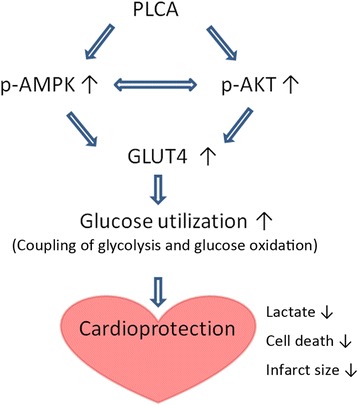
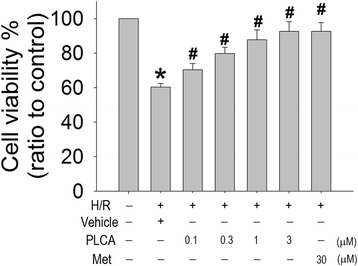
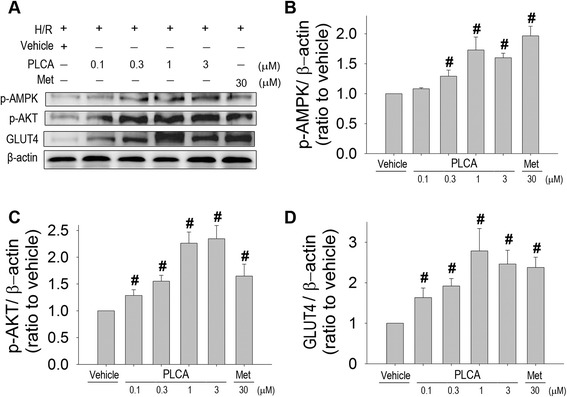
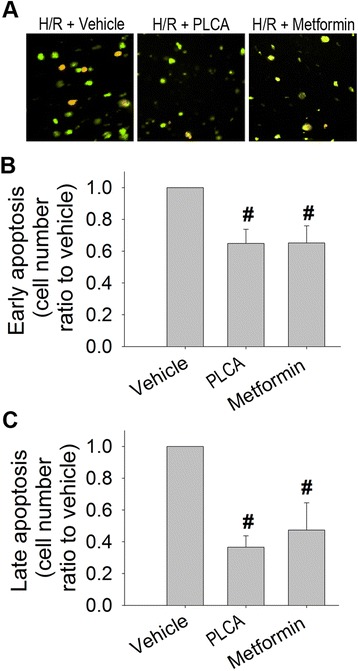
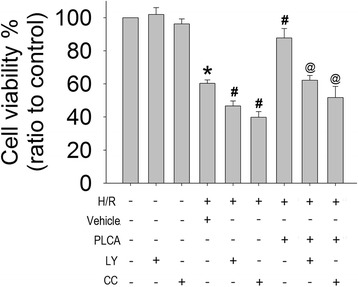
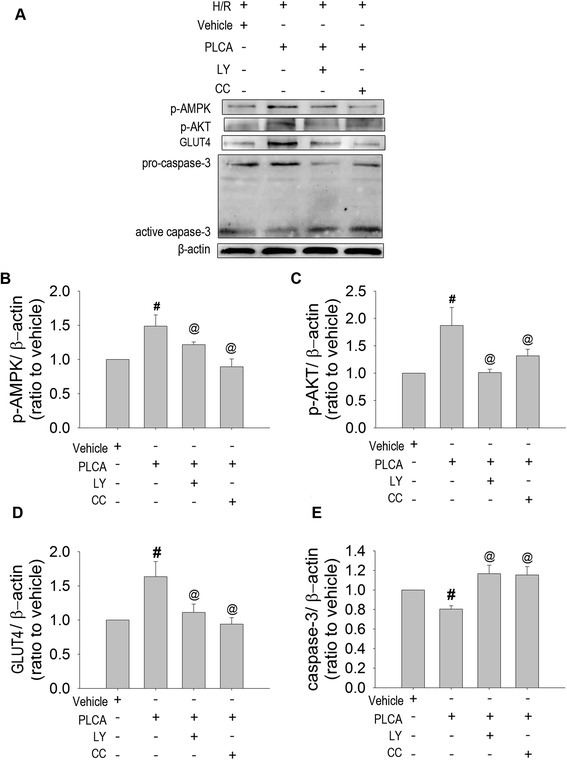
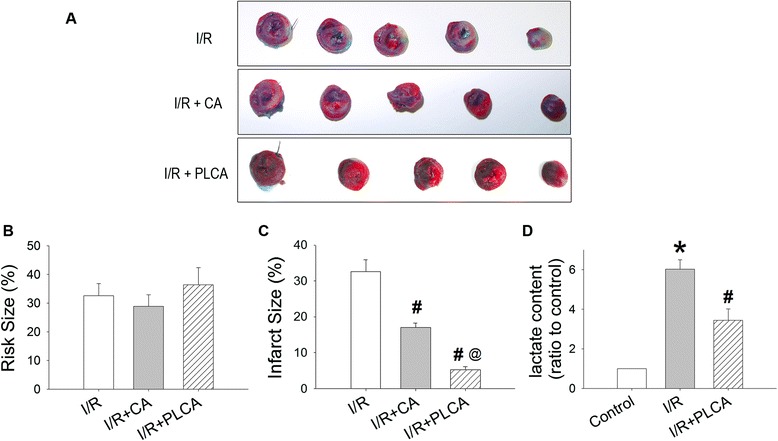
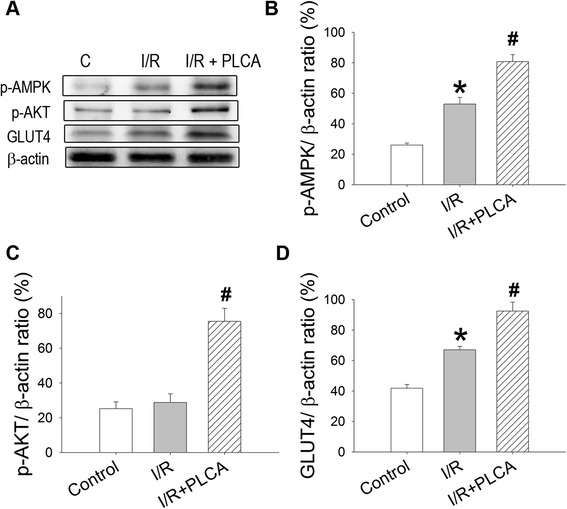
Cardiomyocytes were isolated and subjected to 6 h hypoxia followed by 18 h reperfusion. PLCA (0.1 to 3 μM) and metformin (30 μM) were added before hypoxia was initiated. PLCA at 1 μM and metformin at 30 μM exerted similar effects on the improvement of cell viability and the alleviation of cell apoptosis in NRVM after H/R. PLCA promoted p-AMPK, p-AKT, and GLUT4 upregulation to induce a cardioprotective effect in both cell and animal model. The accumulation of cardiac lactate was attenuated by PLCA during myocardial I/R, and infarct size was smaller in rats treated with PLCA (1 mg/kg) than in those treated with caffeic acid (1 mg/kg).
AMPK and AKT are synergistically activated by PLCA, which lead facilities glucose utilization, thereby attenuating lactate accumulation and cell death. The cardioprotective dose of PLCA was lower than those of metformin and caffeic acid. We provide a new insight into this potential drug for the treatment of myocardial I/R injury.
冠心病是全球主要的死亡原因之一,仍需要能够减轻损伤的治疗方法。糖酵解与葡萄糖氧化的解偶联会在心肌缺血/再灌注(I/R)损伤期间诱导乳酸积累。细胞死亡发生,最终导致心肌梗死。咖啡酸是自然界中主要的酚类成分之一,具有抗氧化作用。吡咯烷基咖啡酰胺(PLCA)是我们团队合成的咖啡酸新衍生物。我们旨在研究PLCA对新生大鼠心室肌细胞(NRVM)缺氧/复氧(H/R)以及大鼠心肌I/R的影响。
分离心肌细胞,使其经历6小时缺氧,随后再灌注18小时。在开始缺氧前加入PLCA(0.1至3μM)和二甲双胍(30μM)。1μM的PLCA和30μM的二甲双胍对改善H/R后NRVM的细胞活力和减轻细胞凋亡具有相似的作用。PLCA促进p-AMPK、p-AKT和GLUT4上调,从而在细胞和动物模型中发挥心脏保护作用。在心肌I/R期间,PLCA可减轻心脏乳酸的积累,与用咖啡酸(1mg/kg)治疗的大鼠相比,用PLCA(1mg/kg)治疗的大鼠梗死面积更小。
PLCA协同激活AMPK和AKT,促进葡萄糖利用,从而减轻乳酸积累和细胞死亡。PLCA的心脏保护剂量低于二甲双胍和咖啡酸。我们为这种治疗心肌I/R损伤的潜在药物提供了新的见解。