Adi Atam E, Abdu Tukur, Khan Amir, Rashid Musa Haruna, Ebri Ubi E, Cockcroft Anne, Andersson Neil
CIET Trust, 71 Oxford Road, 2196, Johannesburg, Saxonwold, South Africa.
Institute of Geography and urban regional planning, University of Peshawar, Peshawar, Pakistan.
BMC Res Notes. 2015 Mar 13;8:79. doi: 10.1186/s13104-015-1026-y.
It is a recognized child right to acquire a name and a nationality, and birth registration may be necessary to allow access to services, but the level of birth registration is low in Nigeria. A household survey about management of childhood illnesses provided an opportunity to examine actionable determinants of birth registration of children in Bauchi and Cross River states of Nigeria.
Trained field teams visited households in a stratified random cluster sample of 90 enumeration areas in each state. They administered a questionnaire to women 14-49 years old which included questions about birth registration of their children 0-47 months old and about socio-economic and other factors potentially related to birth registration, including education of the parents, poverty (food sufficiency), marital status of the mother, maternal antenatal care and place of delivery of the last pregnancy. Bivariate then multivariate analysis examined associations with birth registration. Facilitators later conducted separate male and female focus group discussions in the same 90 communities in each state, discussing the reasons for the findings about levels of birth registration.
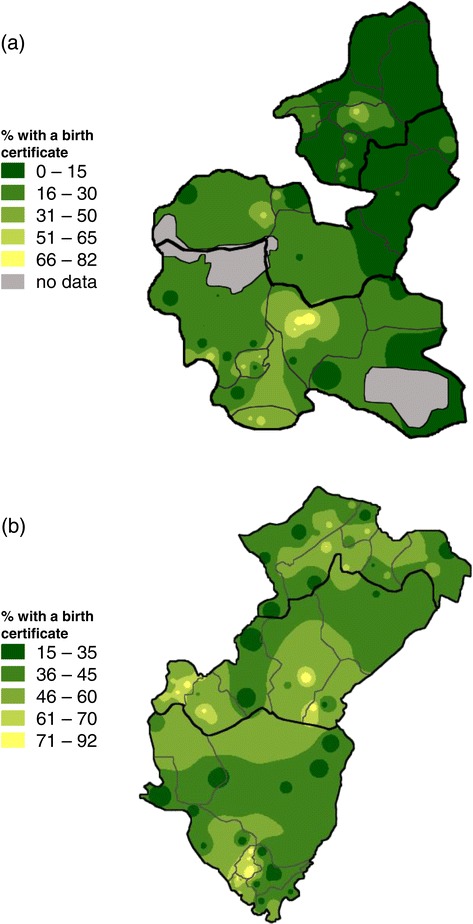
Nearly half (45%) of 8602 children in Cross River State and only a fifth (19%) of 9837 in Bauchi State had birth certificates (seen or unseen). In both states, children whose mothers attended antenatal care and who delivered in a government health facility in their last pregnancy were more likely to have a birth certificate, as were children of more educated parents, from less poor households, and from urban communities. Focus group discussions revealed that many people did not know about birth certificates or where to get them, and parents were discouraged from getting birth certificates because of the unofficial payments involved.
There are low levels of birth registration in Bauchi and Cross River states, particularly among disadvantaged households. As a result of this study, both states have planned interventions to increase birth registration, including closer collaboration between the National Population Commissions and state health services.
获得姓名和国籍是公认的儿童权利,出生登记对于获得服务可能是必要的,但尼日利亚的出生登记水平较低。一项关于儿童疾病管理的家庭调查为研究尼日利亚包奇州和克罗斯河州儿童出生登记的可行动决定因素提供了契机。
经过培训的实地团队走访了每个州90个普查区的分层随机整群样本中的家庭。他们向14至49岁的女性发放了一份问卷,其中包括关于其0至47个月大孩子的出生登记问题,以及与出生登记可能相关的社会经济和其他因素,包括父母的教育程度、贫困状况(食物充足情况)、母亲的婚姻状况、孕产妇产前护理以及最后一次怀孕的分娩地点。先进行双变量分析,然后进行多变量分析,以研究与出生登记的关联。之后,协助人员在每个州的相同90个社区分别组织了男性和女性焦点小组讨论,讨论关于出生登记水平调查结果的原因。
在克罗斯河州的8602名儿童中,近一半(45%)有出生证明(无论是否见过),而在包奇州的9837名儿童中只有五分之一(19%)有出生证明。在这两个州,母亲接受过产前护理且最后一次怀孕在政府卫生机构分娩的儿童更有可能有出生证明,父母受教育程度较高、家庭贫困程度较低以及来自城市社区的儿童也是如此。焦点小组讨论显示,许多人不知道出生证明或在哪里获取,而且由于涉及非官方支付,父母不愿意去获取出生证明。
包奇州和克罗斯河州的出生登记水平较低,尤其是在弱势家庭中。基于这项研究,两个州都已计划采取干预措施以增加出生登记,包括国家人口委员会与州卫生服务部门之间加强合作。