Leskela Susanna, Serrano Ana, de la Fuente Hortensia, Rodríguez-Muñoz Ana, Ramos-Levi Ana, Sampedro-Nuñez Miguel, Sánchez-Madrid Francisco, González-Amaro Roberto, Marazuela Mónica
Department of Endocrinology, Hospital Universitario de la Princesa, Instituto de Investigación Sanitaria Princesa, Universidad Autónoma de Madrid, Madrid, Spain.
Department of Immunology, Hospital Universitario de la Princesa, Instituto de Investigación Sanitaria Princesa, Universidad Autónoma de Madrid, Centro Nacional de Investigaciones Cardiovasculares Carlos III, Madrid, Spain.
PLoS One. 2015 Apr 16;10(4):e0123938. doi: 10.1371/journal.pone.0123938. eCollection 2015.
Patients with autoimmune thyroid disease (AITD) show defects in their immune-regulatory mechanisms. Herein we assessed the expression and function of galectin-1 and galectin-9 (Gal-1, Gal-9) in dendritic cells (DCs) from patients with AITD.
Peripheral blood samples from 25 patients with Graves' disease (GD), 11 Hashimoto's thyroiditis (HT), and 24 healthy subjects were studied. Thyroid tissue samples from 44 patients with AITD and 22 patients with goiter were also analyzed. Expression and function of Gal-1 and Gal-9 was assessed by quantitative RT-PCR, immunofluorescence and flow cytometry.
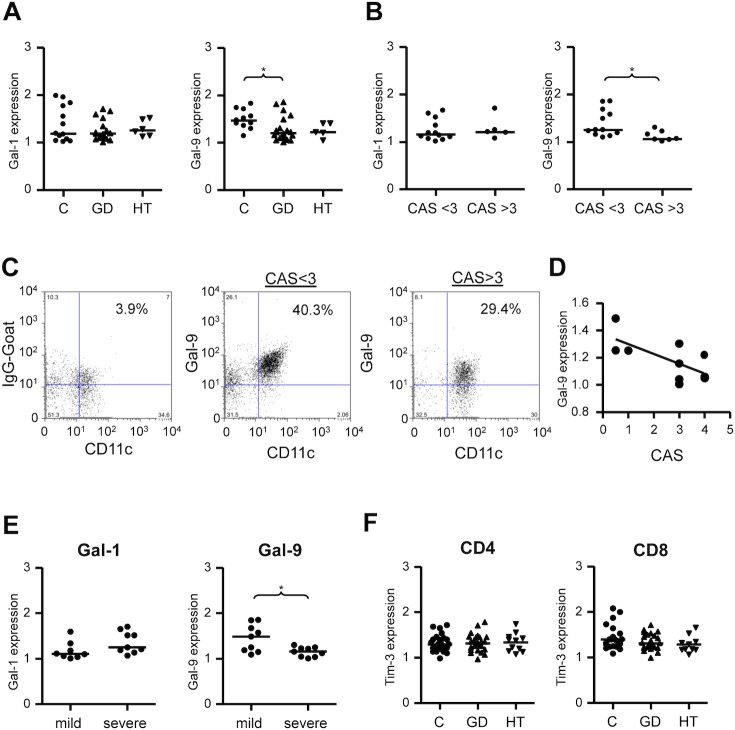
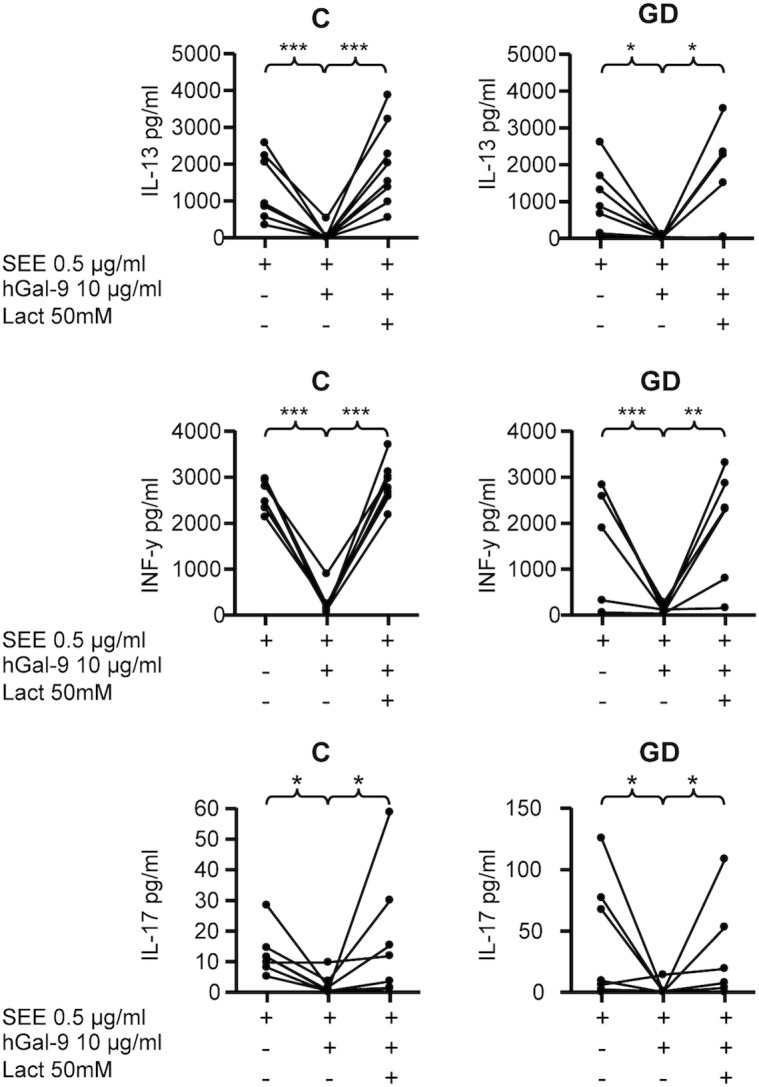
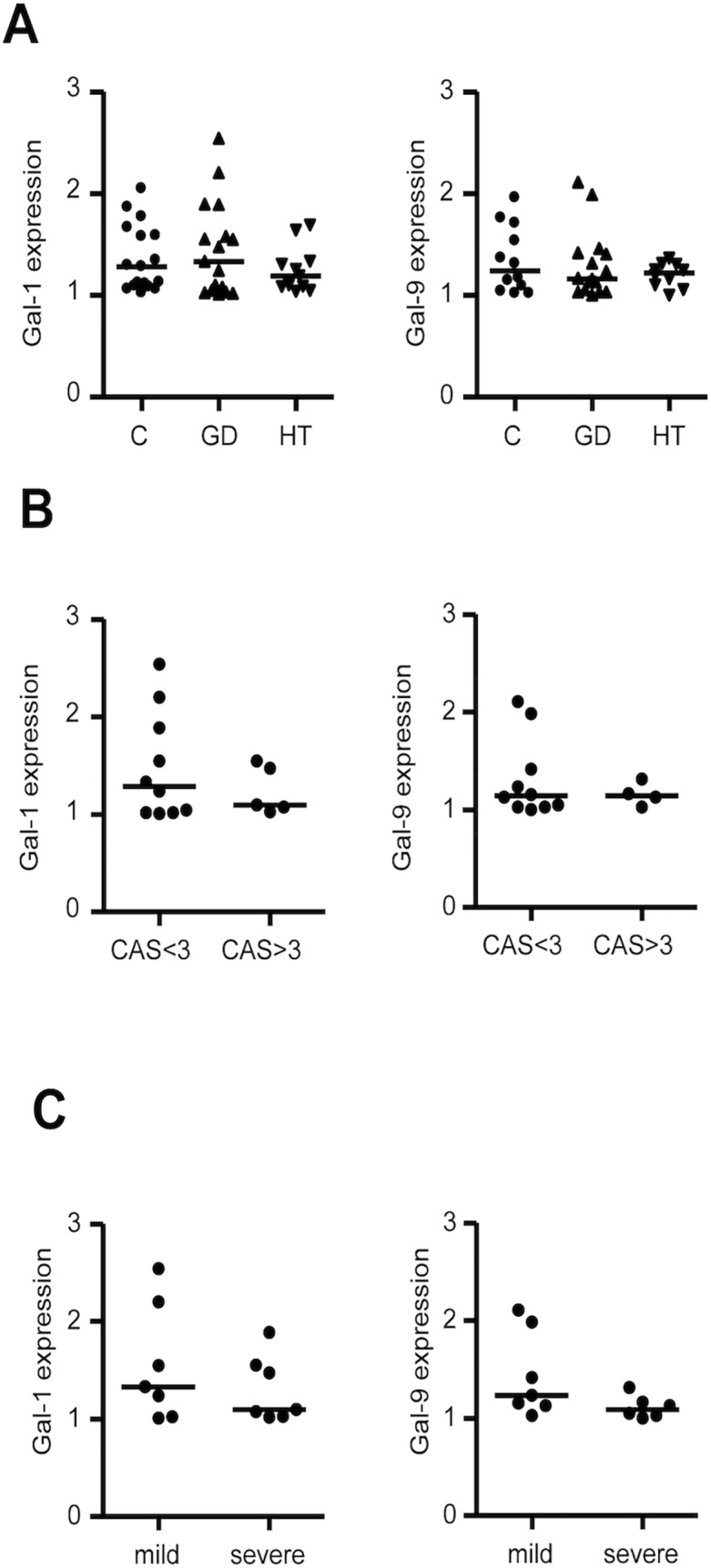
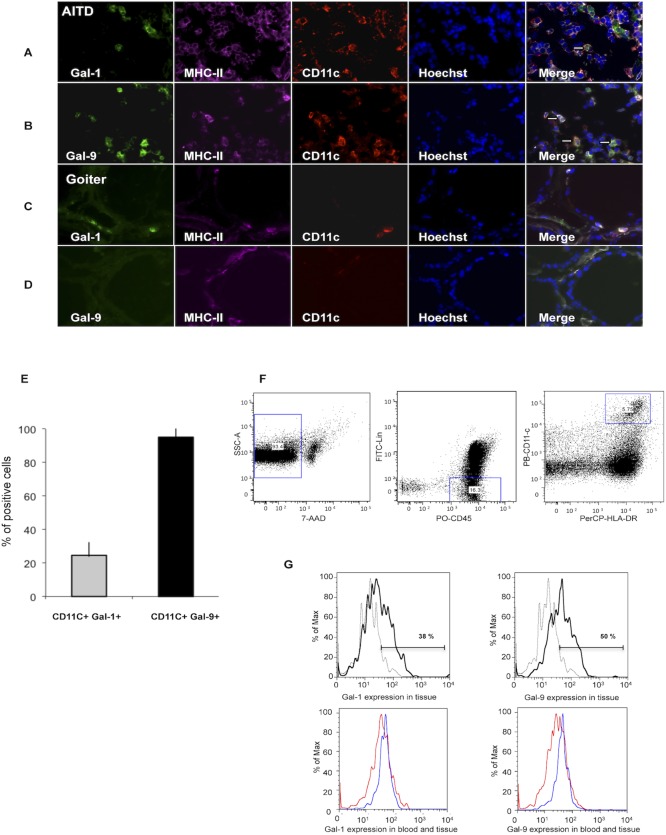
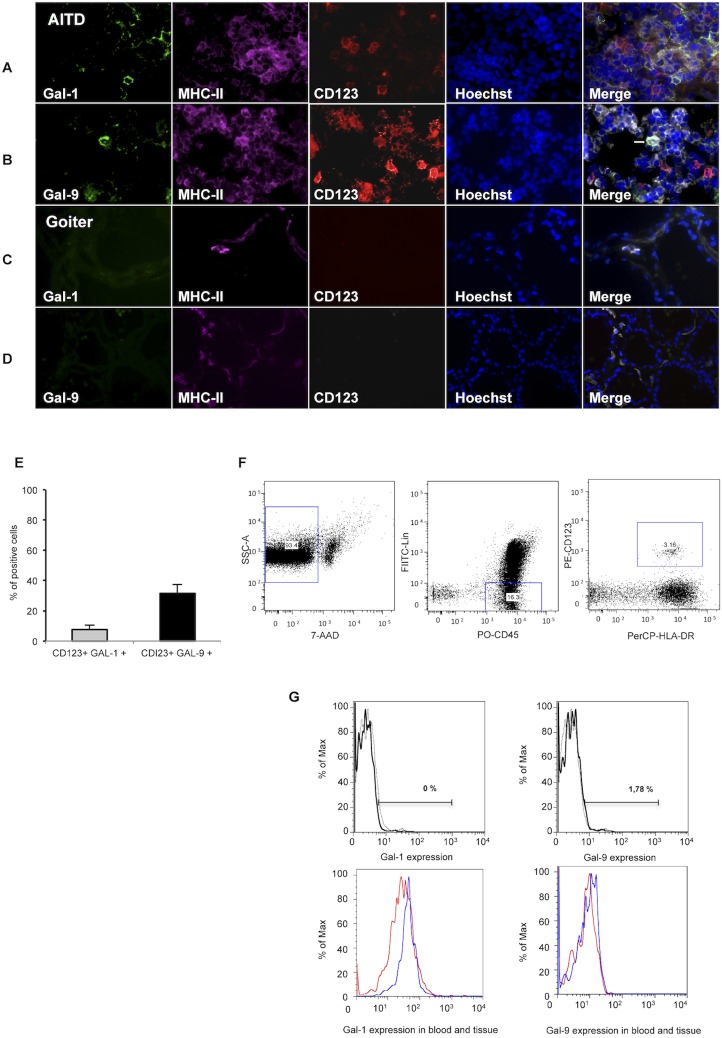
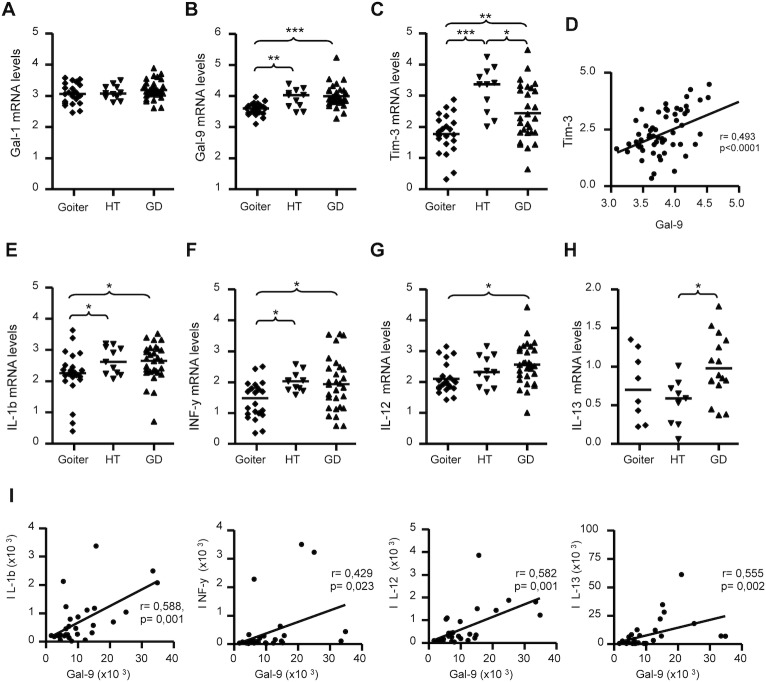
A diminished expression of Gal-9, but not of Gal-1, by peripheral blood DCs was observed in GD patients, mainly in those with Graves´ ophthalmopathy, and a significant negative association between disease severity and Gal-9 expression was detected. In addition, the mRNA levels of Gal-9 and its ligand TIM-3 were increased in thyroid tissue from AITD patients and its expression was associated with the levels of Th1/Th12/Th17 cytokines. Immunofluorescence studies proved that intrathyroidal Gal-9 expression was confined to DCs and macrophages. Finally, in vitro functional assays showed that exogenous Gal-9 had a suppressive effect on the release of Th1/Th2/Th17 cytokines by DC/lymphocyte autologous co-cultures from both AITD patients and healthy controls.
The altered pattern of expression of Gal-9 in peripheral blood DCs from GD patients, its correlation with disease severity as well as its ability to suppress cytokine release suggest that Gal-9 could be involved in the pathogenesis of AITD.
自身免疫性甲状腺疾病(AITD)患者存在免疫调节机制缺陷。在此,我们评估了AITD患者树突状细胞(DCs)中半乳糖凝集素-1和半乳糖凝集素-9(Gal-1、Gal-9)的表达及功能。
研究了25例格雷夫斯病(GD)患者、11例桥本甲状腺炎(HT)患者和24例健康受试者的外周血样本。还分析了44例AITD患者和22例甲状腺肿患者的甲状腺组织样本。通过定量逆转录聚合酶链反应、免疫荧光和流式细胞术评估Gal-1和Gal-9的表达及功能。
在GD患者中,观察到外周血DCs中Gal-9表达降低,但Gal-1未降低,主要见于伴有格雷夫斯眼病的患者,且检测到疾病严重程度与Gal-9表达之间存在显著负相关。此外,AITD患者甲状腺组织中Gal-9及其配体TIM-3的mRNA水平升高,其表达与Th1/Th12/Th17细胞因子水平相关。免疫荧光研究证明甲状腺内Gal-9表达局限于DCs和巨噬细胞。最后,体外功能试验表明,外源性Gal-9对AITD患者和健康对照的DC/淋巴细胞自体共培养物释放Th1/Th2/Th17细胞因子具有抑制作用。
GD患者外周血DCs中Gal-9表达模式的改变、其与疾病严重程度的相关性以及抑制细胞因子释放的能力表明,Gal-9可能参与AITD的发病机制。