Cagnan Hayriye, Duff Eugene Paul, Brown Peter
1 Medical Research Council Brain Network Dynamics Unit at the University of Oxford, Mansfield Road, OX1 3TH, UK 2 Nuffield Department of Clinical Neurosciences, University of Oxford, John Radcliffe Hospital, OX3 9DU, UK 3 The Wellcome Trust Centre for Neuroimaging, University College London, Queen Square, London WC1N 3BG, UK.
4 FMRIB Centre, Nuffield Department of Clinical Neurosciences, University of Oxford, OX3 9DU, UK.
Brain. 2015 Jun;138(Pt 6):1667-78. doi: 10.1093/brain/awv093. Epub 2015 Apr 16.
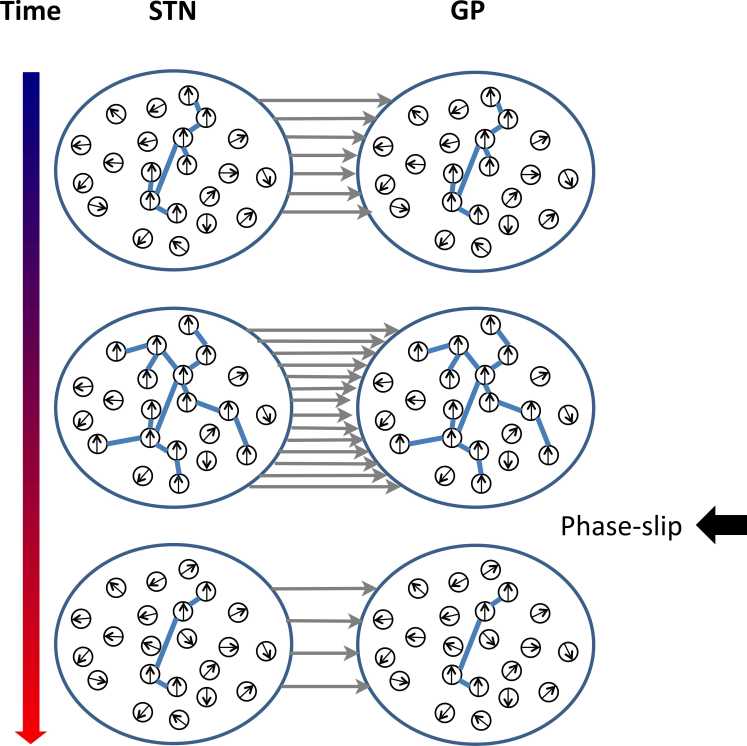
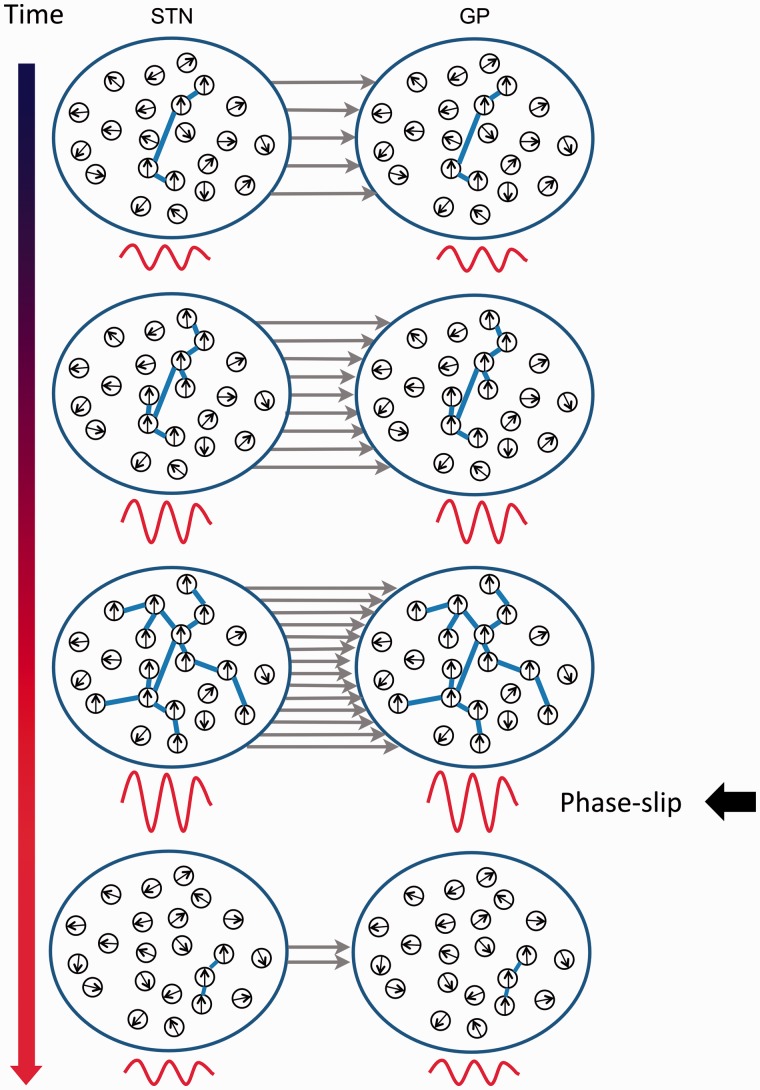
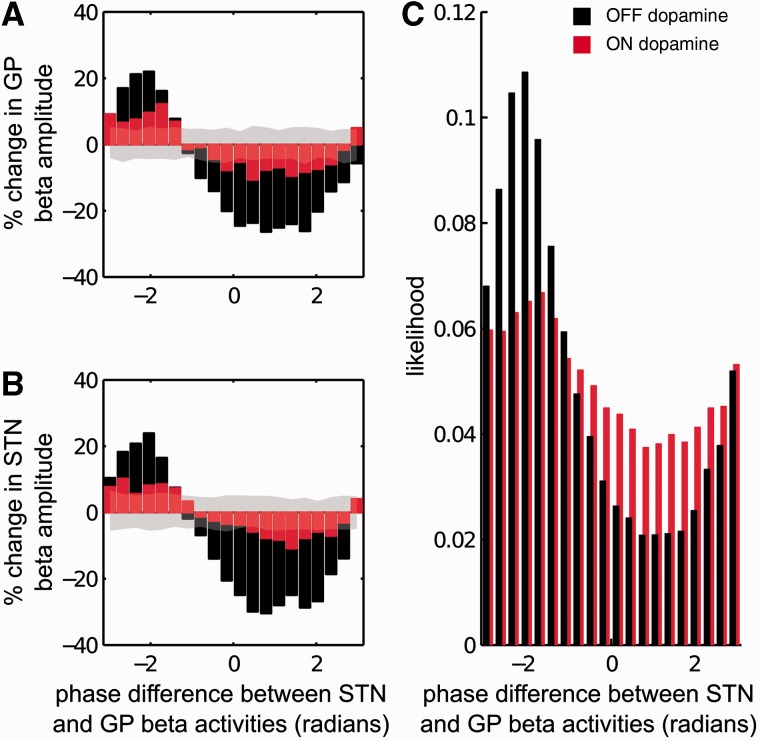
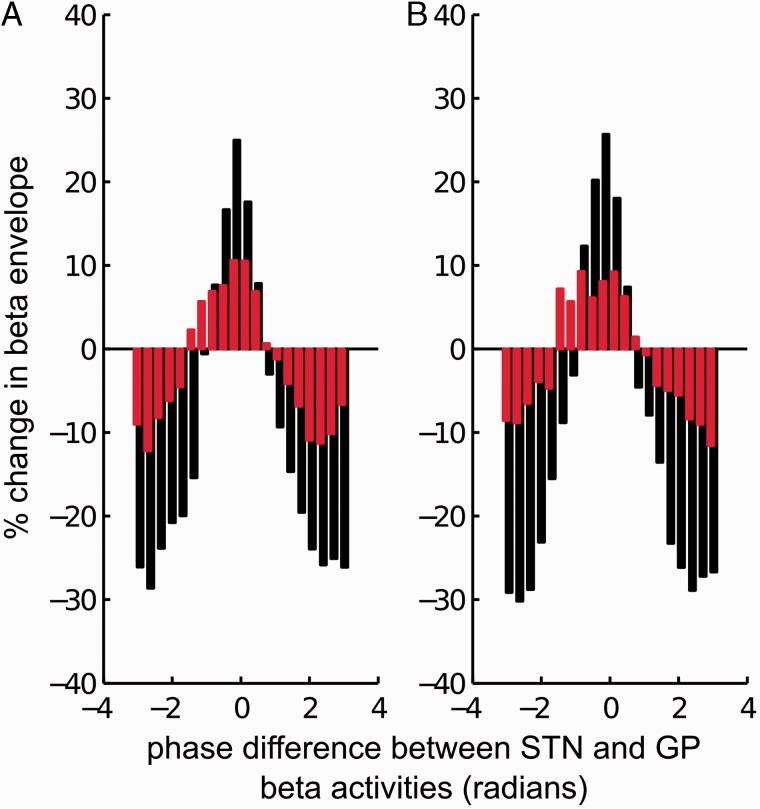
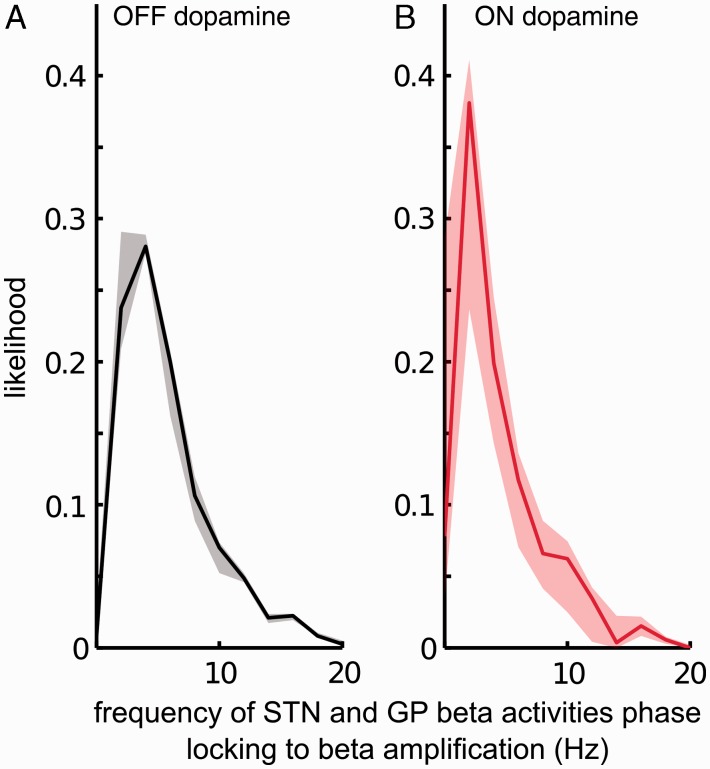
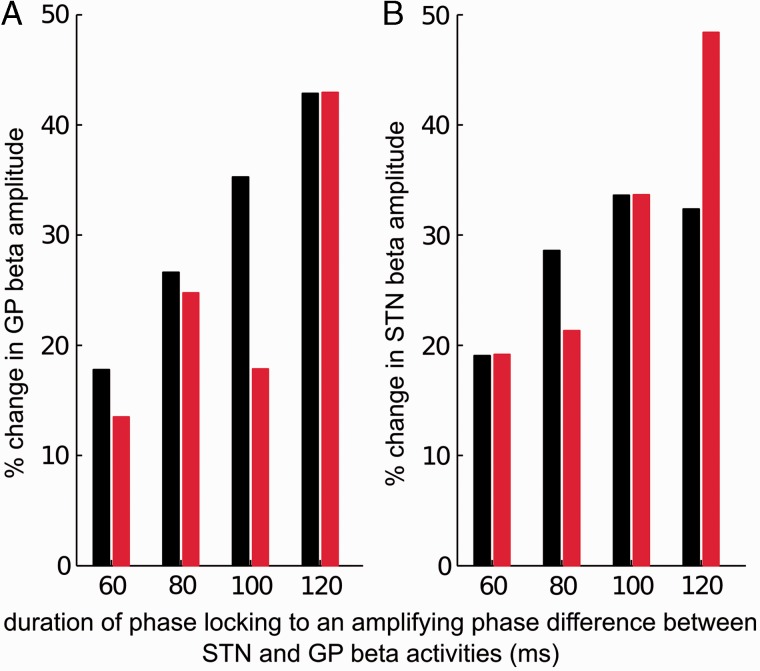
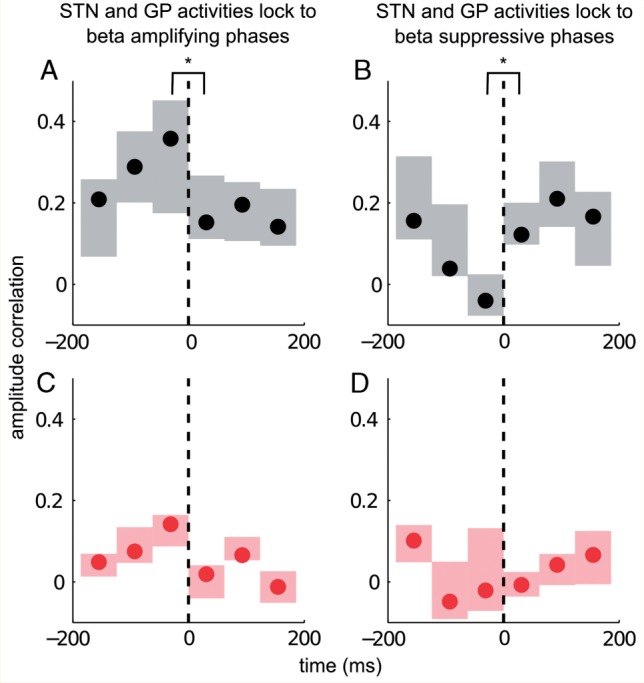
Optimal phase alignment between oscillatory neural circuits is hypothesized to optimize information flow and enhance system performance. This theory is known as communication-through-coherence. The basal ganglia motor circuit exhibits exaggerated oscillatory and coherent activity patterns in Parkinson's disease. Such activity patterns are linked to compromised motor system performance as evinced by bradykinesia, rigidity and tremor, suggesting that network function might actually deteriorate once a certain level of net synchrony is exceeded in the motor circuit. Here, we characterize the processes underscoring excessive synchronization and its termination. To this end, we analysed local field potential recordings from the subthalamic nucleus and globus pallidus of five patients with Parkinson's disease (four male and one female, aged 37-64 years). We observed that certain phase alignments between subthalamic nucleus and globus pallidus amplified local neural synchrony in the beta frequency band while others either suppressed it or did not induce any significant change with respect to surrogates. The increase in local beta synchrony directly correlated with how long the two nuclei locked to beta-amplifying phase alignments. Crucially, administration of the dopamine prodrug, levodopa, reduced the frequency and duration of periods during which subthalamic and pallidal populations were phase-locked to beta-amplifying alignments. Conversely ON dopamine, the total duration over which subthalamic and pallidal populations were aligned to phases that left beta-amplitude unchanged with respect to surrogates increased. Thus dopaminergic input shifted circuit dynamics from persistent periods of locking to amplifying phase alignments, associated with compromised motoric function, to more dynamic phase alignment and improved motoric function. This effect of dopamine on local circuit resonance suggests means by which novel electrical interventions might prevent resonance-related pathological circuit interactions.
振荡神经回路之间的最佳相位对齐被认为可以优化信息流并提高系统性能。这一理论被称为“通过相干性进行通信”。基底神经节运动回路在帕金森病中表现出夸张的振荡和相干活动模式。这种活动模式与运动系统性能受损有关,如运动迟缓、僵硬和震颤所示,这表明一旦运动回路中的净同步超过一定水平,网络功能实际上可能会恶化。在这里,我们描述了导致过度同步及其终止的过程。为此,我们分析了五名帕金森病患者(四名男性和一名女性,年龄37 - 64岁)丘脑底核和苍白球的局部场电位记录。我们观察到,丘脑底核和苍白球之间的某些相位对齐在β频段放大了局部神经同步,而其他相位对齐要么抑制了它,要么相对于替代信号没有引起任何显著变化。局部β同步的增加与两个核锁定在β放大相位对齐的时间直接相关。至关重要的是,多巴胺前体药物左旋多巴的给药减少了丘脑底核和苍白球群体锁定在β放大相位对齐的频率和持续时间。相反,在多巴胺开启时,丘脑底核和苍白球群体与相对于替代信号β振幅不变的相位对齐的总持续时间增加。因此,多巴胺能输入将回路动力学从与运动功能受损相关的持续锁定在放大相位对齐的时期,转变为更动态的相位对齐和改善的运动功能。多巴胺对局部回路共振的这种作用提示了新的电干预可能预防与共振相关的病理性回路相互作用的方法。