Bulman Sarah E, Coleman Cynthia M, Murphy J Mary, Medcalf Nicholas, Ryan Aideen E, Barry Frank
Regenerative Medicine Institute, National University of Ireland Galway, Biosciences, Dangan, Galway, Ireland.
Smith & Nephew, York Science Park, Heslington, York, YO10 5DF, UK.
Stem Cell Res Ther. 2015 Mar 19;6(1):34. doi: 10.1186/s13287-015-0011-7.
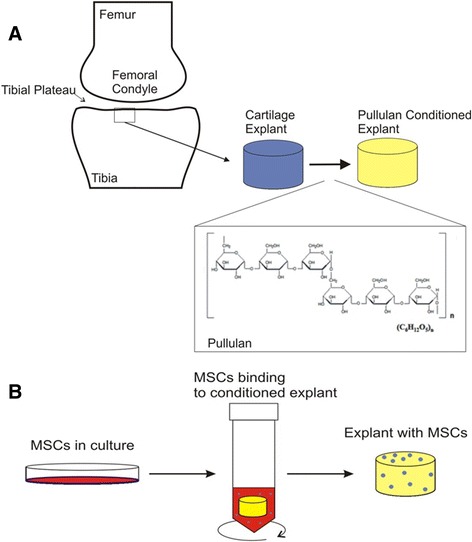
Local delivery of mesenchymal stem cells (MSCs) to the acutely injured or osteoarthritic joint retards cartilage destruction. However, in the absence of assistive materials the efficiency of engraftment of MSCs to either intact or fibrillated cartilage is low and localization is further reduced by natural movement of the joint surfaces. It is hypothesised that enhanced engraftment of the delivered MSCs at the cartilage surface will increase their reparative effect and that the application of a bioadhesive to the degraded cartilage surface will provide improved cell retention. Pullulan is a structurally flexible, non-immunogenic exopolysaccharide with wet-stick adhesive properties and has previously been used for drug delivery via the wet surfaces of the buccal cavity. In this study, the adhesive character of pullulan was exploited to enhance MSC retention on the damaged cartilage surface.
MSCs labeled with PKH26 were applied to pullulan-coated osteoarthritic cartilage explants to measure cell retention. Cytocompatability was assessed by measuring the effects of prolonged exposure to the bioadhesive on MSC viability and proliferation. The surface phenotype of the cells was assessed by flow cytometry and their multipotent nature by measuring osteogenic, adipogenic and chrondrogenic differentiation. Experiments were also carried out to determine expression of the C-type lectin Dectin-2 receptor.
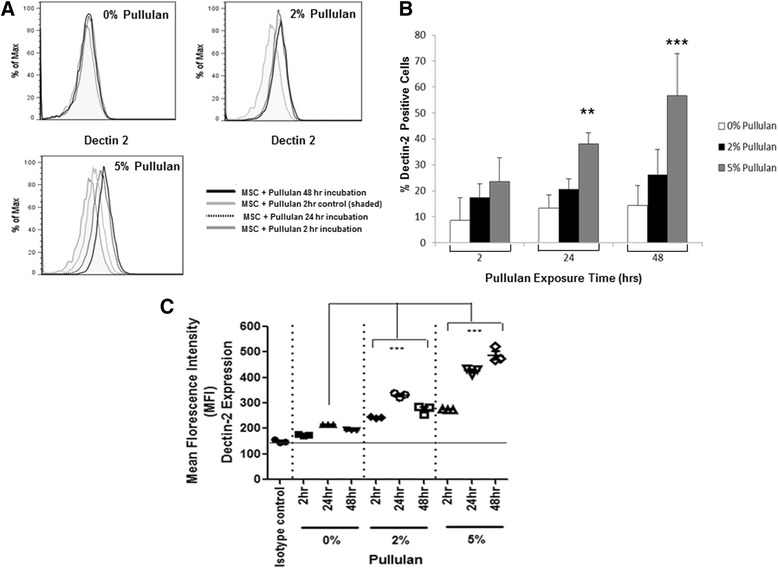
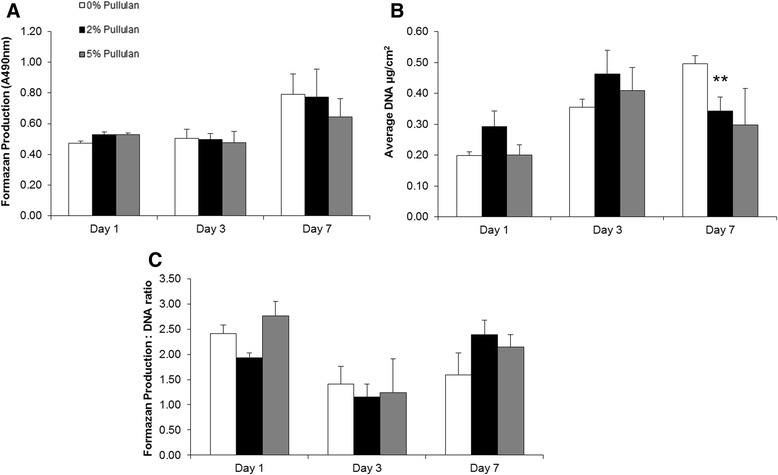
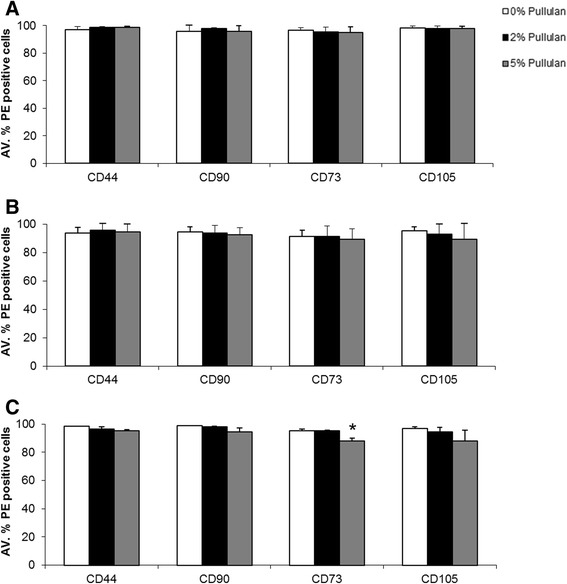
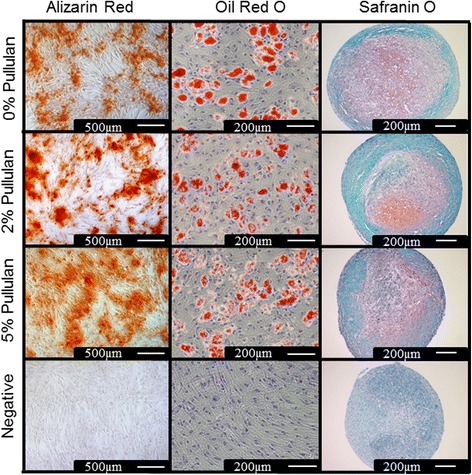
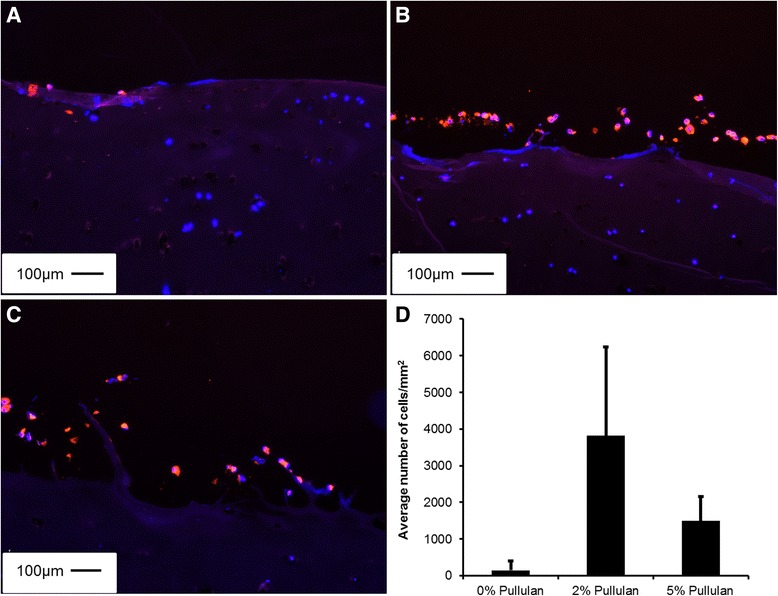
MSCs maintained a stable phenotype following exposure to pullulan in terms of metabolic activity, proliferation, differentiation and surface antigen expression. An increase in osteogenic activity and Dectin-2 receptor expression was seen in MSCs treated with pullulan. Markedly enhanced retention of MSCs was observed in explant culture of osteoarthritic cartilage.
Pullulan is a biocompatible and effective cytoadhesive material for tissue engraftment of MSCs. Prolonged exposure to pullulan has no negative impact on the phenotype, viability and differentiation potential of the cells. Pullulan dramatically improves the retention of MSCs at the fibrillated surface of osteoarthritic articular cartilage. Pullulan causes an upregulation in expression of the Dectin-2 C-type lectin transmembrane complex.
将间充质干细胞(MSCs)局部递送至急性损伤或骨关节炎关节可延缓软骨破坏。然而,在缺乏辅助材料的情况下,MSCs植入完整或纤维化软骨的效率较低,并且关节表面的自然运动进一步降低了其定位。据推测,增强递送的MSCs在软骨表面的植入将增加其修复效果,并且在降解的软骨表面应用生物粘合剂将改善细胞滞留。普鲁兰多糖是一种结构灵活、无免疫原性的胞外多糖,具有湿粘性,此前已用于通过口腔湿表面进行药物递送。在本研究中,利用普鲁兰多糖的粘附特性来增强MSCs在受损软骨表面的滞留。
将用PKH26标记的MSCs应用于普鲁兰多糖包被的骨关节炎软骨外植体以测量细胞滞留。通过测量长时间暴露于生物粘合剂对MSCs活力和增殖的影响来评估细胞相容性。通过流式细胞术评估细胞的表面表型,并通过测量成骨、成脂和软骨形成分化来评估其多能性。还进行了实验以确定C型凝集素Dectin-2受体的表达。
在代谢活性、增殖、分化和表面抗原表达方面,MSCs在暴露于普鲁兰多糖后保持稳定的表型。在用普鲁兰多糖处理的MSCs中观察到成骨活性和Dectin-2受体表达增加。在骨关节炎软骨的外植体培养中观察到MSCs的滞留明显增强。
普鲁兰多糖是一种用于MSCs组织植入的生物相容性和有效的细胞粘附材料。长时间暴露于普鲁兰多糖对细胞的表型、活力和分化潜能没有负面影响。普鲁兰多糖显著改善了MSCs在骨关节炎关节软骨纤维化表面的滞留。普鲁兰多糖导致Dectin-2 C型凝集素跨膜复合物的表达上调。