Voss Meike, Wonnenberg Bodo, Honecker Anja, Kamyschnikow Andreas, Herr Christian, Bischoff Markus, Tschernig Thomas, Bals Robert, Beisswenger Christoph
Department of Internal Medicine V - Pulmonology, Allergology and Respiratory Critical Care Medicine, Saarland University, 66421, Homburg/Saar, Germany.
Institute of Medical Microbiology and Hygiene, Saarland University, 66421, Homburg/Saar, Germany.
Respir Res. 2015 Mar 20;16(1):41. doi: 10.1186/s12931-015-0204-8.
Bacterial colonization and recurrent infections of the respiratory tract contribute to the progression of chronic obstructive pulmonary disease (COPD). There is evidence that exacerbations of COPD are provoked by new bacterial strains acquired from the environment. Using a murine model of colonization, we examined whether chronic exposure to cigarette smoke (CS) promotes nasopharyngeal colonization with typical lung pathogens and whether colonization is linked to inflammation in the respiratory tract.
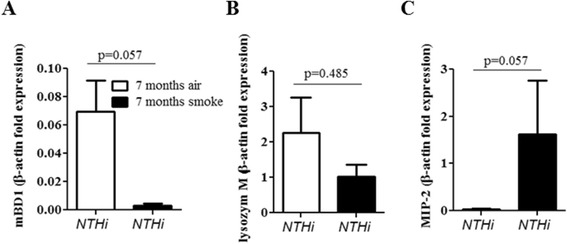
C57BL/6 N mice were chronically exposed to CS. The upper airways of mice were colonized with nontypeable Haemophilus influenzae (NTHi) or Streptococcus pneumoniae. Bacterial colonization was determined in the upper respiratory tract and lung tissue. Inflammatory cells and cytokines were determined in lavage fluids. RT-PCR was performed for inflammatory mediators.
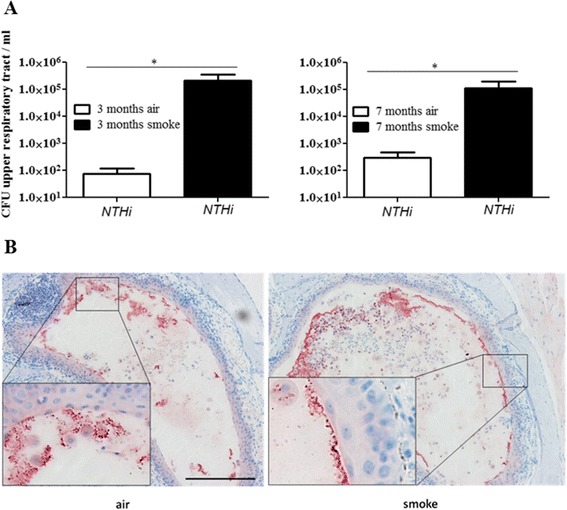
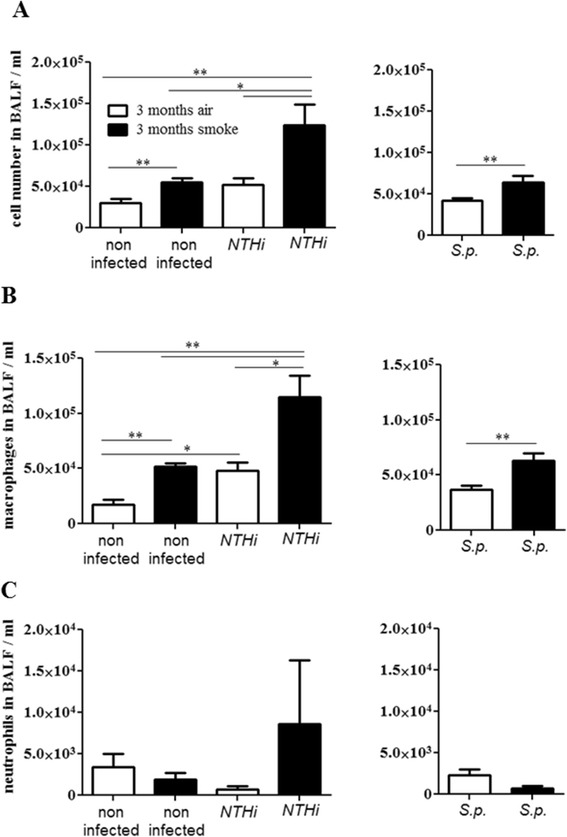
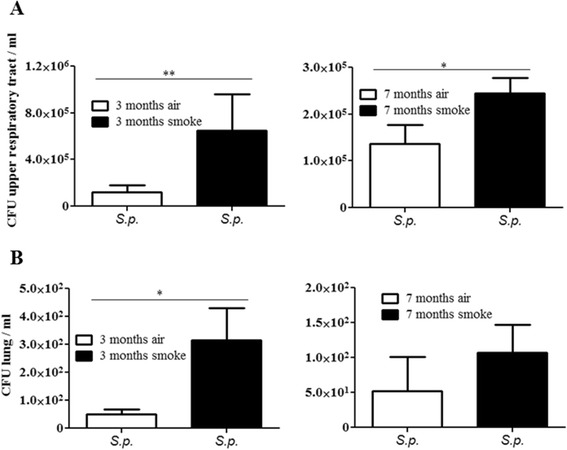
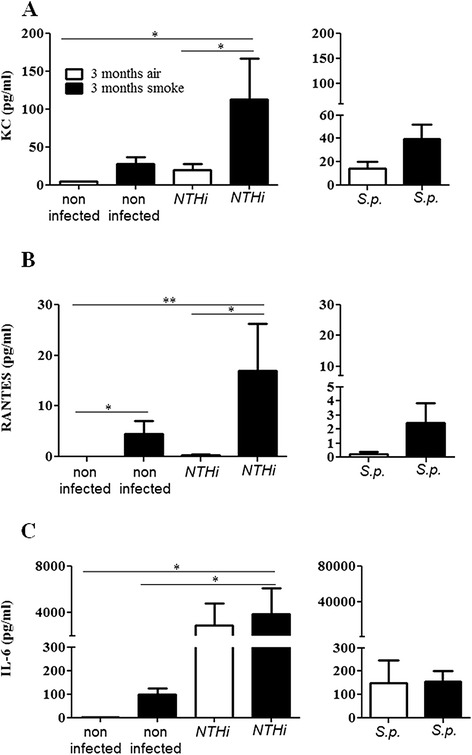
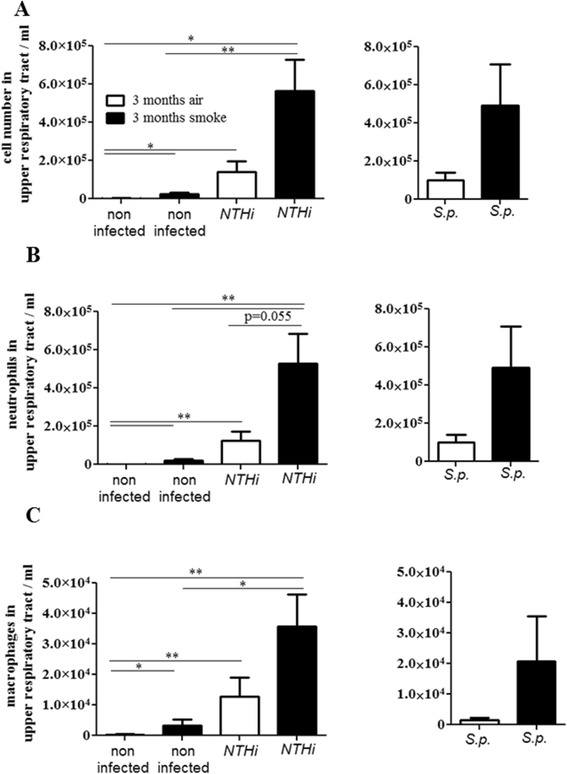
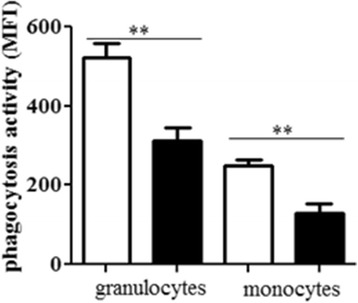
Chronic CS exposure resulted in significantly increased numbers of viable NTHi in the upper airways, whereas NTHi only marginally colonized air-exposed mice. Colonization with S. pneumoniae was enhanced in the upper respiratory tract of CS-exposed mice and was accompanied by increased translocation of S. pneumoniae into the lung. Bacterial colonization levels were associated with increased concentrations of inflammatory mediators and the number of immune cells in lavage fluids of the upper respiratory tract and the lung. Phagocytosis activity was reduced in whole blood granulocytes and monocytes of CS-exposed mice.
These findings demonstrate that exposure to CS impacts the ability of the host to control bacterial colonization of the upper airways, resulting in enhanced inflammation and susceptibility of the host to pathogens migrating into the lung.
细菌定植和呼吸道反复感染会促使慢性阻塞性肺疾病(COPD)进展。有证据表明,COPD急性加重是由从环境中获得的新细菌菌株引发的。我们使用定植小鼠模型,研究长期暴露于香烟烟雾(CS)是否会促进典型肺部病原体在鼻咽部的定植,以及定植是否与呼吸道炎症有关。
将C57BL/6 N小鼠长期暴露于CS中。用不可分型流感嗜血杆菌(NTHi)或肺炎链球菌对小鼠上呼吸道进行定植。测定上呼吸道和肺组织中的细菌定植情况。测定灌洗液中的炎性细胞和细胞因子。对炎性介质进行逆转录聚合酶链反应(RT-PCR)检测。
长期暴露于CS导致上呼吸道中可存活的NTHi数量显著增加,而在暴露于空气的小鼠中,NTHi仅少量定植。在暴露于CS的小鼠上呼吸道中,肺炎链球菌的定植增加,并伴有肺炎链球菌向肺部的易位增加。细菌定植水平与上呼吸道和肺部灌洗液中炎性介质浓度增加以及免疫细胞数量增加有关。暴露于CS的小鼠全血粒细胞和单核细胞的吞噬活性降低。
这些发现表明,暴露于CS会影响宿主控制上呼吸道细菌定植的能力,导致炎症增强以及宿主对迁移至肺部病原体的易感性增加。