Laboratory of Respiratory Diseases and Thoracic Surgery (BREATHE), Department of Chronic Diseases and Metabolism (CHROMETA), KU Leuven, Herestraat 49, O&NI bis, box 706, 3000, Leuven, Belgium.
Clinical and Experimental Endocrinology (CEE), Department of Chronic Diseases and Metabolism (CHROMETA), KU Leuven, Leuven, Belgium.
Respir Res. 2022 Mar 2;23(1):40. doi: 10.1186/s12931-022-01962-6.
In chronic obstructive pulmonary disease (COPD), exacerbations cause acute inflammatory flare-ups and increase the risk for hospitalization and mortality. Exacerbations are common in all disease stages and are often caused by bacterial infections e.g., non-typeable Heamophilus influenzae (NTHi). Accumulating evidence also associates vitamin D deficiency with the severity of COPD and exacerbation frequency. However, it is still unclear whether vitamin D deficiency when combined with cigarette smoking would worsen and prolong exacerbations caused by repeated infections with the same bacterial strain.
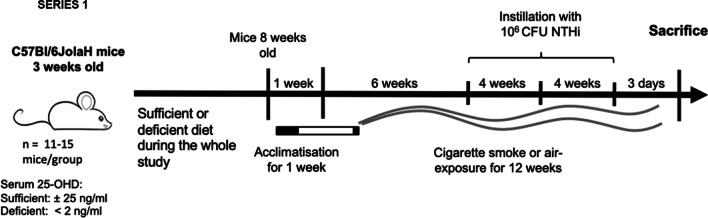
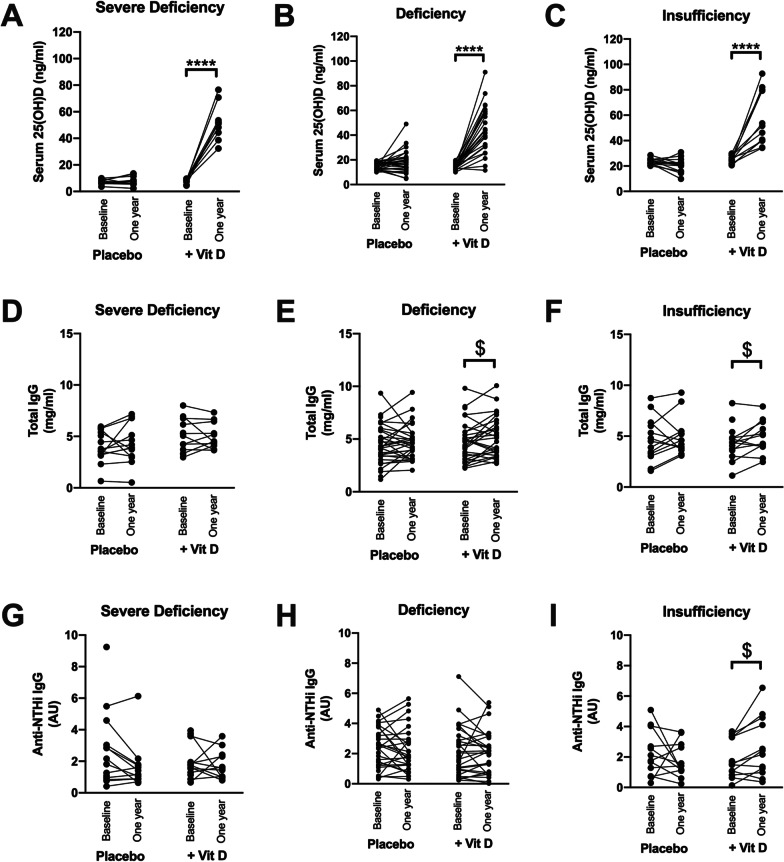
Vitamin D sufficient (VDS) and deficient (VDD) mice were exposed to nose-only cigarette smoke (CS) for 14 weeks and oropharyngeally instilled with NTHi at week 6, 10 and 14. Three days after the last instillation, mice were assessed for lung function, tissue remodeling, inflammation and immunity. The impact of VDD and CS on inflammatory cells and immunoglobulin (Ig) production was also assessed in non-infected animals while serum Ig production against NTHi and dsDNA was measured in COPD patients before and 1 year after supplementation with Vitamin D3.
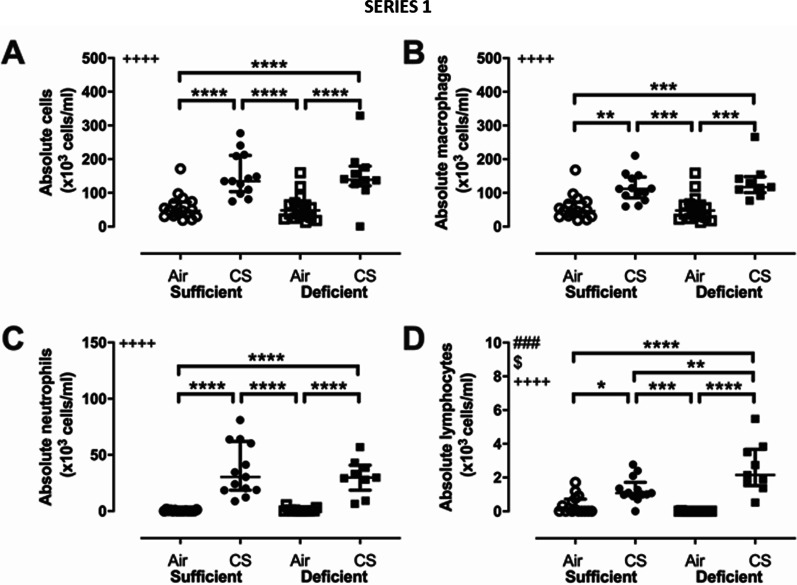
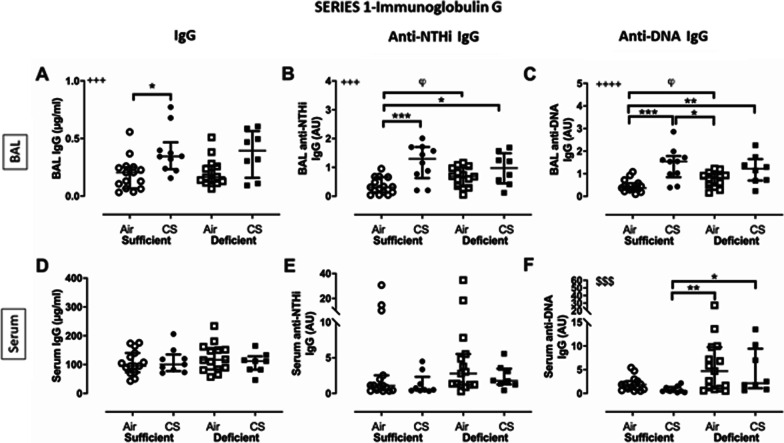
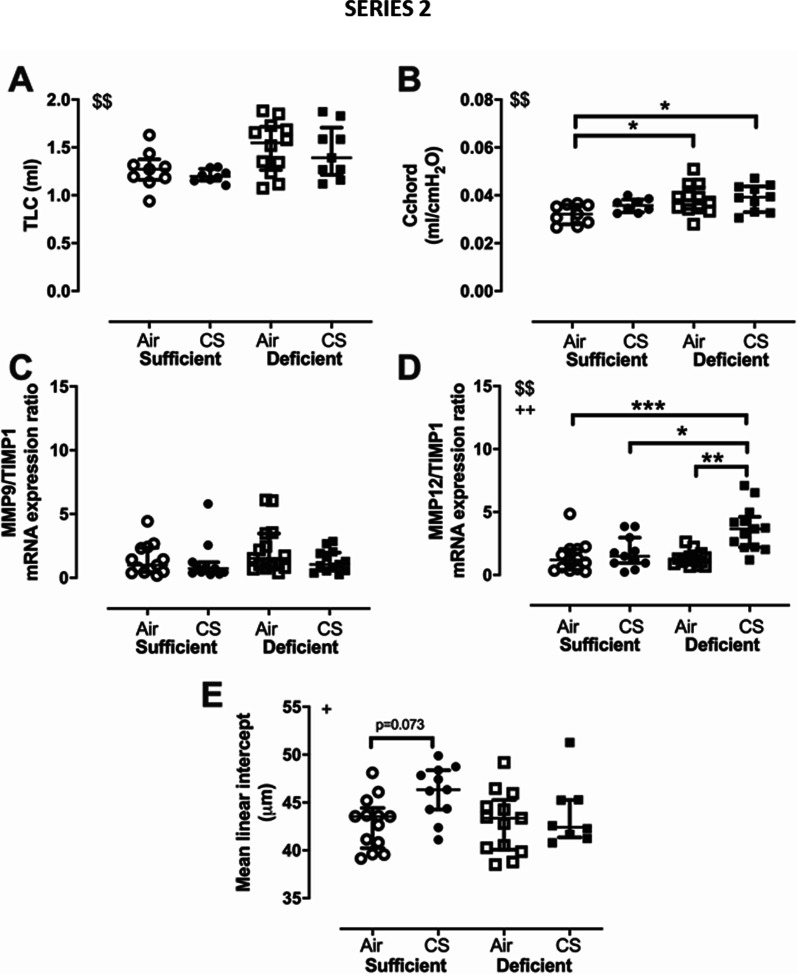
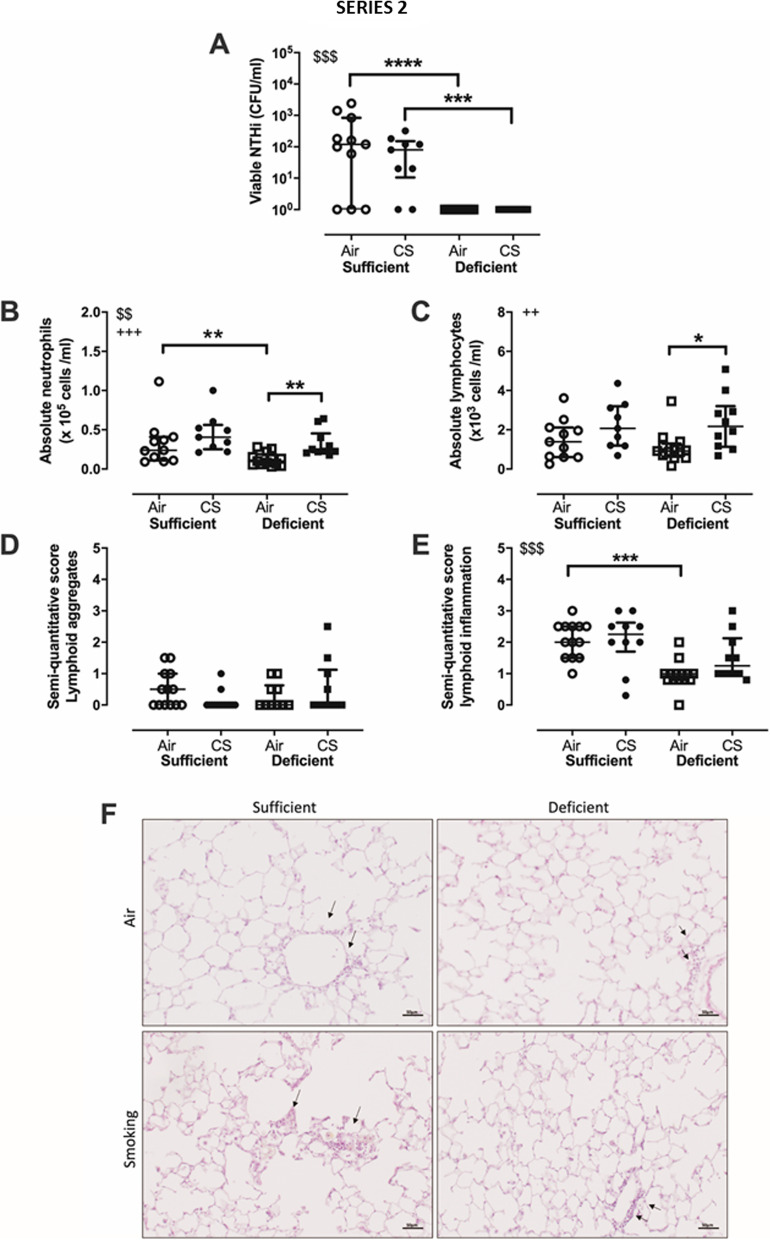
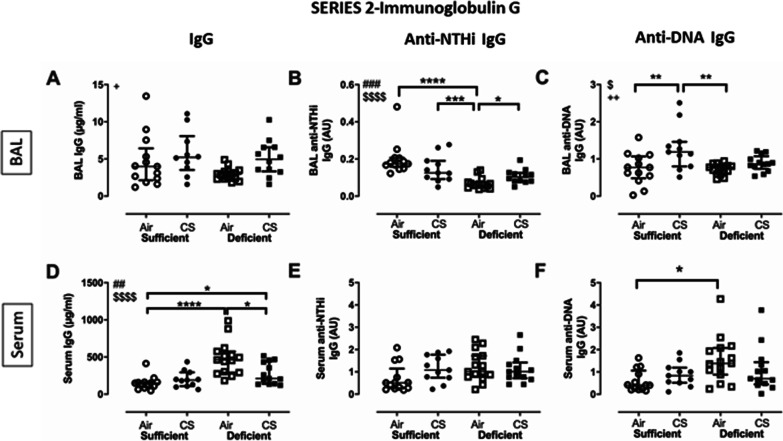
VDD enhanced NTHi eradication, independently of CS and complete eradication was reflected by decreased anti-NTHi Ig's within the lung. In addition, VDD led to an increase in total lung capacity (TLC), lung compliance (Cchord), MMP12/TIMP1 ratio with a rise in serum Ig titers and anti-dsDNA Ig's. Interestingly, in non-infected animals, VDD exacerbated the CS-induced anti-NTHi Ig's, anti-dsDNA Ig's and inflammatory cells within the lung. In COPD patients, serum Ig production was not affected by vitamin D status but anti-NTHi IgG increased after vitamin D3 supplementation in patients who were Vitamin D insufficient before treatment.
During repeated infections, VDD facilitated NTHi eradication and resolution of local lung inflammation through production of anti-NTHi Ig, independently of CS whilst it also promoted autoantibodies. In COPD patients, vitamin D supplementation could be protective against NTHi infections in vitamin D insufficient patients. Future research is needed to decipher the determinants of dual effects of VDD on adaptive immunity.
ClinicalTrials, NCT00666367. Registered 23 April 2008, https://www.clinicaltrials.gov/ct2/show/study/NCT00666367 .
在慢性阻塞性肺疾病(COPD)中,加重会导致急性炎症发作,并增加住院和死亡的风险。加重在所有疾病阶段都很常见,通常由细菌感染引起,例如不可分型流感嗜血杆菌(NTHi)。越来越多的证据还将维生素 D 缺乏与 COPD 的严重程度和加重频率联系起来。然而,目前尚不清楚维生素 D 缺乏症与吸烟相结合是否会加重和延长由同种细菌重复感染引起的加重。
将维生素 D 充足(VDS)和缺乏(VDD)的小鼠暴露于鼻内香烟烟雾(CS)中 14 周,并在第 6、10 和 14 周经口咽注入 NTHi。最后一次滴注后 3 天,评估小鼠的肺功能、组织重塑、炎症和免疫。还在非感染动物中评估了 VDD 和 CS 对炎症细胞和免疫球蛋白(Ig)产生的影响,同时在 COPD 患者中测量了维生素 D3 补充前后针对 NTHi 和 dsDNA 的血清 Ig 产生。
VDD 增强了 NTHi 的清除,独立于 CS,而完全清除则反映为肺内抗-NTHi Ig 的减少。此外,VDD 导致总肺容量(TLC)、肺顺应性(Cchord)增加,MMP12/TIMP1 比值升高,血清 Ig 滴度和抗 dsDNA Ig 升高。有趣的是,在非感染动物中,VDD 加剧了 CS 诱导的抗-NTHi Ig、抗 dsDNA Ig 和肺内炎症细胞。在 COPD 患者中,维生素 D 状态对血清 Ig 产生没有影响,但在治疗前维生素 D 不足的患者中,维生素 D3 补充后抗-NTHi IgG 增加。
在反复感染期间,VDD 通过产生抗-NTHi Ig 促进 NTHi 的清除和局部肺部炎症的解决,独立于 CS,同时也促进了自身抗体。在 COPD 患者中,维生素 D 补充可能对维生素 D 不足患者的 NTHi 感染有保护作用。需要进一步研究以破译 VDD 对适应性免疫的双重影响的决定因素。
ClinicalTrials,NCT00666367。于 2008 年 4 月 23 日注册,https://www.clinicaltrials.gov/ct2/show/study/NCT00666367。