Wang Sihyung, Lee Ji-Seon, Hyun Jeongeun, Kim Jieun, Kim Seung U, Cha Hyuk-Jin, Jung Youngmi
Department of Intergrated Biological Science, Pusan National University, 63-2 Pusandaehak-ro, Kumjeong-gu, Pusan, 609-735, Korea.
Department of Life Science, Sogang University, Seoul, 121-742, Korea.
Stem Cell Res Ther. 2015 Mar 11;6(1):20. doi: 10.1186/s13287-015-0019-z.
Tumor necrosis factor-inducible gene 6 protein (TSG-6), one of the cytokines released by human mesenchymal stem/stromal cells (hMSC), has an anti-inflammatory effect and alleviates several pathological conditions; however, the hepatoprotective potential of TSG-6 remains unclear. We investigated whether TSG-6 promoted liver regeneration in acute liver failure.
The immortalized hMSC (B10) constitutively over-expressing TSG-6 or empty plasmid (NC: Negative Control) were established, and either TSG-6 or NC-conditioned medium (CM) was intraperitoneally injected into mice with acute liver damage caused by CCl4. Mice were sacrificed at 3 days post-CM treatment.
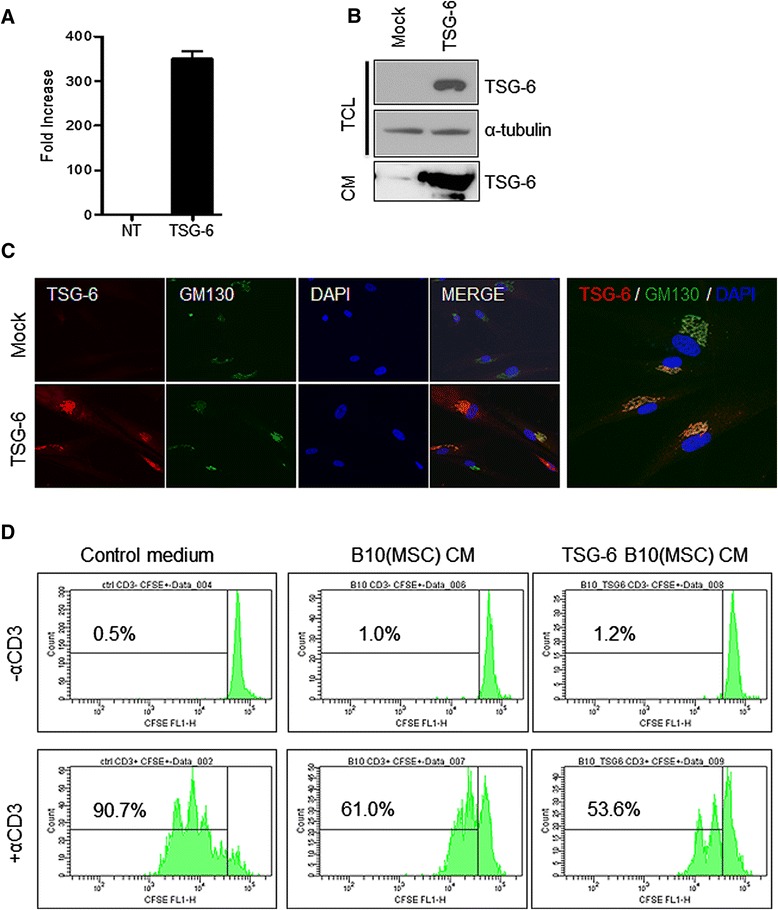
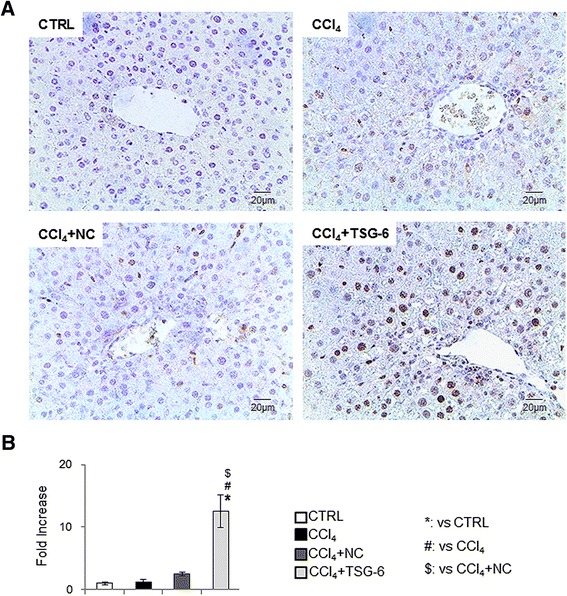
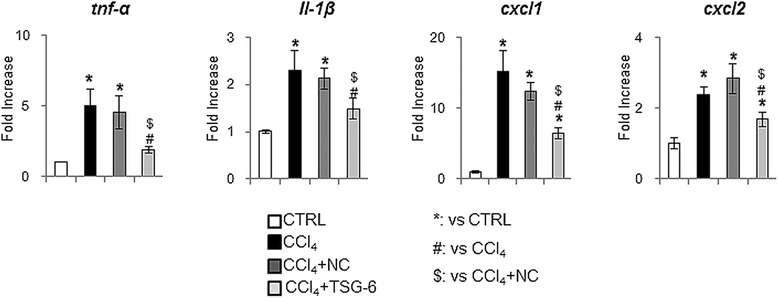
Higher expression and the immunosuppressive activity of TSG-6 were observed in CM from TSG-6-hMSC. The obvious histomorphological liver injury and increased level of liver enzymes were shown in CCl4-treated mice with or without NC-CM, whereas those observations were markedly ameliorated in TSG-6-CM-treated mice with CCl4. Ki67-positive hepatocytic cells were accumulated in the liver of the CCl4+TSG-6 group. RNA analysis showed the decrease in both of inflammation markers, tnfα, il-1β, cxcl1 and cxcl2, and fibrotic markers, tgf-β1, α-sma and collagen α1, in the CCl4+TSG-6 group, compared to the CCl4 or the CCl4+NC group. Protein analysis confirmed the lower expression of TGF-β1 and α-SMA in the CCl4+TSG-6 than the CCl4 or the CCl4+NC group. Immunostaining for α-SMA also revealed the accumulation of the activated hepatic stellate cells in the livers of mice in the CCl4 and CCl4+NC groups, but not in the livers of mice from the CCl4+TSG-6 group. The cultured LX2 cells, human hepatic stellate cell line, in TSG-6-CM showed the reduced expression of fibrotic markers, tgf-β1, vimentin and collagen α1, whereas the addition of the TSG-6 antibody neutralized the inhibitory effect of TSG-6 on the activation of LX2 cells. In addition, cytoplasmic lipid drops, the marker of inactivated hepatic stellate cell, were detected in TSG-6-CM-cultured LX2 cells, only. The suppressed TSG-6 activity by TSG-6 antibody attenuated the restoration process in livers of TSG-6-CM-treated mice with CCl4.
These results demonstrated that TSG-6 contributed to the liver regeneration by suppressing the activation of hepatic stellate cells in CCl4-treated mice, suggesting the therapeutic potential of TSG-6 for acute liver failure.
肿瘤坏死因子诱导基因6蛋白(TSG - 6)是人间充质干/基质细胞(hMSC)释放的细胞因子之一,具有抗炎作用并能缓解多种病理状况;然而,TSG - 6的肝保护潜力仍不清楚。我们研究了TSG - 6是否能促进急性肝衰竭中的肝脏再生。
构建了组成性过表达TSG - 6或空质粒(NC:阴性对照)的永生化hMSC(B10),并将TSG - 6或NC条件培养基(CM)腹腔注射到由四氯化碳引起急性肝损伤的小鼠体内。在CM处理后3天处死小鼠。
在来自TSG - 6 - hMSC的CM中观察到TSG - 6的更高表达和免疫抑制活性。在接受或未接受NC - CM的四氯化碳处理小鼠中均出现明显的组织形态学肝损伤和肝酶水平升高,而在接受四氯化碳处理并注射TSG - 6 - CM的小鼠中这些观察结果明显改善。Ki67阳性肝细胞在四氯化碳 + TSG - 6组的肝脏中积聚。RNA分析显示,与四氯化碳组或四氯化碳 + NC组相比,四氯化碳 + TSG - 6组中炎症标志物(肿瘤坏死因子α、白细胞介素 - 1β、趋化因子CXCL1和CXCL2)以及纤维化标志物(转化生长因子 - β1、α - 平滑肌肌动蛋白和胶原蛋白α1)均减少。蛋白质分析证实,四氯化碳 + TSG - 6组中转化生长因子 - β1和α - SMA的表达低于四氯化碳组或四氯化碳 + NC组。α - SMA免疫染色还显示,四氯化碳组和四氯化碳 + NC组小鼠肝脏中活化的肝星状细胞积聚,而四氯化碳 + TSG - 6组小鼠肝脏中未出现。在TSG - 6 - CM中培养的LX2细胞(人肝星状细胞系)显示纤维化标志物(转化生长因子 - β1、波形蛋白和胶原蛋白α1)表达降低,而添加TSG - 6抗体可中和TSG - 6对LX2细胞活化的抑制作用。此外,仅在TSG - 6 - CM培养的LX2细胞中检测到细胞质脂滴(失活肝星状细胞的标志物)。TSG - 6抗体抑制TSG - 6活性减弱了接受四氯化碳处理并注射TSG - 6 - CM的小鼠肝脏的恢复过程。
这些结果表明,TSG - 6通过抑制四氯化碳处理小鼠肝星状细胞的活化促进肝脏再生,提示TSG - 6对急性肝衰竭具有治疗潜力。